
tulip 'Princess Charmante'
Also known as: Information to be completed
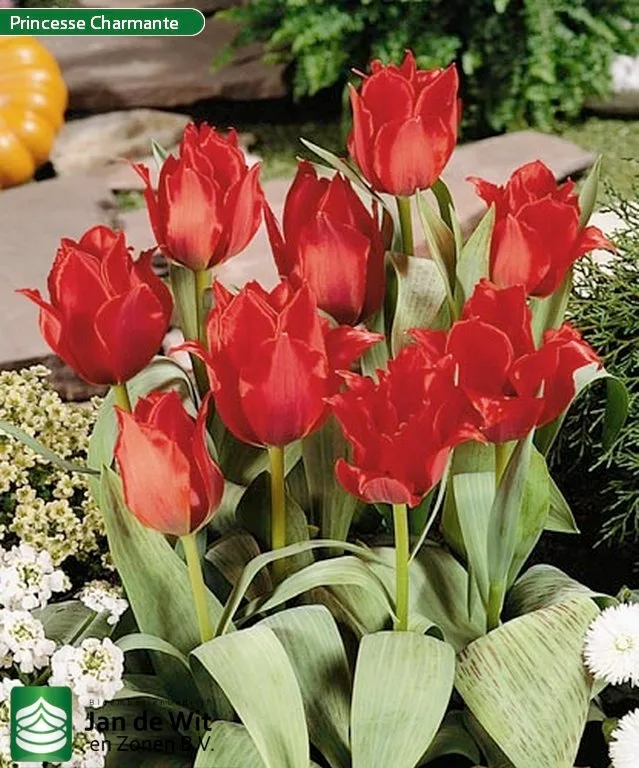
A perennial bulb with broadly lance shaped, greyish-green leaves striped with purple. Flowers are single, cup-shaped and bright red, up to 35cm high
Scientific classification
- Species
- tulip 'Princess Charmante' (Tulipa 'Princesse Charmante')
- Genus
- Tulipa
- Family
- Liliaceae
- Order
- Liliales
- Class
- Liliopsida
- Phylum
- Magnoliophyta
- Harmful if eaten, skin allergen. Wear gloves and other protective equipment when handling]
- Toxicity
- Bulbs
- Plant type
- 0.1-0.5 metres
- Height
- 0.1-0.5 metres
- Spread
- Deciduous
- Foliage
- Columnar upright
- Habit
- Spring
- Season of interest
- Full sun
- Sunlight
- Information to be completed
- Ideal temperature









tulip 'Princess Charmante' pictures
Toxicity
Harmful if eaten, skin allergen. Wear gloves and other protective equipment when handling]
tulip 'Princess Charmante' care guide
- Moist soil during active growth, then reduce watering after foliage yellows
- Watering
- Full sun
- Sunlight

Watering
Moist soil during active growth, then reduce watering after foliage yellows
Fertilizing
 Fertilizing
Light bulb fertilizer at emergence and again after flowering
Pruning
 Pruning
Deadhead after flowering and remove fallen petals
Propagation
 Propagation
Propagate by division, separating offsets in summer
Growing
 Growing
Plant 10 to 15cm deep in fertile, well-drained soil with shelter from strong winds and protection from excessive wet. See tulip cultivation for further advice
Common pests and diseases
Diseases
May be susceptible to tulip fire and bulb rot in poorly drained soil
Pests
May be susceptible to slugs, aphids and stem and bulb eelworm; squirrels may eat the bulbs
Explore the plant health library →




