
Ribes nigrum 'Baldwin'
Also known as: Information to be completed
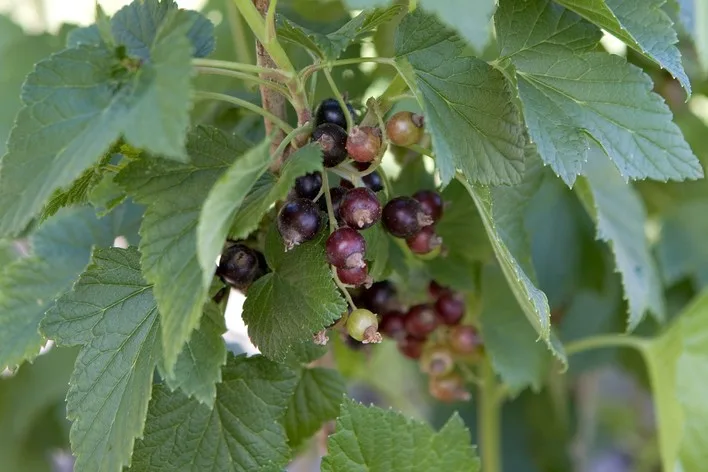
A deciduous shrub which produces mid to late season blackcurrants, giving a heavy crop of medium to large fruit with good flavour. The fruits are high in vitamin C, have a tart blackcurrant flavour and are good for cooking and adding to pies, jam and cordials.
Scientific classification
- Species
- Ribes nigrum 'Baldwin' (Ribes nigrum 'Baldwin')
- Genus
- Ribes
- Family
- Grossulariaceae
- Order
- Saxifragales
- Class
- Magnoliopsida
- Phylum
- Magnoliophyta
- Information to be completed
- Toxicity
- Fruit Edible · Shrubs
- Plant type
- 1-1.5 metres
- Height
- 1-1.5 metres
- Spread
- Deciduous
- Foliage
- Bushy
- Habit
- Spring · Summer
- Season of interest
- Full sun · Partial shade
- Sunlight
- Information to be completed
- Ideal temperature









Ribes nigrum 'Baldwin' pictures
Distribution of Ribes nigrum 'Baldwin'
Distribution map
- Native
- Introduced
- Cultivated
Source:WCVP v16 · Royal Botanic Gardens, Kew · CC BY 3.0 · Boundaries:WGSRPD / TDWG
Ribes nigrum 'Baldwin' care guide
- Deep soak roots, maintain steady moisture for fruiting berry bush
- Watering
- Full sun · Partial shade
- Sunlight

Watering
Deep soak roots, maintain steady moisture for fruiting berry bush
Fertilizing
 Fertilizing
Fruit bush balanced feed twice yearly in spring and mid summer
Pruning
 Pruning
Prune in winter. Blackcurrants fruit best on younger wood so aim to remove up to one quarter of the oldest stems at ground level to encourage new growth from the base.
Propagation
 Propagation
Propagate by hardwood cuttings
Growing
 Growing
Blackcurrants prefer a sunny site with well-drained but moisture-retentive soil, but will cope in most other soil conditions and tolerate light shade. Mulch annually with well-rotted manure or compost and apply a general purpose fertiliser in spring. Please see our blackcurrant cultivation page for more growing tips.
Common pests and diseases
Diseases
May be susceptible to a leaf spot, powdery mildews, coral spot and sometimes honey fungus
Pests
May be susceptible to gall mites, gall midge and aphids
Explore the plant health library →




