
Zantedeschia 'Mango'
Also known as: Information to be completed
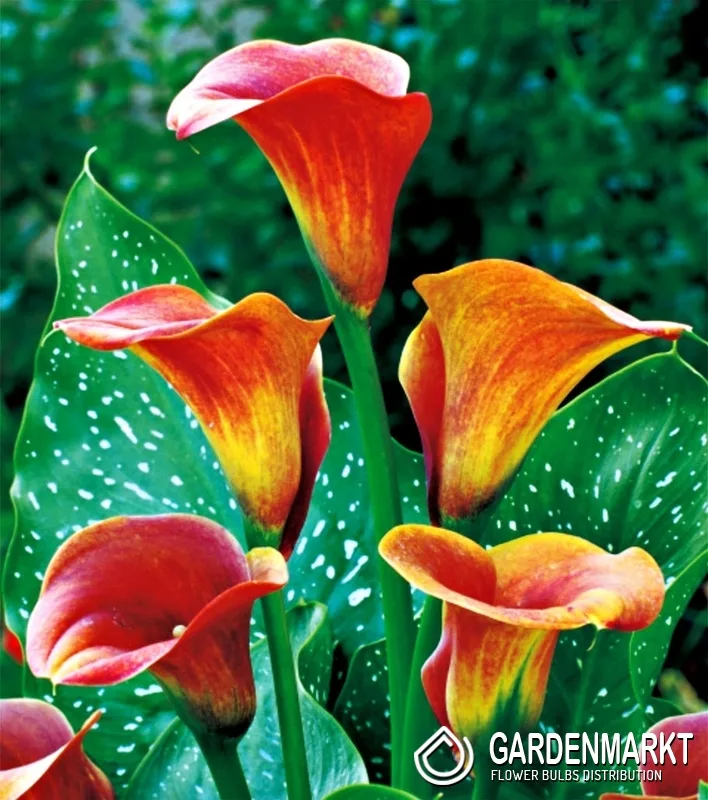
A compact, clump-forming, tuberous perennial to 40cm high with wavy-edged, upright green leaves flecked with white, and orange-yellow flowers with a dark orange throat which appear from summer to early autumn. May be grown as a house or conservatory plant or as a summer patio plant
Scientific classification
- Species
- Zantedeschia 'Mango' (Zantedeschia 'Mango')
- Genus
- Zantedeschia
- Family
- Araceae
- Harmful if eaten, skin/eye irritant. Wear gloves and other protective equipment when handling]
- Toxicity
- Bedding · Conservatory Greenhouse
- Plant type
- 0.1-0.5 metres
- Height
- 0.1-0.5 metres
- Spread
- Deciduous
- Foliage
- Bushy
- Habit
- Spring · Summer · Autumn
- Season of interest
- Full sun
- Sunlight
- Information to be completed
- Ideal temperature









Zantedeschia 'Mango' pictures
Distribution of Zantedeschia 'Mango'
Distribution map
Information to be completed
Information to be completed
Culture
Information to be completed
Toxicity
Harmful if eaten, skin/eye irritant. Wear gloves and other protective equipment when handling]
Quick identification of Zantedeschia 'Mango'
Information to be completed
Zantedeschia 'Mango' care guide
- Moderate regular watering, avoid prolonged drought or waterlogging
- Watering
- Full sun
- Sunlight
- Information to be completed
- Ideal temperature

Watering
Moderate regular watering, avoid prolonged drought or waterlogging
Fertilizing
 Fertilizing
Balanced feed in spring and light repeat in growth season
Pruning
 Pruning
Remove the flowers as they start to fade, pulling the entire stem out at the base
Propagation
 Propagation
Propagate by division in spring
Growing
 Growing
Plant tubers in loam-based compost in spring. Plants may be grown under glass all year, at a minimum of 10°C; alternatively use as bedding plants in summer once all risk of frost has passed. Keep well-watered in the growing season. Bring outdoor pots indoors, or lift and store tubers in a frost-free place, in autumn. See Zantedeschia cultivation
People also ask
Information to be completed
Common pests and diseases
Diseases
May be susceptible to fungal and bacterial rots and a virus
Pests
May be susceptible to glasshouse red spider mite
Explore the plant health library →




