
reed 'Variegatus'
Also known as: Information to be completed
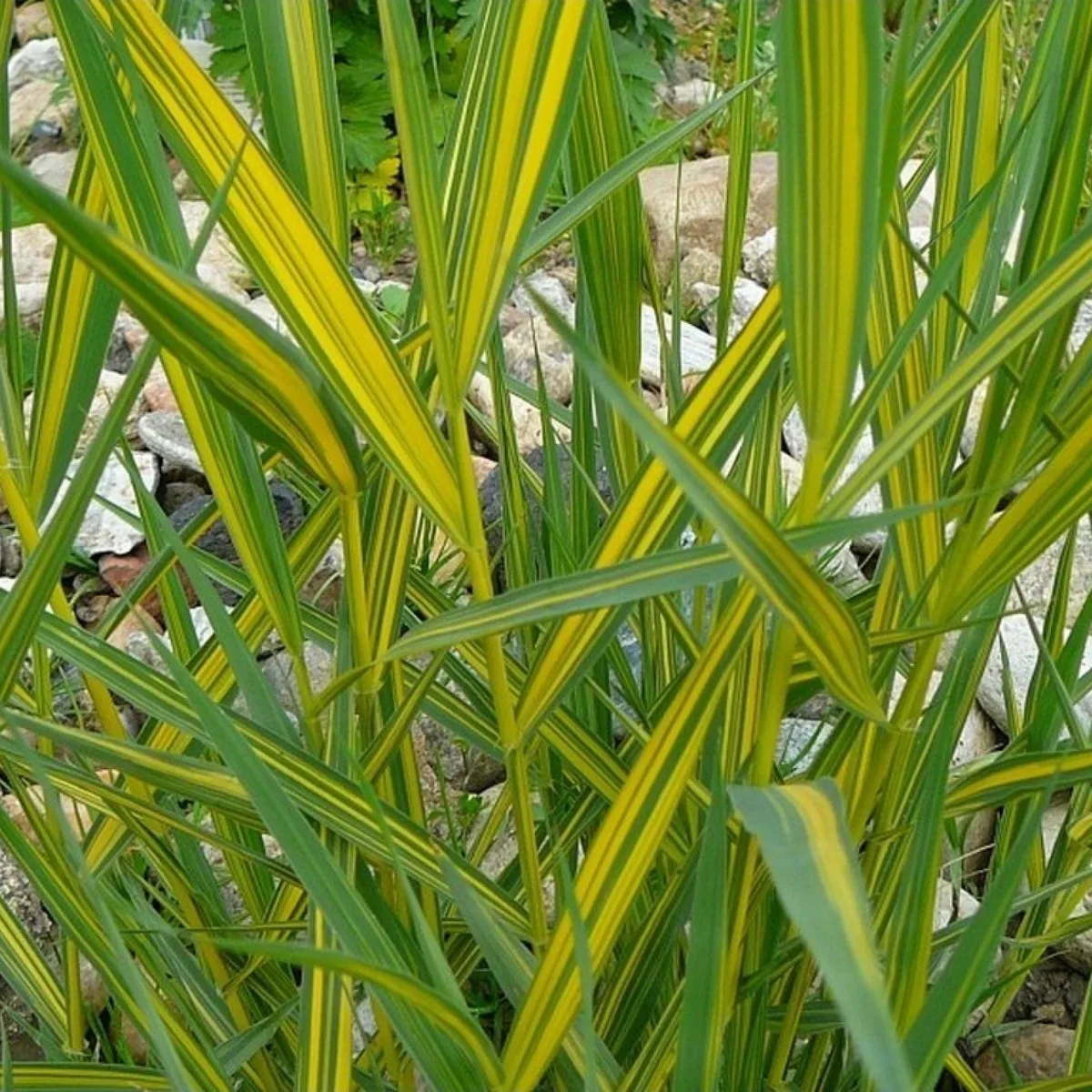
A rapidly-spreading deciduous grass that will form an extensive colony of erect, leafy stems to 2m. Drooping, linear leaves with yellow variegation turn light brown in autumn, and terminal dark purple flowering panicles are borne from late summer
Scientific classification
- Species
- reed 'Variegatus' (Phragmites australis 'Variegatus')
- Genus
- Phragmites
- Family
- Poaceae
- Order
- Poales
- Class
- Liliopsida
- Phylum
- Magnoliophyta
- Information to be completed
- Toxicity
- Aquatic · Herbaceous Perennial · Bogs
- Plant type
- 1.5-2.5 metres
- Height
- 2.5-4 metres
- Spread
- Deciduous
- Foliage
- Columnar upright
- Habit
- Autumn · Spring · Summer
- Season of interest
- Full sun
- Sunlight
- Information to be completed
- Ideal temperature









reed 'Variegatus' pictures
Distribution of reed 'Variegatus'
Distribution map
- Native
- Introduced
- Cultivated
Source:WCVP v16 · Royal Botanic Gardens, Kew · CC BY 3.0 · Boundaries:WGSRPD / TDWG
reed 'Variegatus' care guide
- Moderate regular watering, avoid prolonged drought and stagnant waterlogging
- Watering
- Full sun
- Sunlight

Watering
Moderate regular watering, avoid prolonged drought and stagnant waterlogging
Fertilizing
 Fertilizing
Balanced perennial feed every four weeks spring through summer growth
Pruning
 Pruning
Cut back in autumn or winter
Propagation
 Propagation
Divide in early spring or summer
Growing
 Growing
Unlike the green-leaved forms, this particular cultivar of reed is suited not only to wetlands, but may also be grown in moisture retentive sites where it is less vigorous, though still has the potential to become a nuisance if not managed well
Common pests and diseases
Diseases
Generally disease-free
Pests
Generally pest-free
Explore the plant health library →




