
Acer davidii 'Rosalie'
Also known as: Information to be completed
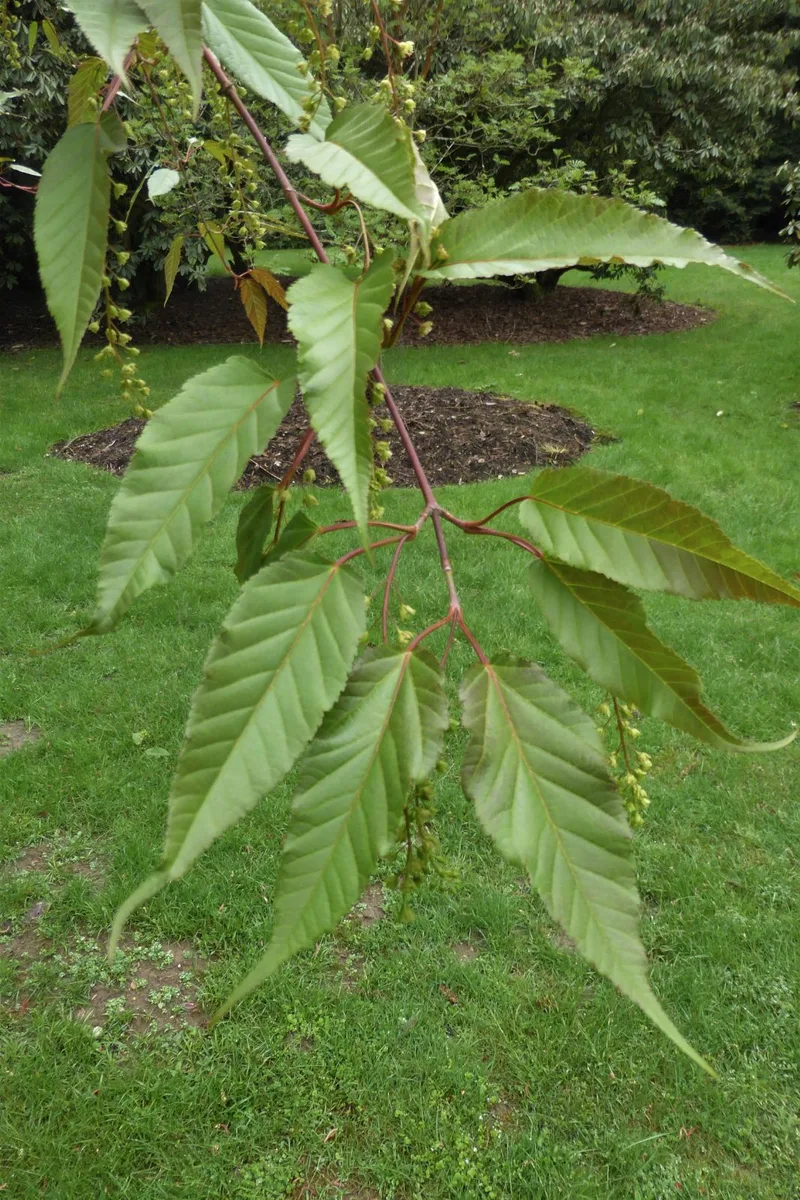
A deciduous tree, up to 10m high in 20 years, with young shoots tinted purple in winter, and olive green mature bark strongly streaked with white. Long, tapered leaves emerge glossy dark red and develop to green, before turning rich yellow in autumn. Pendent clusters of small yellow-green flowers are produced in spring, followed by winged seeds
Scientific classification
- Species
- Acer davidii 'Rosalie' (Acer davidii 'Rosalie')
- Genus
- Acer
- Family
- Sapindaceae
- Order
- Sapindales
- Class
- Magnoliopsida
- Phylum
- Magnoliophyta
- Fruit are ornamental - not to be eaten. Wear gloves and other protective equipment when handling
- Toxicity
- Trees
- Plant type
- 8-12 metres
- Height
- 4-8 metres
- Spread
- Deciduous
- Foliage
- Columnar upright
- Habit
- Autumn · Spring · Summer
- Season of interest
- Full sun · Partial shade
- Sunlight
- Information to be completed
- Ideal temperature









Acer davidii 'Rosalie' pictures
Distribution of Acer davidii 'Rosalie'
Distribution map
- Native
- Introduced
- Cultivated
Source:WCVP v16 · Royal Botanic Gardens, Kew · CC BY 3.0 · Boundaries:WGSRPD / TDWG
Toxicity
Fruit are ornamental - not to be eaten. Wear gloves and other protective equipment when handling
Acer davidii 'Rosalie' care guide
- Moderate regular watering, young maple needs consistent mild moisture
- Watering
- Full sun · Partial shade
- Sunlight

Watering
Moderate regular watering, young maple needs consistent mild moisture
Fertilizing
 Fertilizing
Deciduous tree diluted feed one slow dose each early spring annually
Pruning
 Pruning
Little pruning is needed. Remove diseased, damaged, crowded or crossing shoots and unwanted growth. Prune only from late autumn to mid-winter.
Propagation
 Propagation
Propagate by softwood cuttings, layering or grafting
Growing
 Growing
Grow in moisture-retentive, well-drained soil, in a sheltered position with protection from drying winds. Thrives in part shade, but will tolerate full sun if soil is reliably moist. Mulch in spring to improve moisture retention
Common pests and diseases
Diseases
May be susceptible to Verticillium wilt, Acer leaf scorch and honey fungus
Pests
May be susceptible to aphids, leafhoppers, glasshouse red spider mite, scale insects, caterpillars and rose leaf-rolling sawfly, large rose sawfly. Also rabbits and deer can cause damage
Explore the plant health library →




