
peony 'Black Pirate'
Also known as: Information to be completed
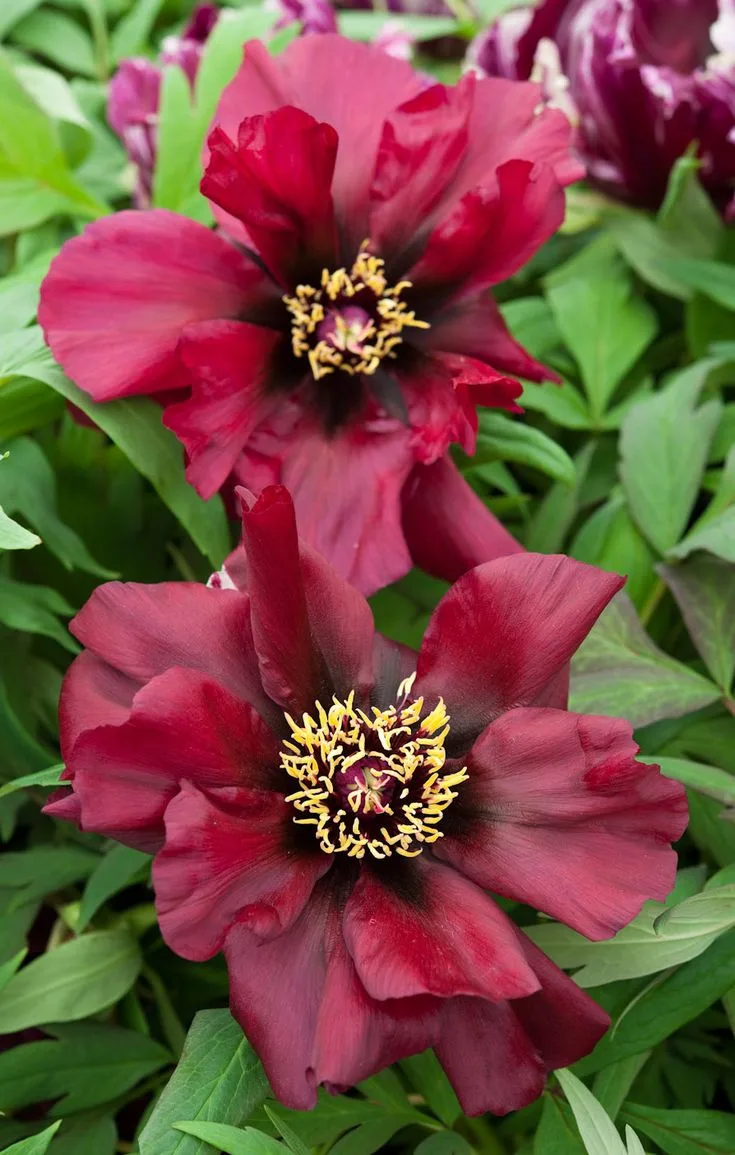
An upright, branching, deciduous shrub with dissected, finely textured, dark green leaves. Large and showy, spicily scented, funnel-shaped, semi-double flowers borne from late spring into early summer have wavy, deep red petals with a golden yellow centre
Scientific classification
- Species
- peony 'Black Pirate' (Paeonia 'Black Pirate')
- Genus
- Paeonia
- Family
- Paeoniaceae
- Order
- Saxifragales
- Class
- Magnoliopsida
- Phylum
- Magnoliophyta
- Information to be completed
- Toxicity
- Shrubs
- Plant type
- 1.5-2.5 metres
- Height
- 1.5-2.5 metres
- Spread
- Deciduous
- Foliage
- Bushy
- Habit
- Spring · Summer · Autumn
- Season of interest
- Full sun · Partial shade
- Sunlight
- Information to be completed
- Ideal temperature









peony 'Black Pirate' pictures
peony 'Black Pirate' care guide
- Deep watering in dry spells, mulch to retain underground moisture
- Watering
- Full sun · Partial shade
- Sunlight

Watering
Deep watering in dry spells, mulch to retain underground moisture
Fertilizing
 Fertilizing
Organic rose and peony fertilizer twice yearly spring and fall
Pruning
 Pruning
Little pruning is needed. Remove diseased, damaged, crowded or crossing shoots and unwanted growth. Timing depends on the plant: generally late winter or early spring; plants prone to bleeding and deciduous magnolias need different timing, and deciduous azaleas and lilacs are pruned after flowering.
Propagation
 Propagation
Propagate by grafting, from a semi-ripe cutting or layering
Growing
 Growing
Will grow well in fertile, humus-rich, moist but well-drained soil in full sun or partial shade in a sheltered position. Plant in autumn, add fertiliser in spring to promote good growth and mulch avoiding the stem area. Irrigate regularly until the plant becomes established after which it should not require routine watering. See tree peony cultivation for more details.
Common pests and diseases
Diseases
May be susceptible to a virus, honey fungus, Verticillium wilt, peony leaf blotch and peony wilt
Pests
May be susceptible to leaf and bud eelworm and soil-dwelling swift moth caterpillar
Explore the plant health library →




