
Pinus cembra 'Stricta'
Also known as: Information to be completed
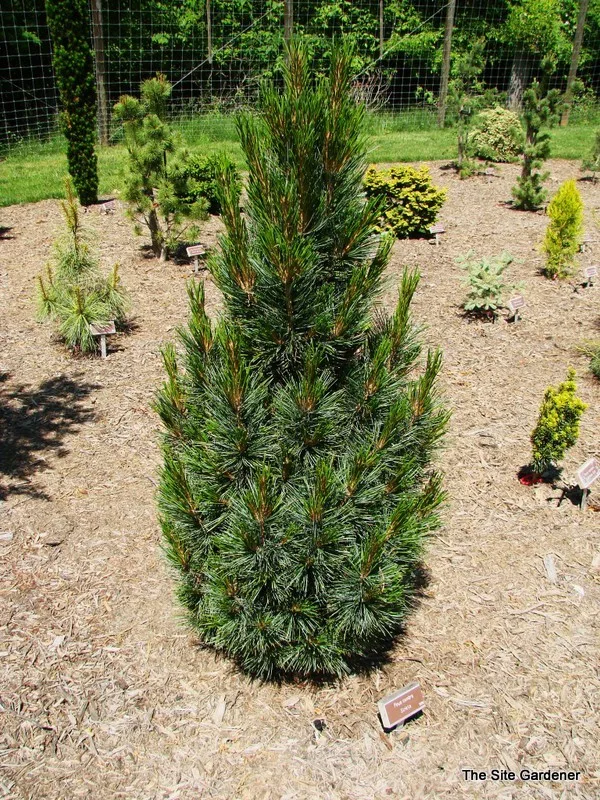
A slow growing, fastigiate form of the typical species, growing into a narrowly conical shrub up to 6m (20ft) tall and a spread in excess of 2.5m (8ft) when mature. The evergreen, dark-green needles are soft, thin, glossy and densely produced, giving the tree a ruffled texture from a distance. The tree does not typically have a clear, visible trunk until quite old, but instead the canopy exists from the tree's apex to ground level, with the tree retaining its lower branches for much longer than other pines. The tree is primarily grown for its architectural shape and texture as the bark and cones are of little ornamental significance
Scientific classification
- Species
- Pinus cembra 'Stricta' (Pinus cembra 'Stricta')
- Genus
- Pinus
- Family
- Pinaceae
- Information to be completed
- Toxicity
- Trees · Conifers
- Plant type
- 8-12 metres
- Height
- 2.5-4 metres
- Spread
- Evergreen
- Foliage
- Columnar upright
- Habit
- Spring · Summer · Autumn · Winter
- Season of interest
- Full sun
- Sunlight
- Information to be completed
- Ideal temperature









Pinus cembra 'Stricta' pictures
Distribution of Pinus cembra 'Stricta'
Distribution map
Information to be completed
Information to be completed
Culture
Information to be completed
Toxicity
Information to be completed
Quick identification of Pinus cembra 'Stricta'
Information to be completed
Pinus cembra 'Stricta' care guide
- Deep occasional watering with excellent drainage, less once established
- Watering
- Full sun
- Sunlight
- Information to be completed
- Ideal temperature

Watering
Deep occasional watering with excellent drainage, less once established
Fertilizing
 Fertilizing
Light conifer feed once yearly in early spring only
Pruning
 Pruning
No pruning required
Propagation
 Propagation
Propagate by grafting
Growing
 Growing
Grow in well-drained, preferably neutral to acidic soil in full sun
People also ask
Information to be completed
Common pests and diseases
Diseases
May be susceptible to honey fungus and needle cast diseases
Pests
May be susceptible to adelgids, conifer aphid, sawfly larvae, and pine shoot moth
Explore the plant health library →




