
magnolia 'Peter Veitch'
Also known as: Information to be completed
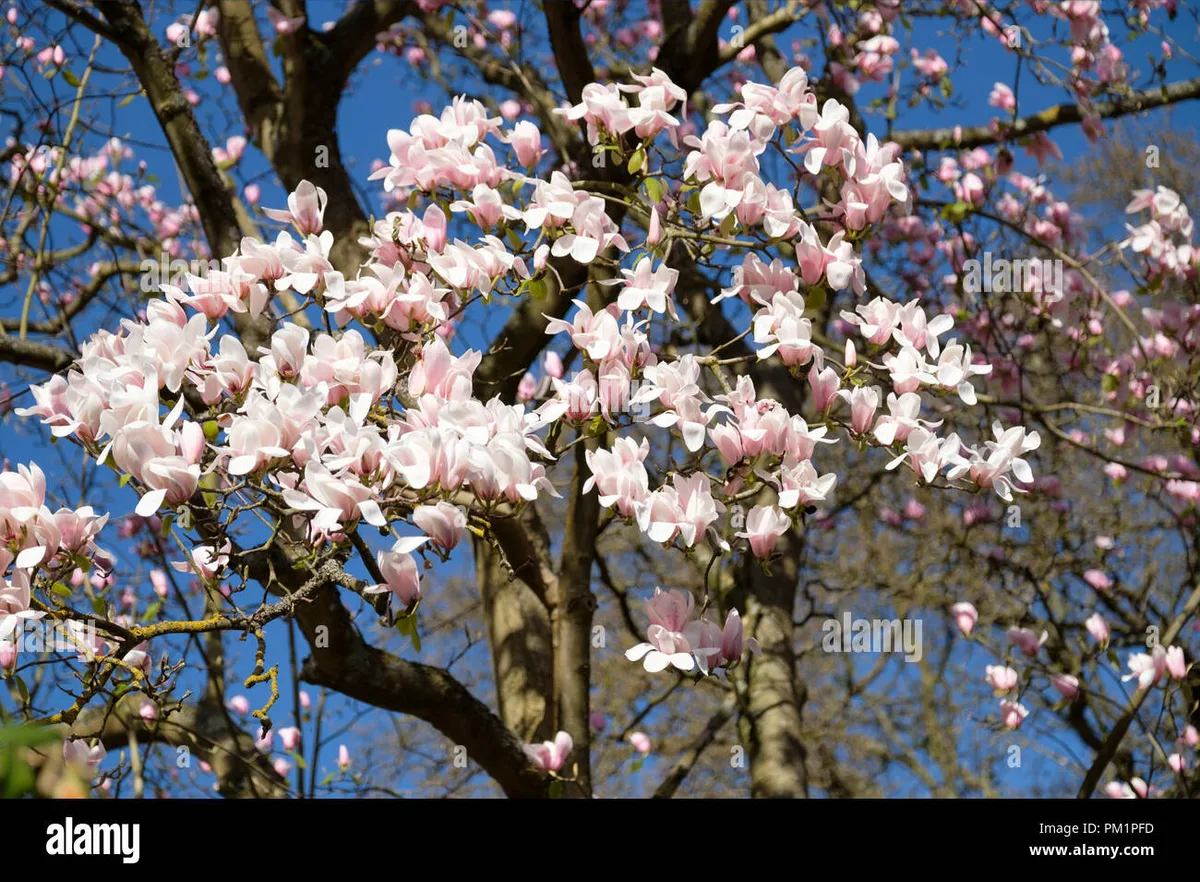
Large, upright, deciduous tree about 30m in height, with purple-green branches and juvenile leaves, the leaves are dark green when mature and to 30cm long. Goblet-shaped pale pink flowers, 15cm long and shaded to white at the petal tips, are produced on bare branches in mid-spring
Scientific classification
- Species
- magnolia 'Peter Veitch' (Magnolia × veitchii 'Peter Veitch')
- Genus
- Magnolia
- Family
- Magnoliaceae
- Order
- Magnoliales
- Class
- Magnoliopsida
- Phylum
- Magnoliophyta
- Information to be completed
- Toxicity
- Trees
- Plant type
- Information to be completed
- Height
- Information to be completed
- Spread
- Deciduous
- Foliage
- Columnar upright
- Habit
- Spring · Summer · Autumn
- Season of interest
- Full sun · Partial shade
- Sunlight
- Information to be completed
- Ideal temperature









magnolia 'Peter Veitch' pictures
magnolia 'Peter Veitch' care guide
- Moderate regular watering, allowing brief slight drying between soakings
- Watering
- Full sun · Partial shade
- Sunlight

Watering
Moderate regular watering, allowing brief slight drying between soakings
Fertilizing
 Fertilizing
Balanced perennial feed every four weeks from spring through summer
Pruning
 Pruning
Magnolia pruning should be carried out in midsummer when in full leaf if necessary. See magnolia pruning
Propagation
 Propagation
Propagate by softwood cuttings from late spring to early summer or semi-ripe cuttings from late summer to autumn
Growing
 Growing
Grow in moist but well-drained neutral to acid soil in full sun or partial shade with shelter from cold winds. Flowers may be damaged by late frosts. See magnolia cultivation for further advice
Common pests and diseases
Diseases
May be susceptible to coral spot, phytophthora, grey moulds, honey fungus, a virus or fungal leaf spot
Pests
May be susceptible to scale insects, horse chestnut scale and capsid bug
Explore the plant health library →




