
Hyacinthus orientalis 'King of the Blues'
Also known as: Information to be completed
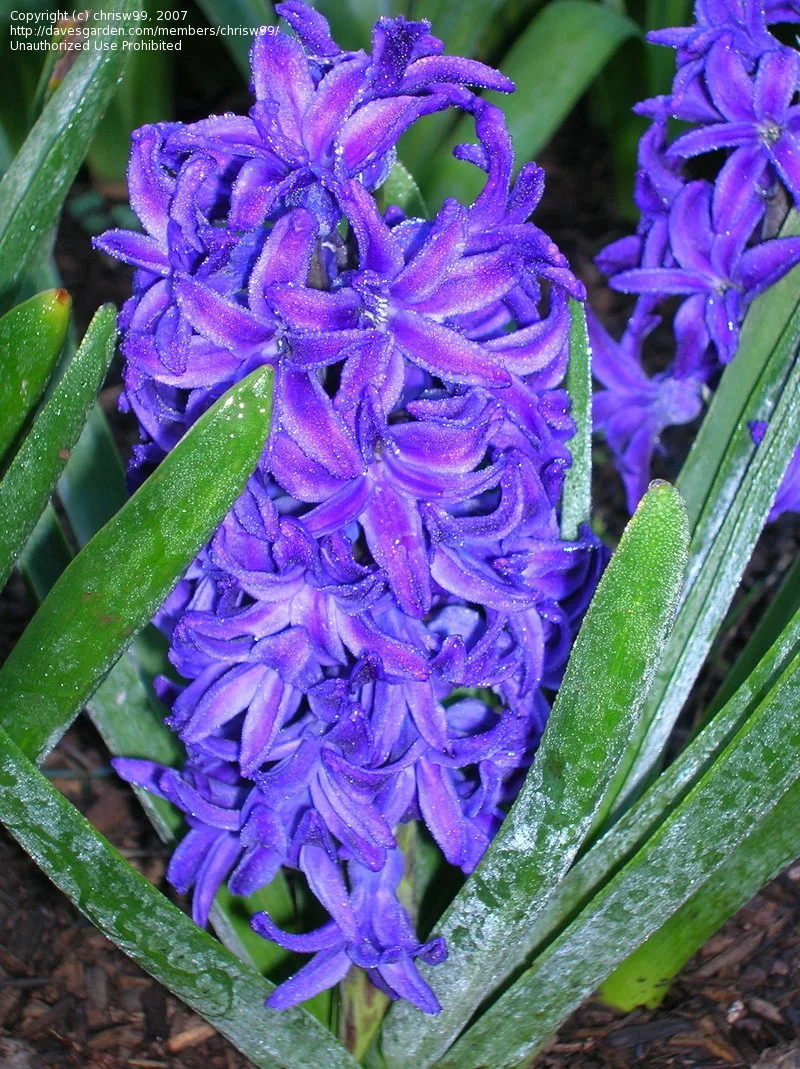
A bulbous perennial with upright, lance-shaped grey-green leaves. Single, upright tubular racemes of star-shaped fragrant dark purple-black flowers with a darker stripe, appear in the March to April if grown outdoors or around February time if grown indoors
Scientific classification
- Species
- Hyacinthus orientalis 'King of the Blues' (Hyacinthus orientalis 'King of the Blues')
- Genus
- Hyacinthus
- Family
- Asparagaceae
- Order
- Asparagales
- Class
- Liliopsida
- Phylum
- Magnoliophyta
- Skin irritant. Wear gloves and other protective equipment when handling
- Toxicity
- Bulbs · Conservatory Greenhouse · Houseplants
- Plant type
- 0.1-0.5 metres
- Height
- 0.1-0.5 metres
- Spread
- Deciduous
- Foliage
- Columnar upright
- Habit
- Spring
- Season of interest
- Full sun · Partial shade
- Sunlight
- Information to be completed
- Ideal temperature









Hyacinthus orientalis 'King of the Blues' pictures
Distribution of Hyacinthus orientalis 'King of the Blues'
Distribution map
- Native
- Introduced
- Cultivated
Source:WCVP v16 · Royal Botanic Gardens, Kew · CC BY 3.0 · Boundaries:WGSRPD / TDWG
Toxicity
Skin irritant. Wear gloves and other protective equipment when handling
Hyacinthus orientalis 'King of the Blues' care guide
- Moderate regular watering, stop irrigation after foliage yellows fully
- Watering
- Full sun · Partial shade
- Sunlight

Watering
Moderate regular watering, stop irrigation after foliage yellows fully
Fertilizing
 Fertilizing
Weak hyacinth bulb nutrient mix biweekly pre-bloom growth phase
Pruning
 Pruning
No pruning required
Propagation
 Propagation
Propagate by removing offsets when dormant in summer
Growing
 Growing
Plant 10cm deep in autumn in any moderately fertile, humus-rich, well-drained soil. Will not flower in full shade. Protect container grown bulbs from excessive winter wet. Bulbs for indoor displays need to be specially prepared; plant labels will normally indicate whether the bulb is suitable for indoor use. See hyacinth cultivation
Common pests and diseases
Diseases
Generally disease-free
Pests
May be susceptible to slugs and snails
Explore the plant health library →




