
Bletilla striata f. gebina
Also known as: Information to be completed
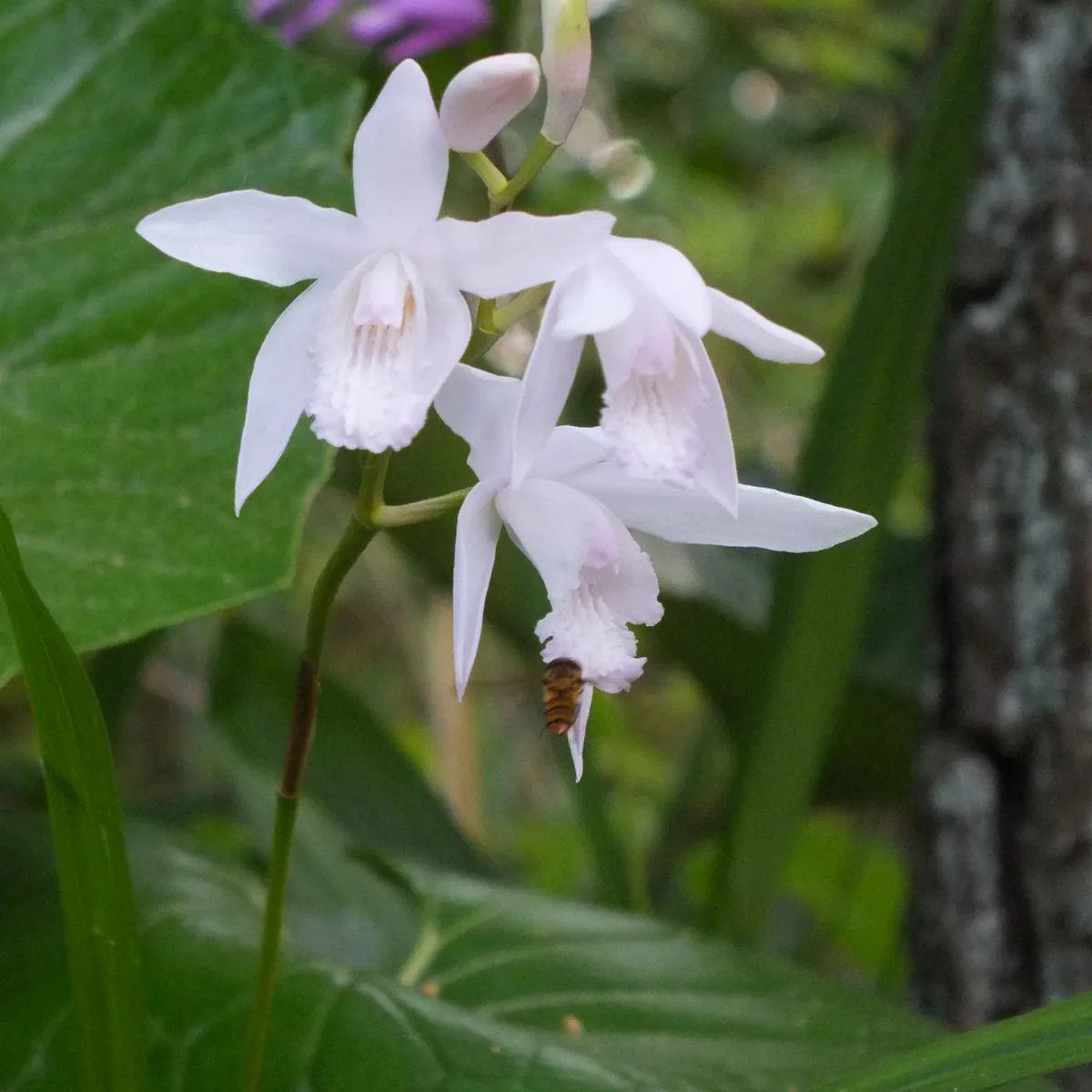
A hardy terrestrial (ground dwelling) orchid with flattened pseudobulbs and wide, lance-shaped, corrugated, green leaves. From spring to early summer it produces starry, white flowers, 2.5cm (1in) across, with a characteristic pale lilac lip.
Scientific classification
- Species
- Bletilla striata f. gebina (Bletilla striata f. gebina)
- Genus
- Bletilla
- Family
- Orchidaceae
- Order
- Asparagales
- Class
- Liliopsida
- Phylum
- Tracheophyta
- Information to be completed
- Toxicity
- Herbaceous Perennial
- Plant type
- 0.1-0.5 metres
- Height
- 0.5-1 metres
- Spread
- Deciduous
- Foliage
- Clump forming
- Habit
- Spring · Summer
- Season of interest
- Partial shade
- Sunlight
- Information to be completed
- Ideal temperature









Bletilla striata f. gebina pictures
Distribution of Bletilla striata f. gebina
Distribution map
- Native
- Introduced
- Cultivated
Source:WCVP v16 · Royal Botanic Gardens, Kew · CC BY 3.0 · Boundaries:WGSRPD / TDWG
Bletilla striata f. gebina care guide
- Moderate regular watering, allowing brief slight drying between soakings
- Watering
- Partial shade
- Sunlight

Watering
Moderate regular watering, allowing brief slight drying between soakings
Fertilizing
 Fertilizing
Balanced perennial feed every four weeks from spring through summer
Pruning
 Pruning
No pruning required. Remove withered leaves in autumn or late winter.
Propagation
 Propagation
Propagate by division in early spring.
Growing
 Growing
Under glass, grow in loam-based potting compost with additional leaf mould, in bright filtered or bright indirect light. In summer, water liberally, applying a quarter-strength fertiliser every third watering. Keep dry in winter. Outdoors, grow in moist, well-drained humus-rich soil in a sheltered site, and provide partial shade in summer. Mulch in winter, or alternatively, lift and store in a dry and frost-free place.
Common pests and diseases
Diseases
Generally disease-free
Pests
May be susceptible to glasshouse red spider mite, glasshouse whitefly, aphids and mealybugs.
Explore the plant health library →




