
Acer palmatum 'Waterfall'
Also known as: Information to be completed
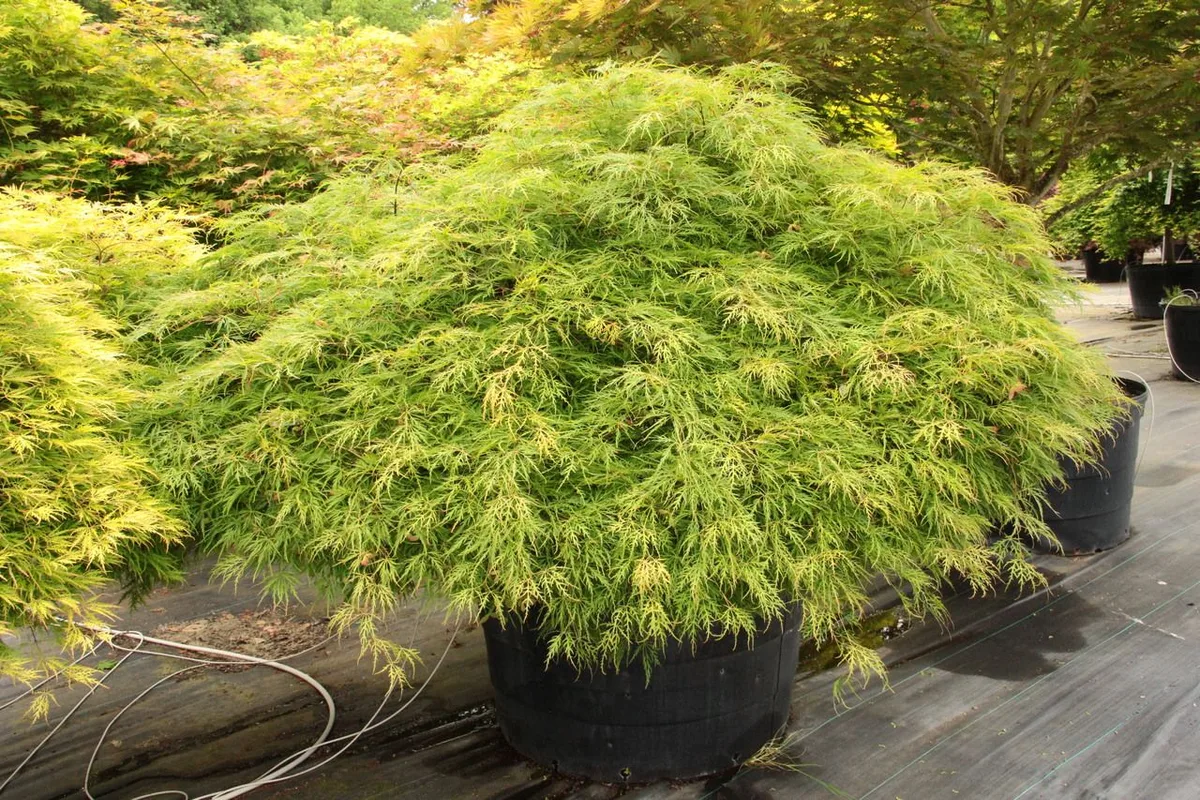
A deciduous shrub or small tree, to around 2.5m high, with a weeping habit forming a dense mound of lacy foliage. Leaves are bright green, and deeply cut into narrow, feathery lobes, turning bright shades of yellow, orange and red in the autumn
Scientific classification
- Species
- Acer palmatum 'Waterfall' (Acer palmatum 'Waterfall')
- Genus
- Acer
- Family
- Sapindaceae
- Order
- Sapindales
- Class
- Magnoliopsida
- Phylum
- Magnoliophyta
- Information to be completed
- Toxicity
- Shrubs · Trees
- Plant type
- 1.5-2.5 metres
- Height
- 2.5-4 metres
- Spread
- Deciduous
- Foliage
- Pendulous weeping
- Habit
- Autumn · Spring · Summer
- Season of interest
- Full sun · Partial shade
- Sunlight
- Information to be completed
- Ideal temperature









Acer palmatum 'Waterfall' pictures
Acer palmatum 'Waterfall' care guide
- Moderate regular watering, allowing brief slight drying between soakings
- Watering
- Full sun · Partial shade
- Sunlight

Watering
Moderate regular watering, allowing brief slight drying between soakings
Fertilizing
 Fertilizing
Balanced perennial feed every four weeks from spring through summer
Pruning
 Pruning
Little pruning is needed. Remove diseased, damaged, crowded or crossing shoots and unwanted growth. Prune only from late autumn to mid-winter.
Propagation
 Propagation
Propagate by layering or grafting
Growing
 Growing
Grow in moisture-retentive, well-drained, ideally slightly acidic soil, in a sheltered position with protection from drying winds. Thrives in part shade, though some sun is needed to develop the leaf colour; will tolerate full sun if soil is reliably moist. Mulch in spring, especially when grown in containers, to improve moisture retention. See Japanese maples cultivation
Common pests and diseases
Diseases
May be susceptible to Verticillium wilt, Acer leaf scorch and honey fungus
Pests
May be susceptible to Acer gall mite, aphids, caterpillars and horse chestnut scale
Explore the plant health library →




