
Magnolia × proctoriana
Also known as: Information to be completed
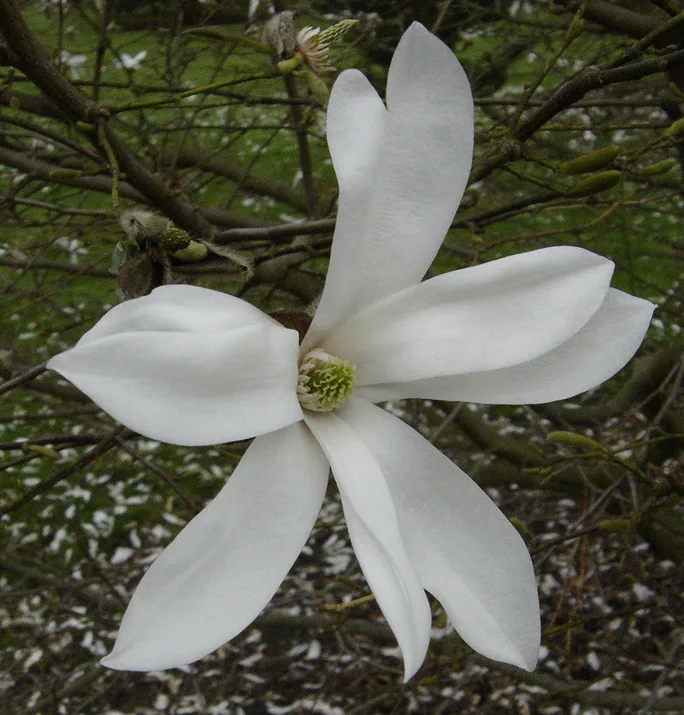
Large, deciduous, very floriferous shrub or small tree with aromatic, oval mid-green leaves, to 12cm long, with pale undersides. In mid-spring, before the leaves open, it produces star-shaped, white flowers, up to 10cm across, with six to 12 petals
Scientific classification
- Species
- Magnolia × proctoriana (Magnolia × proctoriana)
- Genus
- Magnolia
- Family
- Magnoliaceae
- Order
- Magnoliales
- Class
- Magnoliopsida
- Phylum
- Magnoliophyta
- Information to be completed
- Toxicity
- Trees
- Plant type
- 4-8 metres
- Height
- 4-8 metres
- Spread
- Deciduous
- Foliage
- Bushy
- Habit
- Spring · Summer · Autumn
- Season of interest
- Full sun · Partial shade
- Sunlight
- Information to be completed
- Ideal temperature









Magnolia × proctoriana pictures
Distribution of Magnolia × proctoriana
Distribution map
- Native
- Introduced
- Cultivated
Source:WCVP v16 · Royal Botanic Gardens, Kew · CC BY 3.0 · Boundaries:WGSRPD / TDWG
Magnolia × proctoriana care guide
- Moderate regular watering, allowing brief slight drying between soakings
- Watering
- Full sun · Partial shade
- Sunlight

Watering
Moderate regular watering, allowing brief slight drying between soakings
Fertilizing
 Fertilizing
Balanced perennial feed every four weeks from spring through summer
Pruning
 Pruning
Minimal pruning required, see magnolia pruning. Deciduous magnolias should only be pruned between midsummer and early autumn
Propagation
 Propagation
Propagate by softwood or greenwood cuttings from late spring to early summer or by semi-hardwood cuttings from late summer to autumn
Growing
 Growing
Grow in moist, humus-rich, well-drained neutral to acid soil in sun or part shade with shelter from cold winds. Late frosts may damage flower buds. See magnolia cultivation
Common pests and diseases
Diseases
May be susceptible to coral spot, phytophthora, grey moulds, honey fungus, a virus or fungal leaf spot
Pests
May be susceptible to scale insects, horse chestnut scale and capsid bug
Explore the plant health library →




