
fuchsia 'Baby Blue Eyes'
Also known as: Information to be completed
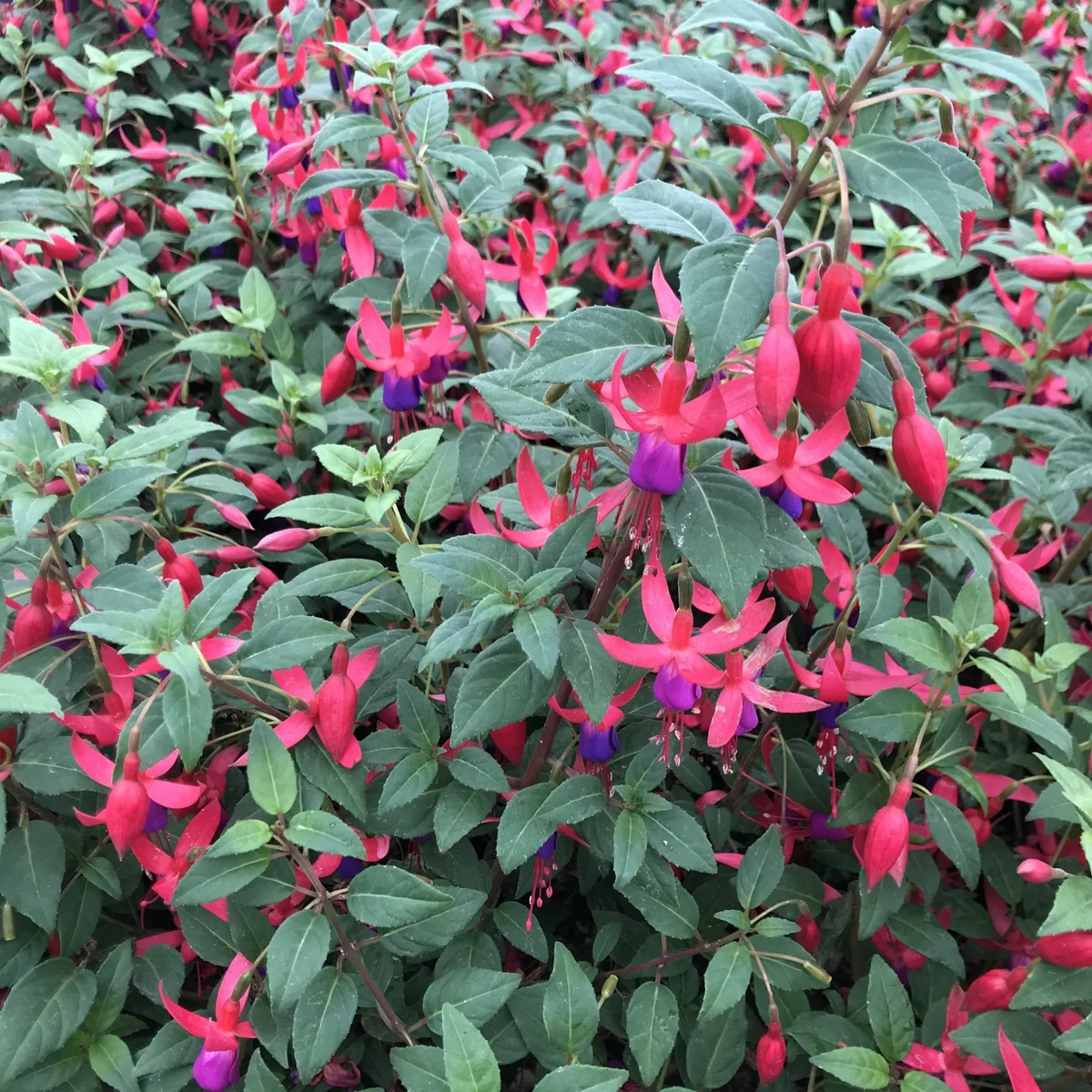
A cultivar with an erect habit that reaches about 90cm in height with a spread of 110cm. Leaves are small, held in pairs or whorls of three and the stems, red-flushed. The drooping flowers are held in pairs from the leaf axils. The purplish-red sepals become very reflexed. The corolla tube is violet blue with the petals shaded light red at their base
Scientific classification
- Species
- fuchsia 'Baby Blue Eyes' (Fuchsia 'Baby Blue Eyes')
- Genus
- Fuchsia
- Family
- Onagraceae
- Order
- Myrtales
- Class
- Magnoliopsida
- Phylum
- Tracheophyta
- Fruit are ornamental - not to be eaten. Wear gloves and other protective equipment when handling
- Toxicity
- Shrubs
- Plant type
- 0.5-1 metres
- Height
- 1-1.5 metres
- Spread
- Deciduous
- Foliage
- Bushy
- Habit
- Spring · Summer · Autumn
- Season of interest
- Full sun · Partial shade
- Sunlight
- Information to be completed
- Ideal temperature









fuchsia 'Baby Blue Eyes' pictures
Toxicity
Fruit are ornamental - not to be eaten. Wear gloves and other protective equipment when handling
fuchsia 'Baby Blue Eyes' care guide
- Uniformly moist potting soil, mild surrounding air humidity
- Watering
- Full sun · Partial shade
- Sunlight

Watering
Uniformly moist potting soil, mild surrounding air humidity
Fertilizing
 Fertilizing
Diluted fuchsia blooming feed biweekly spring through autumn
Pruning
 Pruning
Shorten last year's flowering stems to one or two buds from the older woody framework. Remove thin, weak and dead shoots. Prune in early to mid-spring as growth resumes; avoid winter pruning that exposes new shoots to frost.
Propagation
 Propagation
Propagate by softwood or semi-hardwood cuttings
Growing
 Growing
Can be grown outdoors in moist, fertile soil. Hardy outside in most regions. Plant the base of the stem 5cm below the soil surface and provide a deep winter mulch and shelter from cold drying winds. See hardy fuchsia cultivation
Common pests and diseases
Diseases
May be susceptible to fuchsia rust, grey moulds and honey fungus (rarely)
Pests
May be susceptible to aphids, fuchsia gall mite, capsid bug and vine weevil
Explore the plant health library →




