
commonName:"clematis 'Mrs Spencer Castle'"
Also known as: Information to be completed
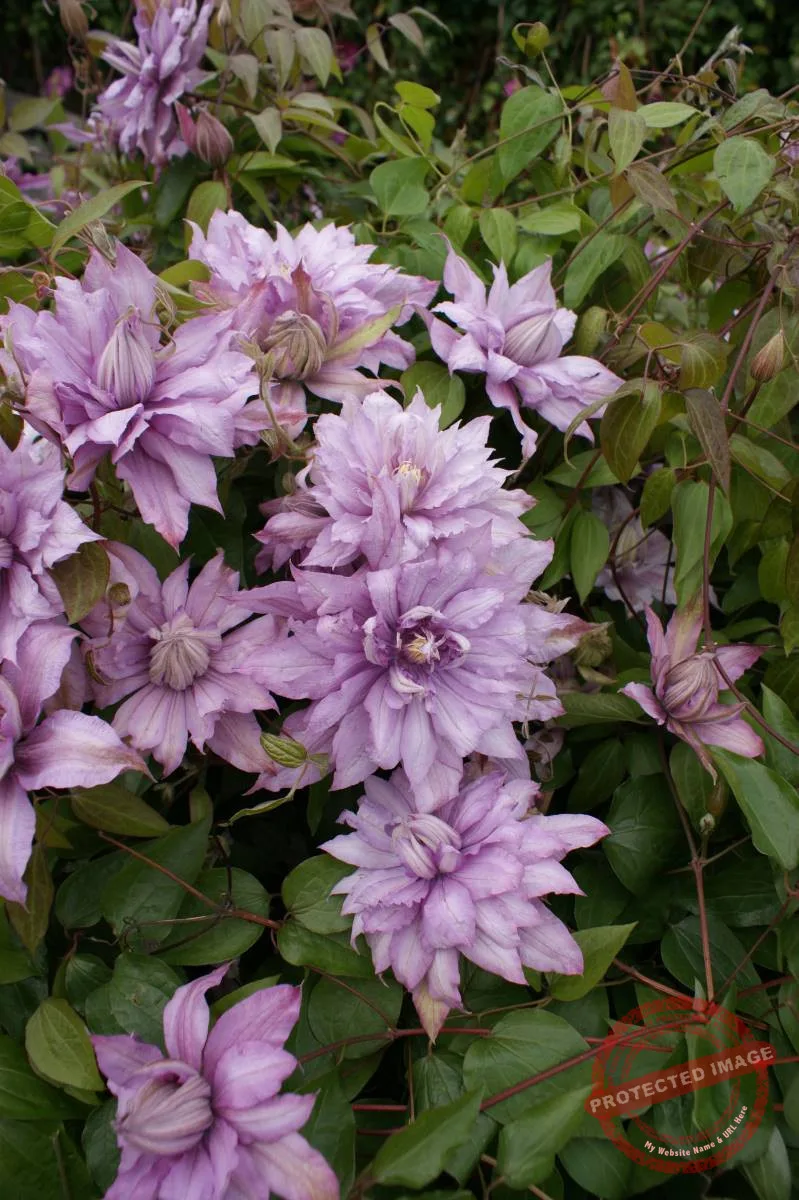
An early-flowering deciduous perennial climber with dark green leaves. Large, semi-double lilac-pink flowers with yellow stamens appear in early summer followed by a second flush of single blooms in late summer to autumn
Scientific classification
- Species
- commonName:"clematis 'Mrs Spencer Castle'" (Clematis 'Mrs Spencer Castle')
- Genus
- Clematis
- Family
- Ranunculaceae
- Order
- Ranunculales
- Class
- Magnoliopsida
- Phylum
- Tracheophyta
- Skin irritant. Wear gloves and other protective equipment when handling
- Toxicity
- Climber Wall Shrub · Herbaceous Perennial
- Plant type
- 1.5-2.5 metres
- Height
- 0.5-1 metres
- Spread
- Deciduous
- Foliage
- Climbing
- Habit
- Spring · Summer · Autumn
- Season of interest
- Full sun · Partial shade
- Sunlight
- Information to be completed
- Ideal temperature









commonName:"clematis 'Mrs Spencer Castle'" pictures
Toxicity
Skin irritant. Wear gloves and other protective equipment when handling
commonName:"clematis 'Mrs Spencer Castle'" care guide
- Water regularly, keeping roots cool and moist; avoid waterlogging around the crown.
- Watering
- Full sun · Partial shade
- Sunlight

Watering
Water regularly, keeping roots cool and moist; avoid waterlogging around the crown.
Fertilizing
 Fertilizing
Apply a high-phosphorus fertilizer once in early spring and again after the first flush.
Pruning
 Pruning
In late winter or early spring, remove weak or dead growth above healthy bud pairs without heavy pruning. After the first summer flowers, shorten some shoots to strong buds or sideshoots below the flowers to encourage another flush.
Propagation
 Propagation
Propagate by layering or semi-hardwood cuttings
Growing
 Growing
Plant in a moisture-retentive, well-drained soil, with the roots and base of the plant kept cool and shaded by other plants or a layer of pebbles at the base. Plant with the crown 5-8cm deep to encourage shoots to grow from below ground level. Good for scrambling up trees in a naturalistic setting. See clematis cultivation
Common pests and diseases
Diseases
May be susceptible to honey fungus (rarely), clematis wilt and clematis slime flux
Pests
May be susceptible to aphids, slugs, snails or caterpillars
Explore the plant health library →




