
Aubrieta 'Silberrand'
Also known as: Information to be completed
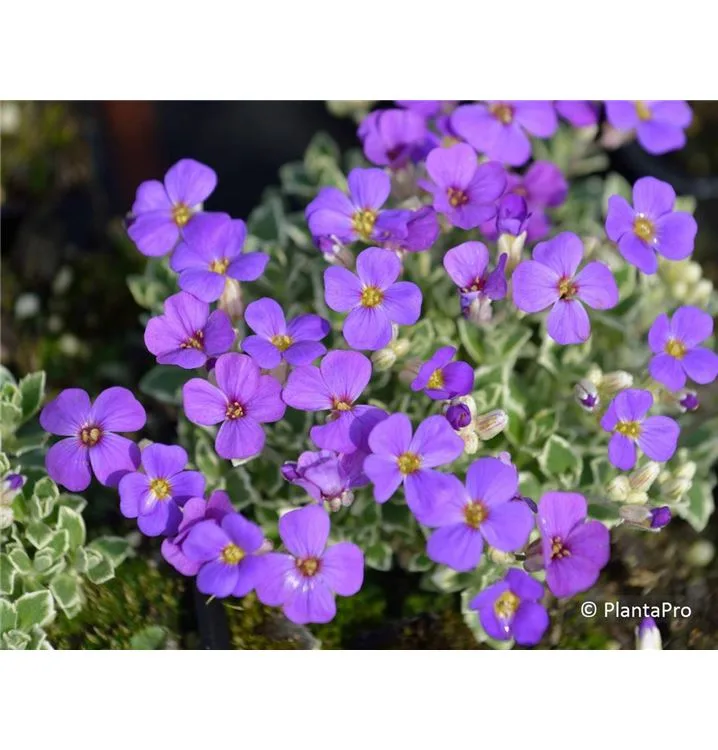
A slowly spreading, mound or mat-forming, low-growing evergreen perennial to about 10cm high, with small, hairy, variegated ovate and sometimes toothed mid-green to grey-green leaves with creamy-white edges. Bright blue-purple, four-petalled flowers are produced in short spikes from mid-spring to early summer.
Scientific classification
- Species
- Aubrieta 'Silberrand' (Aubrieta 'Silberrand')
- Genus
- Aubrieta
- Family
- Brassicaceae
- Information to be completed
- Toxicity
- Alpine Rockery
- Plant type
- Up to 10 cm
- Height
- 0.1-0.5 metres
- Spread
- Evergreen
- Foliage
- Matforming
- Habit
- Autumn · Winter · Spring · Summer
- Season of interest
- Full sun
- Sunlight
- Information to be completed
- Ideal temperature









Aubrieta 'Silberrand' pictures
Distribution of Aubrieta 'Silberrand'
Distribution map
Information to be completed
Information to be completed
Culture
Information to be completed
Toxicity
Information to be completed
Quick identification of Aubrieta 'Silberrand'
Information to be completed
Aubrieta 'Silberrand' care guide
- Moderate regular watering, allowing brief slight drying between soakings
- Watering
- Full sun
- Sunlight
- Information to be completed
- Ideal temperature

Watering
Moderate regular watering, allowing brief slight drying between soakings
Fertilizing
 Fertilizing
Balanced perennial feed every four weeks from spring through summer
Pruning
 Pruning
Cut back after flowering to maintain compactness
Propagation
 Propagation
Propagate by seed, softwood or semi-hardwood cuttings
Growing
 Growing
Best grown in well-drained soil in full sun but can tolerate light shade; an ideal plant for dry areas such as chalky slopes and on walls. Being hardy it is a useful container plant for spring colour
People also ask
Information to be completed
Common pests and diseases
Diseases
May be susceptible to white blister
Pests
May be susceptible to aphids, leaf and bud eelworms and flea beetles
Explore the plant health library →




