
lesser meadow rue 'Adiantifolium
Also known as: Information to be completed
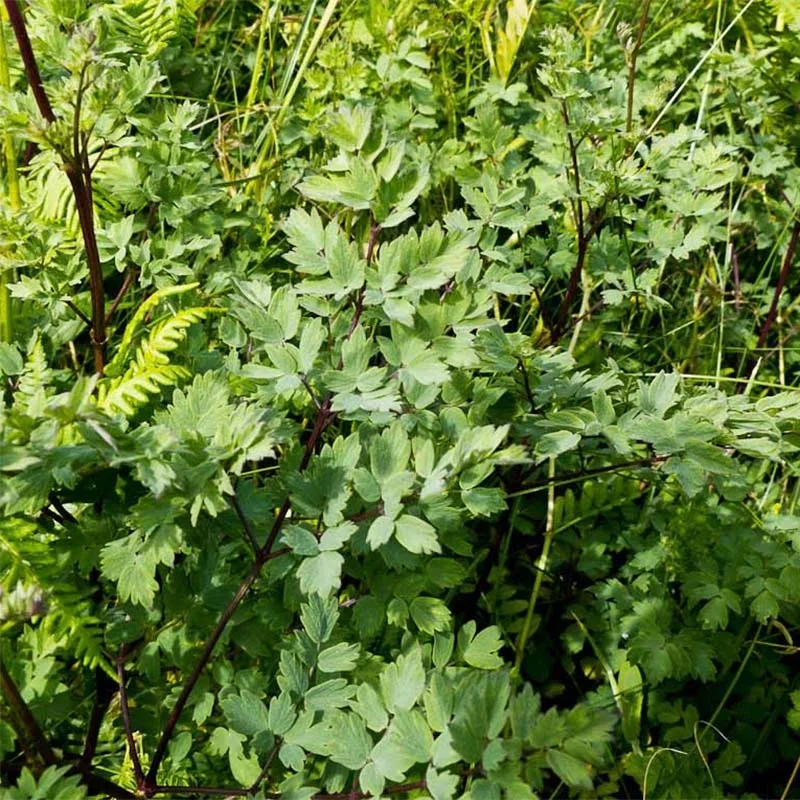
Produces finely divided bluish-green leaves composed of leaflets; small, nodding, then upward-facing yellow flowers are carried in open or dense sprays in early summer
Scientific classification
- Species
- lesser meadow rue 'Adiantifolium (Thalictrum minus 'Adiantifolium')
- Genus
- Thalictrum
- Family
- Ranunculaceae
- Order
- Ranunculales
- Class
- Magnoliopsida
- Phylum
- Magnoliophyta
- Contact with foliage may irritate the skin. Wear gloves and other protective equipment when handling
- Toxicity
- Herbaceous Perennial
- Plant type
- 0.5-1 metres
- Height
- 0.1-0.5 metres
- Spread
- Deciduous
- Foliage
- Clump forming
- Habit
- Spring · Summer · Autumn
- Season of interest
- Partial shade
- Sunlight
- Information to be completed
- Ideal temperature









lesser meadow rue 'Adiantifolium pictures
Distribution of lesser meadow rue 'Adiantifolium
Distribution map
- Native
- Introduced
- Cultivated
Source:WCVP v16 · Royal Botanic Gardens, Kew · CC BY 3.0 · Boundaries:WGSRPD / TDWG
Toxicity
Contact with foliage may irritate the skin. Wear gloves and other protective equipment when handling
lesser meadow rue 'Adiantifolium care guide
- Uniform mild soil dampness, do not let root ball fully dry out completely
- Watering
- Partial shade
- Sunlight

Watering
Uniform mild soil dampness, do not let root ball fully dry out completely
Fertilizing
 Fertilizing
Diluted meadow rue feed monthly all warm active growing months
Pruning
 Pruning
Cut down stems once flowering is over
Propagation
 Propagation
Propagate by seed in pots in a cold frame as soon as seed is ripe or in early spring - seed raised flowers may be variable. Propagate by division in spring as new growth begins
Growing
 Growing
Grow in moist, humus-rich soil in partial shade; ideal for a moist meadow garden or a wild border
Common pests and diseases
Diseases
Susceptible to powdery mildews in dry conditions
Pests
Slugs may be a problem
Explore the plant health library →




