
star jasmine 'Tricolor'
Also known as: Information to be completed
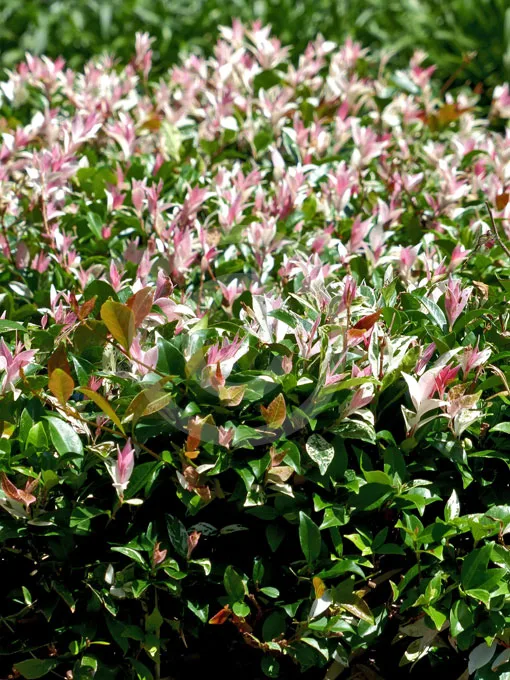
A slow-growing, woody climber with twining stems, evergreen, variegated leaves which are soft pink and cream when young, mature to dark green mottled with white, and turn reddish in winter, and very fragrant white flowers in late summer
Scientific classification
- Species
- star jasmine 'Tricolor' (Trachelospermum jasminoides 'Tricolor')
- Genus
- Trachelospermum
- Family
- Apocynaceae
- Order
- Gentianales
- Class
- Magnoliopsida
- Phylum
- Magnoliophyta
- Information to be completed
- Toxicity
- Climber Wall Shrub · Conservatory Greenhouse
- Plant type
- 2.5-4 metres
- Height
- 1.5-2.5 metres
- Spread
- Evergreen
- Foliage
- Climbing
- Habit
- Spring · Summer · Autumn · Winter
- Season of interest
- Full sun · Partial shade
- Sunlight
- 15 – 25 °C
- Ideal temperature









star jasmine 'Tricolor' pictures
Distribution of star jasmine 'Tricolor'
Distribution map
- Native
- Introduced
- Cultivated
Source:WCVP v16 · Royal Botanic Gardens, Kew · CC BY 3.0 · Boundaries:WGSRPD / TDWG
star jasmine 'Tricolor' care guide
- Moderate regular watering, allowing brief slight drying between soakings
- Watering
- Full sun · Partial shade
- Sunlight
- 15 – 25 °C
- Ideal temperature

Watering
Moderate regular watering, allowing brief slight drying between soakings
Fertilizing
 Fertilizing
Balanced perennial feed every four weeks from spring through summer
Pruning
 Pruning
Routine pruning is unnecessary; shorten overlong shoots to fit the available space. Prune in early spring.
Propagation
 Propagation
Propagate by semi-ripe cuttings with bottom heat in summer, or by layering in autumn
Growing
 Growing
Outdoors, grow in fertile, well-drained soil in full sun or partial shade, and provide shelter from cold, drying winds, for example by growing against a warm, sunny wall; in areas prone to severe frosts, grow in a cool greenhouse or conservatory in loam-based potting compost (such as John Innes No. 3) in full light with shade from hot sun and with good ventilation, water freely and apply a monthly balanced liquid fertilizer during the growing season, and water sparingly in winter
Common pests and diseases
Diseases
May be susceptible to honey fungus
Pests
May be susceptible to cushion scale, mealybugs and glasshouse red spider mite
Explore the plant health library →




