
apple 'Millicent Barnes'
Also known as: Information to be completed
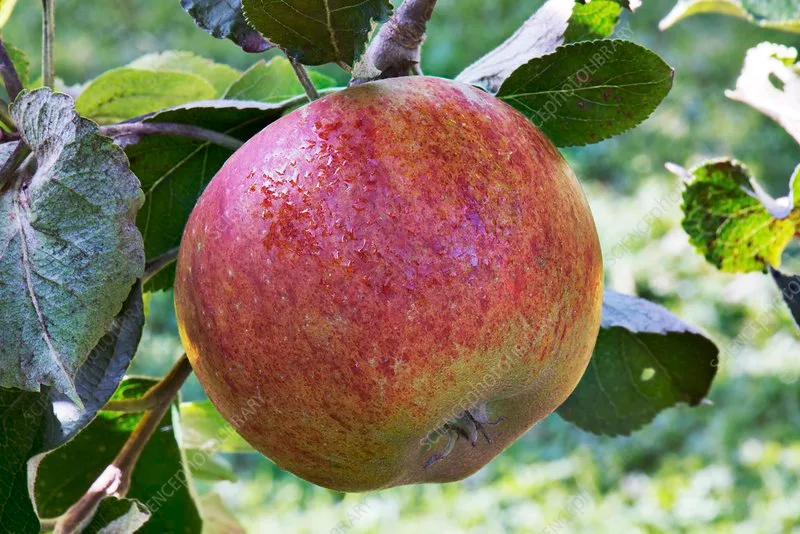
A mid-season, dessert apple with greenish-yellow skin, flushed and striped with red, and crisp, juicy, quite sharp, greenish-white flesh. A moderately vigorous, upright tree, producing a good crop, and requiring a group 2, 3 or 4 pollinator. Fruit is ready to pick in early autumn, and keeps until late autumn
Scientific classification
- Species
- apple 'Millicent Barnes' (Malus domestica 'Millicent Barnes')
- Genus
- Malus
- Family
- Rosaceae
- Order
- Rosales
- Class
- Magnoliopsida
- Phylum
- Magnoliophyta
- Information to be completed
- Toxicity
- Fruit Edible · Trees
- Plant type
- 4-8 metres
- Height
- 4-8 metres
- Spread
- Deciduous
- Foliage
- Bushy
- Habit
- Spring · Summer · Autumn
- Season of interest
- Full sun
- Sunlight
- Information to be completed
- Ideal temperature









apple 'Millicent Barnes' pictures
Distribution of apple 'Millicent Barnes'
Distribution map
- Native
- Introduced
- Cultivated
Source:WCVP v16 · Royal Botanic Gardens, Kew · CC BY 3.0 · Boundaries:WGSRPD / TDWG
apple 'Millicent Barnes' care guide
- Deep water root zone weekly, allow slight surface soil drying
- Watering
- Full sun
- Sunlight

Watering
Deep water root zone weekly, allow slight surface soil drying
Fertilizing
 Fertilizing
Spread fruit tree granular fertilizer early spring each growing year
Pruning
 Pruning
Prune according to chosen training method. See Apple pruning
Propagation
 Propagation
Propagate by grafting in mid-winter or budding in late summer. Fruit grown from pips will not resemble the parent
Growing
 Growing
Prefers a deep, fertile, moist but well-drained, neutral soil in a sheltered, sunny position. Will not thrive on very acid soils, shallow chalk soils or with shade for more than half the day. May require fruit thinning to improve fruit size and quality. See Apple cultivation
Common pests and diseases
Diseases
May be susceptible to apple canker, apple scab, blossom wilt, brown rot, fireblight, honey fungus and powdery mildews
Pests
May be susceptible to aphids, including woolly aphid and rosy apple aphid, fruit tree red spider mite, codling moth and other caterpillars
Explore the plant health library →




