
kiwi fruit 'Hayward'
Also known as: Information to be completed
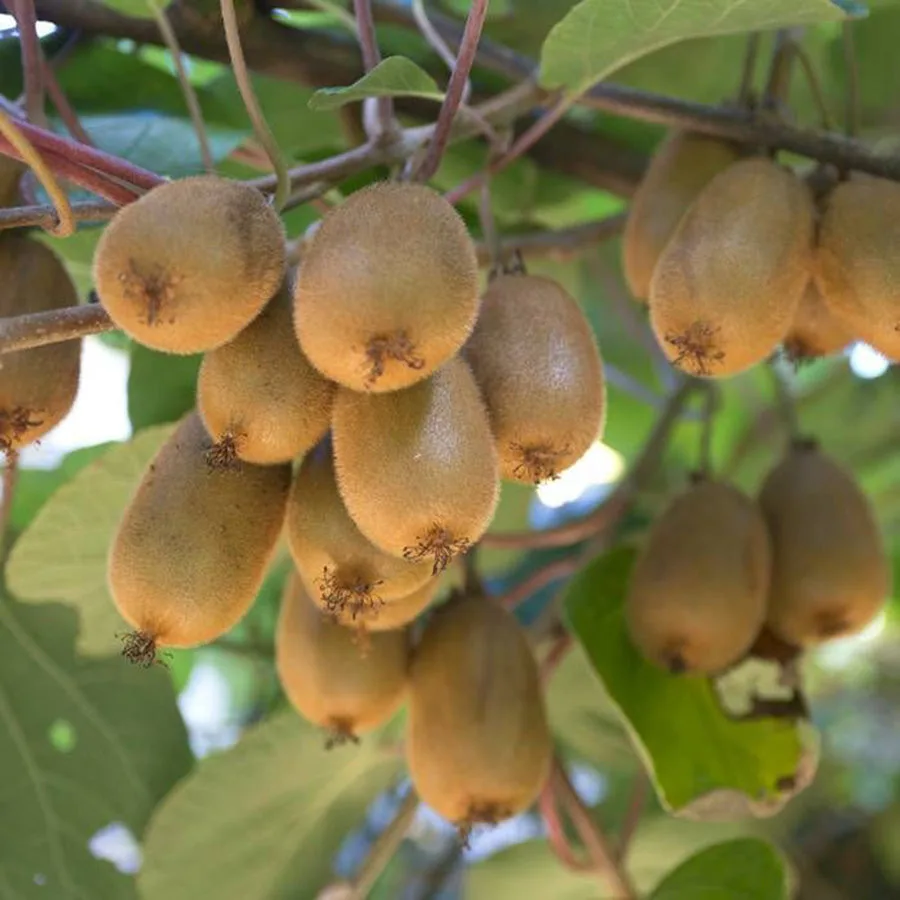
Hayward' is a vigorous, twining, deciduous climber up to 10m in height with heart-shaped leaves to 20cm long and stout shoots covered in reddish-brown hairs. Small clusters of creamy-white flowers up to 4cm across are borne in summer, and,in the presence of a male plant to ensure pollination, edible greenish-brownfruits to 7cm longwill follow in autumn
Scientific classification
- Species
- kiwi fruit 'Hayward' (Actinidia deliciosa 'Hayward')
- Genus
- Actinidia
- Family
- Actinidiaceae
- Order
- Ericales
- Class
- Magnoliopsida
- Phylum
- Magnoliophyta
- Information to be completed
- Toxicity
- Climber Wall Shrub · Fruit Edible
- Plant type
- 8-12 metres
- Height
- 4-8 metres
- Spread
- Deciduous
- Foliage
- Climbing
- Habit
- Spring · Summer · Autumn
- Season of interest
- Full sun
- Sunlight
- Information to be completed
- Ideal temperature









kiwi fruit 'Hayward' pictures
Distribution of kiwi fruit 'Hayward'
Distribution map
- Native
- Introduced
- Cultivated
Source:WCVP v16 · Royal Botanic Gardens, Kew · CC BY 3.0 · Boundaries:WGSRPD / TDWG
kiwi fruit 'Hayward' care guide
- Moderate deep watering during dry periods, free drainage preferred
- Watering
- Full sun
- Sunlight

Watering
Moderate deep watering during dry periods, free drainage preferred
Fertilizing
 Fertilizing
Balanced shrub feed once in spring
Pruning
 Pruning
When grown for fruit, pruning is carried out in winter and summer
Propagation
 Propagation
Propagate by softwood cuttings taken in the spring or by whip and tongue grafting
Growing
 Growing
Grow in fertile, well-drained soil in full sun and a sheltered site. Prone to late frost and wind scorch damage. Male and female plants are needed for fruit set, unless a self-fertile cultivar is grown. See kiwi cultivation for further details
Common pests and diseases
Diseases
May be susceptible to honey fungus and phytophthora root rot
Pests
Generally pest-free
Explore the plant health library →




