
rocambole
Also known as: hardneck garlic; serpent garlic
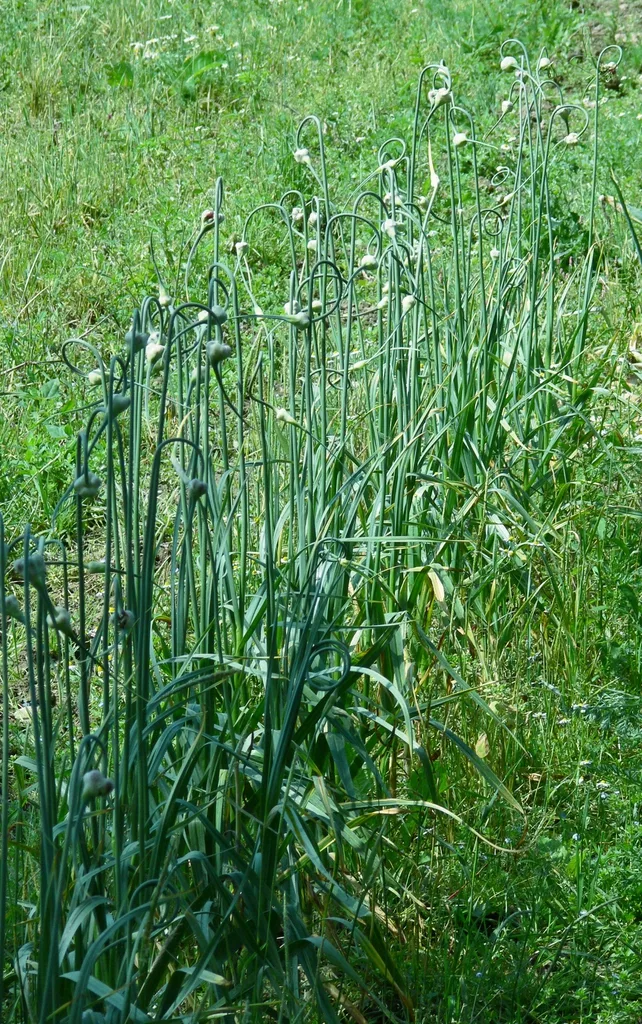
A vigorous hardneck garlic producing strongly flavoured, aromatic white skinned garlic cloves. Hardneck garlic have strongly flavoured cloves, often produce flower stalks, but only store until mid-winter, each bulb will yield up to ten cloves
Scientific classification
- Species
- rocambole (Allium sativum var. ophioscorodon)
- Genus
- Allium
- Family
- Amaryllidaceae
- Order
- Asparagales
- Class
- Liliopsida
- Phylum
- Magnoliophyta
- Skin irritant/allergen. Wear gloves and other protective equipment when handling
- Toxicity
- Herbs - Culinary · Bulbs
- Plant type
- 0.5-1 metres
- Height
- 0.1-0.5 metres
- Spread
- Deciduous
- Foliage
- Clump forming
- Habit
- Spring · Summer
- Season of interest
- Full sun
- Sunlight
- Information to be completed
- Ideal temperature









rocambole pictures
Distribution of rocambole
Distribution map
- Native
- Introduced
- Cultivated
Source:WCVP v16 · Royal Botanic Gardens, Kew · CC BY 3.0 · Boundaries:WGSRPD / TDWG
Toxicity
Skin irritant/allergen. Wear gloves and other protective equipment when handling
rocambole care guide
- Water moderately in growth, keep drier after flowering
- Watering
- Full sun
- Sunlight

Watering
Water moderately in growth, keep drier after flowering
Fertilizing
 Fertilizing
Light bulb feed in spring before flowering
Pruning
 Pruning
No pruning required
Propagation
 Propagation
Propagate by dividing the bulb into cloves
Growing
 Growing
Garlic grows best in a sunny, sheltered spot with fertile, well-drained soil. If you have heavy soil try growing your garlic in a raised bed or container. To produce good quality bulbs garlic needs a period of cold, so it’s best planted in late autumn or early winter. Divide each bulb into individual cloves and space the cloves 15cm apart, with the tip 2.5cm below the soil surface. Space rows 30cm apart. Harvest from early summer once the leaves have turned yellow. \r\nPlease see our grow your own advice page about garlic for further advice.
Common pests and diseases
Diseases
May be susceptible to onion white rot, onion downy mildew and leek rust
Pests
May be susceptible to allium leaf miner and onion fly
Explore the plant health library →




