
iris 'Berkeley Gold'
Also known as: Information to be completed
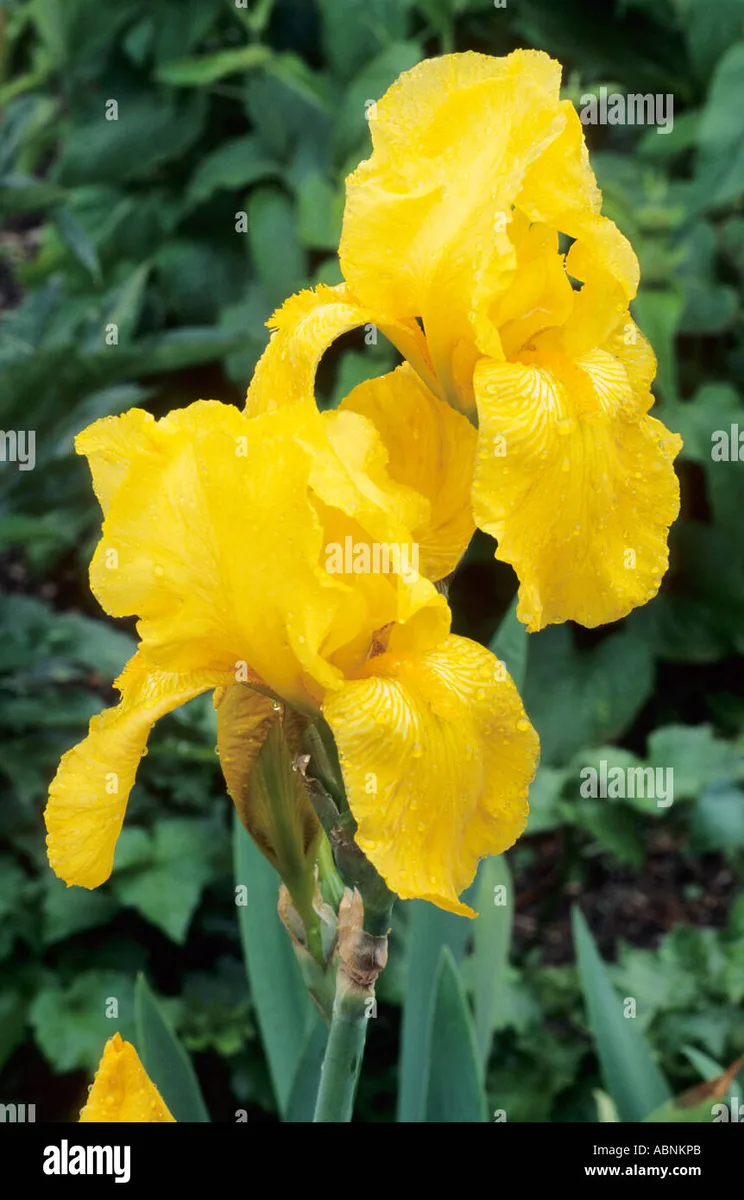
A bearded iris with thick rhizome roots and wide strap-like, sword-shaped, stiffly erect, green leaves. In late spring and early summer it produces large flowers with pale yellow upper petals (standards) and buttery yellow lower petals (falls) with golden beards. These are held on stems to a height of 90cm.
Scientific classification
- Species
- iris 'Berkeley Gold' (Iris 'Berkeley Gold')
- Genus
- Iris
- Family
- Iridaceae
- Harmful if eaten. Wear gloves and other protective equipment when handling
- Toxicity
- Herbaceous Perennial
- Plant type
- 0.5-1 metres
- Height
- 0.1-0.5 metres
- Spread
- Deciduous
- Foliage
- Clump forming
- Habit
- Spring · Summer · Autumn
- Season of interest
- Full sun
- Sunlight
- Information to be completed
- Ideal temperature









iris 'Berkeley Gold' pictures
Distribution of iris 'Berkeley Gold'
Distribution map
Information to be completed
Information to be completed
Culture
Information to be completed
Toxicity
Harmful if eaten. Wear gloves and other protective equipment when handling
Quick identification of iris 'Berkeley Gold'
Information to be completed
iris 'Berkeley Gold' care guide
- Medium moisture in growth, then drier once flowering fully finishes
- Watering
- Full sun
- Sunlight
- Information to be completed
- Ideal temperature

Watering
Medium moisture in growth, then drier once flowering fully finishes
Fertilizing
 Fertilizing
Diluted iris feed every three to four weeks during spring bloom
Pruning
 Pruning
No pruning required. Cut back faded flower stems after flowering, and remove withered leaves in late winter or early spring.
Propagation
 Propagation
Lift rhizomes, separate healthy sections and replant in summer or autumn after flowering has finished, see dividing irises
Growing
 Growing
Grow in well-drained, fertile, neutral to slightly acid soil in full sun. Plant rhizomes just above soil level. See bearded iris cultivation
People also ask
Information to be completed
Common pests and diseases
Diseases
May be susceptible to aphid-borne viruses, bacterial soft rot and grey moulds; see Iris diseases
Pests
May be susceptible to slugs and snails.
Explore the plant health library →




