
hazel 'Red Filbert'
Also known as: Information to be completed
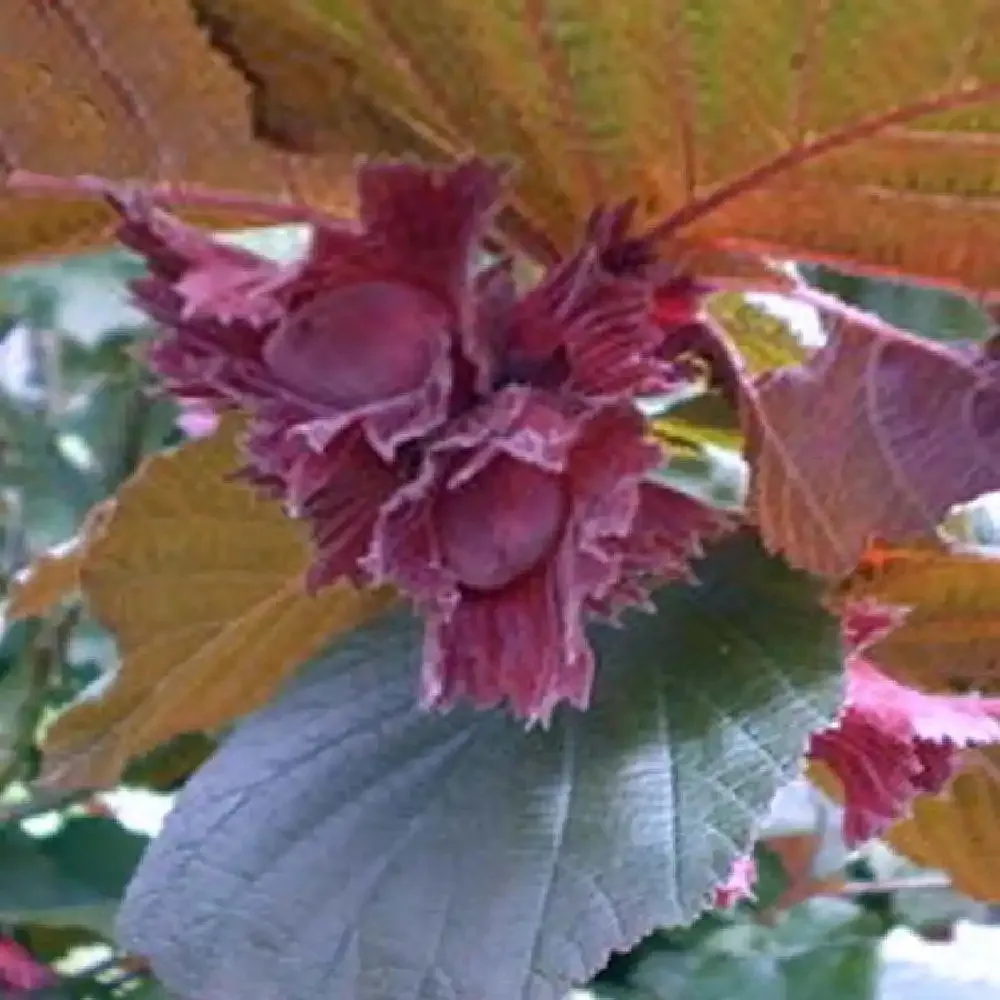
Red Filbert' is a small tree or large shrub with notable burgundy to purple spring foliage becoming dark green as the season progresses. In late winter it bears purplish-pink catkins that are followed by edible red nuts in the autumn
Scientific classification
- Species
- hazel 'Red Filbert' (Corylus maxima 'Red Filbert')
- Genus
- Corylus
- Family
- Betulaceae
- Information to be completed
- Toxicity
- Shrubs
- Plant type
- 4-8 metres
- Height
- 2.5-4 metres
- Spread
- Deciduous
- Foliage
- Bushy
- Habit
- Autumn · Spring · Summer · Winter
- Season of interest
- Full sun · Partial shade
- Sunlight
- Information to be completed
- Ideal temperature









hazel 'Red Filbert' pictures
Distribution of hazel 'Red Filbert'
Distribution map
Information to be completed
Information to be completed
Culture
Information to be completed
Toxicity
Information to be completed
Quick identification of hazel 'Red Filbert'
Information to be completed
hazel 'Red Filbert' care guide
- Moderate regular watering, allowing slight drying between waterings
- Watering
- Full sun · Partial shade
- Sunlight
- Information to be completed
- Ideal temperature

Watering
Moderate regular watering, allowing slight drying between waterings
Fertilizing
 Fertilizing
Balanced feed monthly during active growth season
Pruning
 Pruning
Little pruning is needed. Remove diseased, damaged, crowded or crossing shoots and unwanted growth. Timing depends on the plant: generally late winter or early spring; plants prone to bleeding and deciduous magnolias need different timing, and deciduous azaleas and lilacs are pruned after flowering.
Propagation
 Propagation
Propagate by grafting or by layering
Growing
 Growing
Tolerant of most soil types as long as well-drained; grows well in chalky soils. For best leaf colour and fruit production grow in sunny position. For fruit production see cobnuts and filberts
People also ask
Information to be completed
Common pests and diseases
Diseases
May be susceptible to honey fungus, silver leaf and powdery mildews
Pests
May be be susceptible to caterpillars, gall mites, aphids and sawflies. Squirrels like to feed on the nuts
Explore the plant health library →




