
yellow stinking iris
Also known as: Information to be completed
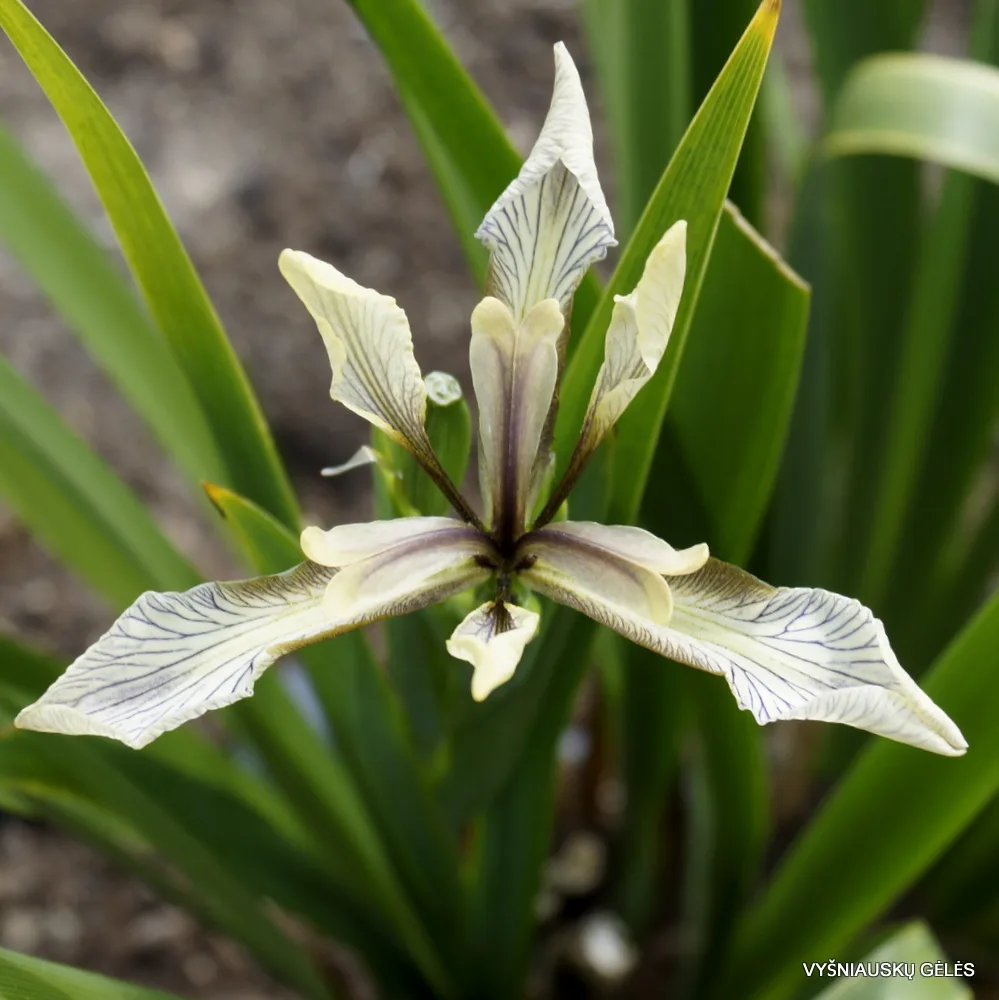
An evergreen, rhizomatous perennial forming clumps of tough, dark green leaves to 75cm long. Branched stems bear pale yellow and brown flowers in summer and are followed by cylindrical pods that burst open in autumn to reveal bright orange-red, rounded fruits that persist through winter
Scientific classification
- Species
- yellow stinking iris (Iris foetidissima var. citrina)
- Genus
- Iris
- Family
- Iridaceae
- Order
- Asparagales
- Class
- Liliopsida
- Phylum
- Magnoliophyta
- Harmful if eaten. Wear gloves and other protective equipment when handling
- Toxicity
- Herbaceous Perennial
- Plant type
- 0.5-1 metres
- Height
- 0.5-1 metres
- Spread
- Evergreen
- Foliage
- Clump forming
- Habit
- Spring · Summer · Autumn · Winter
- Season of interest
- Partial shade · Full shade
- Sunlight
- Information to be completed
- Ideal temperature









yellow stinking iris pictures
Distribution of yellow stinking iris
Distribution map
- Native
- Introduced
- Cultivated
Source:WCVP v16 · Royal Botanic Gardens, Kew · CC BY 3.0 · Boundaries:WGSRPD / TDWG
Toxicity
Harmful if eaten. Wear gloves and other protective equipment when handling
yellow stinking iris care guide
- Medium moisture in growth, then drier once flowering fully finishes
- Watering
- Partial shade · Full shade
- Sunlight

Watering
Medium moisture in growth, then drier once flowering fully finishes
Fertilizing
 Fertilizing
Diluted iris feed every three to four weeks during spring bloom
Pruning
 Pruning
Remove any dying foliage in autumn
Propagation
 Propagation
Propagate by division. See dividing irises
Growing
 Growing
Thrives in a bog garden and shade but will tolerate drier conditions
Common pests and diseases
Diseases
May be susceptible to a leaf spot; see also iris diseases
Pests
May be susceptible to slugs, snails and thrips
Explore the plant health library →




