
Pinguicula gypsicola
Also known as: Information to be completed
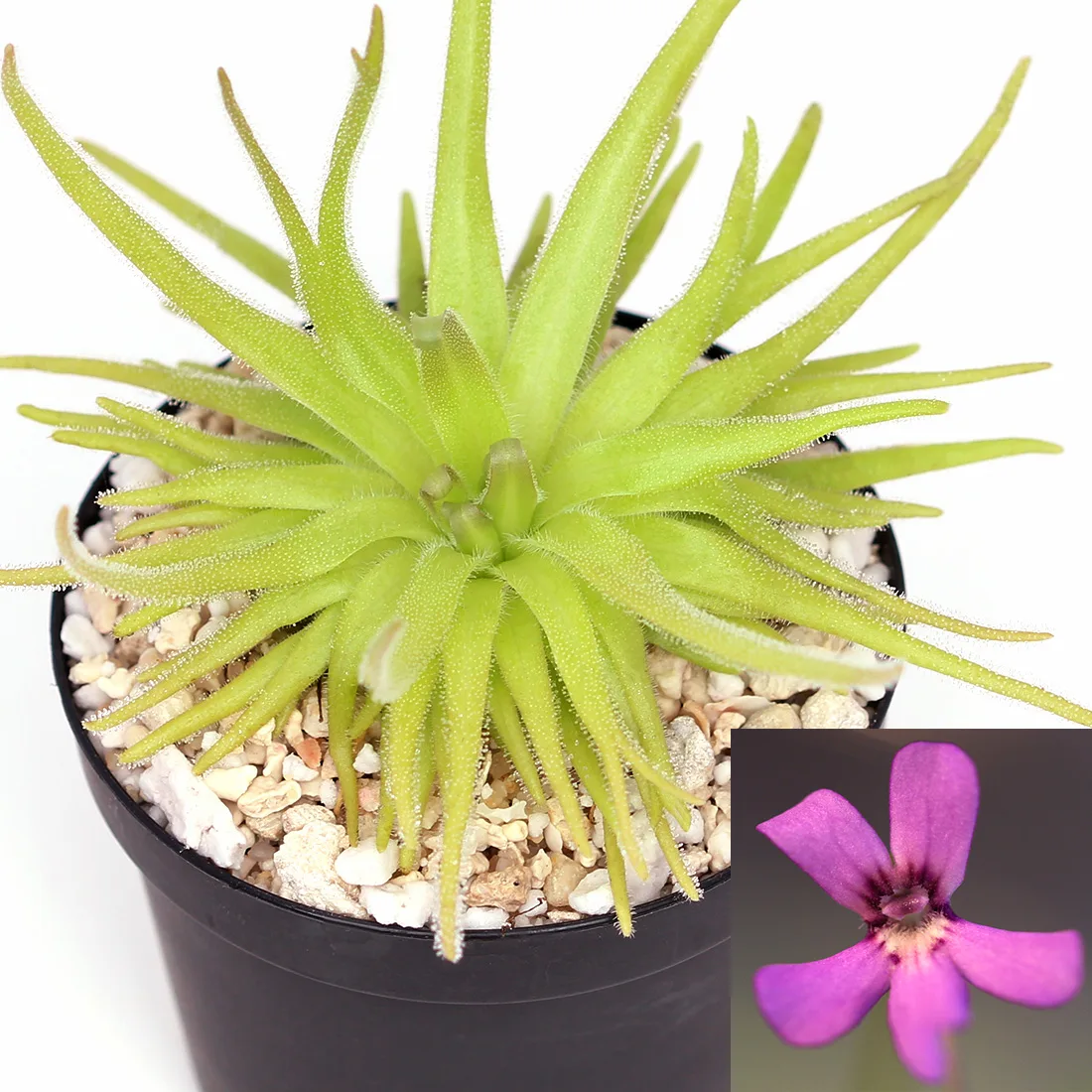
A carnivorous perennial forming a rosette of slender, upright leaves, densely covered in glandular hairs which trap and digest insects. Solitary, purple flowers are borne on 10cm tall flowerstalks in summer. In winter this species has a period of semi-dormancy when it should be kept drier; during this time it may produce small, non-carnivorous leaves
Scientific classification
- Species
- Pinguicula gypsicola (Pinguicula gypsicola)
- Genus
- Pinguicula
- Family
- Lentibulariaceae
- Order
- Lamiales
- Class
- Magnoliopsida
- Phylum
- Magnoliophyta
- Information to be completed
- Toxicity
- Houseplants
- Plant type
- 0.1-0.5 metres
- Height
- 0.1-0.5 metres
- Spread
- Evergreen
- Foliage
- Tufted
- Habit
- Spring · Summer · Autumn · Winter
- Season of interest
- Full sun
- Sunlight
- Information to be completed
- Ideal temperature









Pinguicula gypsicola pictures
Distribution of Pinguicula gypsicola
Distribution map
- Native
- Introduced
- Cultivated
Source:WCVP v16 · Royal Botanic Gardens, Kew · CC BY 3.0 · Boundaries:WGSRPD / TDWG
Pinguicula gypsicola care guide
- Moderate regular watering, avoid prolonged drought or waterlogging
- Watering
- Full sun
- Sunlight

Watering
Moderate regular watering, avoid prolonged drought or waterlogging
Fertilizing
 Fertilizing
Balanced feed in spring and light repeat in growth season
Pruning
 Pruning
No pruning required
Propagation
 Propagation
Propagate by sowing seed on damp sphagnum moss as soon as ripe. Take leaf cuttings in late winter
Growing
 Growing
Grow in a compost mix comprising one part each peat substitute, coarse sand, perlite and dolomitic limestone chippings. Position in bright, filtered light. In growth, water freely; in winter water sparingly. See Carnivorous plant cultivation
Common pests and diseases
Diseases
Generally disease-free
Pests
Generally pest-free
Explore the plant health library →




