
Pyrenees aster 'Lutetia'
Also known as: Information to be completed
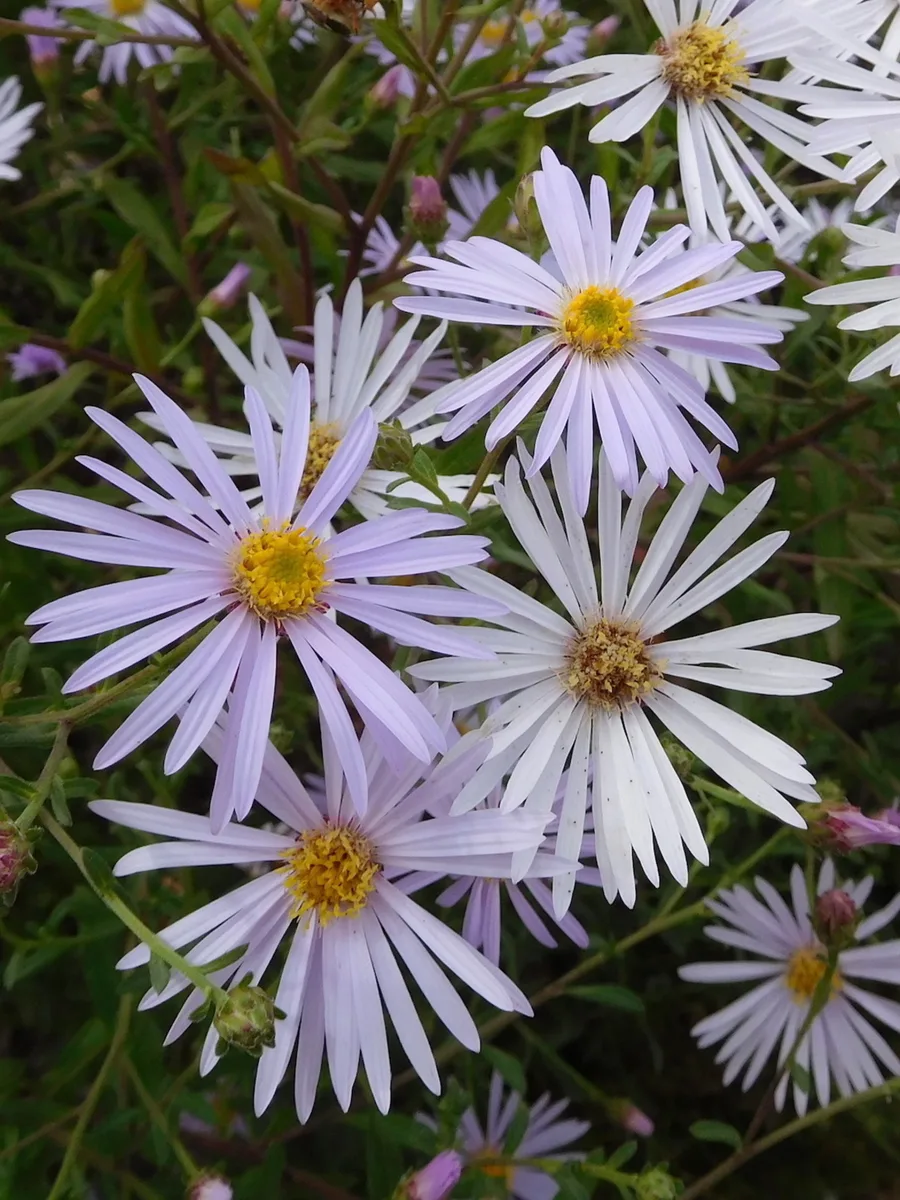
Lutetia' is a vigorous herbaceous perennial forming a clump up to 60cm high with sturdy stems, narrow leaves, and long-lasting starry flowerheads 5cm across with thin rays of pale lilac--blue and yellow centres from late summer to autumn
Scientific classification
- Species
- Pyrenees aster 'Lutetia' (Aster pyrenaeus 'Lutetia')
- Genus
- Aster
- Family
- Asteraceae
- Information to be completed
- Toxicity
- Herbaceous Perennial
- Plant type
- 0.5-1 metres
- Height
- 0.5-1 metres
- Spread
- Deciduous
- Foliage
- Clump forming
- Habit
- Spring · Summer · Autumn
- Season of interest
- Full sun · Partial shade
- Sunlight
- Information to be completed
- Ideal temperature









Pyrenees aster 'Lutetia' pictures
Distribution of Pyrenees aster 'Lutetia'
Distribution map
- Native
- Introduced
- Cultivated
Source:WCVP v16 · Royal Botanic Gardens, Kew · CC BY 3.0 · Boundaries:WGSRPD / TDWG
Culture
Information to be completed
Toxicity
Information to be completed
Quick identification of Pyrenees aster 'Lutetia'
Information to be completed
Pyrenees aster 'Lutetia' care guide
- Moderate regular watering, avoid prolonged drought and stagnant waterlogging
- Watering
- Full sun · Partial shade
- Sunlight
- Information to be completed
- Ideal temperature

Watering
Moderate regular watering, avoid prolonged drought and stagnant waterlogging
Fertilizing
 Fertilizing
Balanced perennial feed every four weeks spring through summer growth
Pruning
 Pruning
No pruning required, except cutting stems close to the ground at the end of winter
Propagation
 Propagation
Propagate by division in spring; regular division helps to keep plants healthy and vigorous but is only necessary every few years
Growing
 Growing
Grow in any well-drained soil; will do better in alkaline soil than in acidic soil; will do best in full sun but will also grow in light shade
People also ask
Information to be completed
Common pests and diseases
Diseases
May be affected by aster wilt, foot rot, leaf spots, grey moulds, and sclerotinia diseases; said to be resistant to powdery mildews
Pests
May be affected by slugs, snails, leaf and bud eelworm and aphids
Explore the plant health library →




