
glory lily 'Rothschildiana'
Also known as: Information to be completed
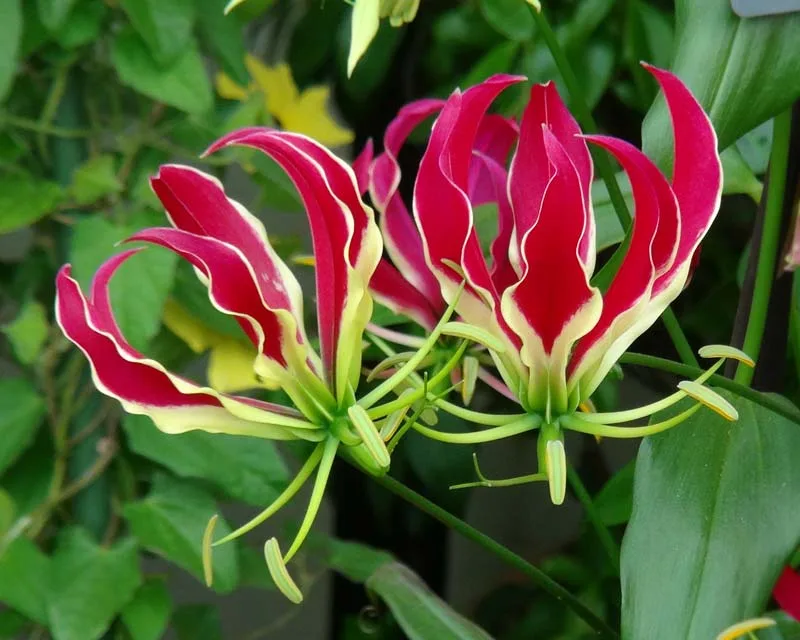
Rothschildiana' is a deciduous, tuberous, tendril climber reaching a height of 2m. Leaves are lance-shaped and the upper leaf axils bear flowers, up to 10cm across, in the summer. The lily-like flowers comprise six reflexed red petals, with wavy yellow edges, surrounding a cluster of curved and protruding stamens
Scientific classification
- Species
- glory lily 'Rothschildiana' (Gloriosa superba 'Rothschildiana')
- Genus
- Gloriosa
- Family
- Colchicaceae
- Order
- Liliales
- Class
- Liliopsida
- Phylum
- Tracheophyta
- TOXIC if eaten. Wear gloves and other protective equipment when handling
- Toxicity
- Climber Wall Shrub · Conservatory Greenhouse
- Plant type
- 1.5-2.5 metres
- Height
- 0.1-0.5 metres
- Spread
- Deciduous
- Foliage
- Climbing
- Habit
- Spring · Summer · Autumn
- Season of interest
- Full sun
- Sunlight
- Information to be completed
- Ideal temperature









glory lily 'Rothschildiana' pictures
Distribution of glory lily 'Rothschildiana'
Distribution map
- Native
- Introduced
- Cultivated
Source:WCVP v16 · Royal Botanic Gardens, Kew · CC BY 3.0 · Boundaries:WGSRPD / TDWG
Toxicity
TOXIC if eaten. Wear gloves and other protective equipment when handling
glory lily 'Rothschildiana' care guide
- Water regularly, keeping the soil moist during growth; reduce after flowering.
- Watering
- Full sun
- Sunlight

Watering
Water regularly, keeping the soil moist during growth; reduce after flowering.
Fertilizing
 Fertilizing
Apply a high-potassium liquid fertilizer every 2-3 weeks during active growth.
Pruning
 Pruning
Cut down top growth as it dies back after flowering
Propagation
 Propagation
Propagate by division
Growing
 Growing
Plant tubers 7-10cm deep in early spring in John Innes No 2 compost with added grit in full light. Water freely once in growth and apply a balanced liquid fertiliser every two weeks. Keep tubers dry and frost-free in winter and pot on in late winter if tubers are very congested
Common pests and diseases
Diseases
Generally disease-free
Pests
May be susceptible to aphids
Explore the plant health library →




