
sage 'Indigo Spires'
Also known as: Information to be completed
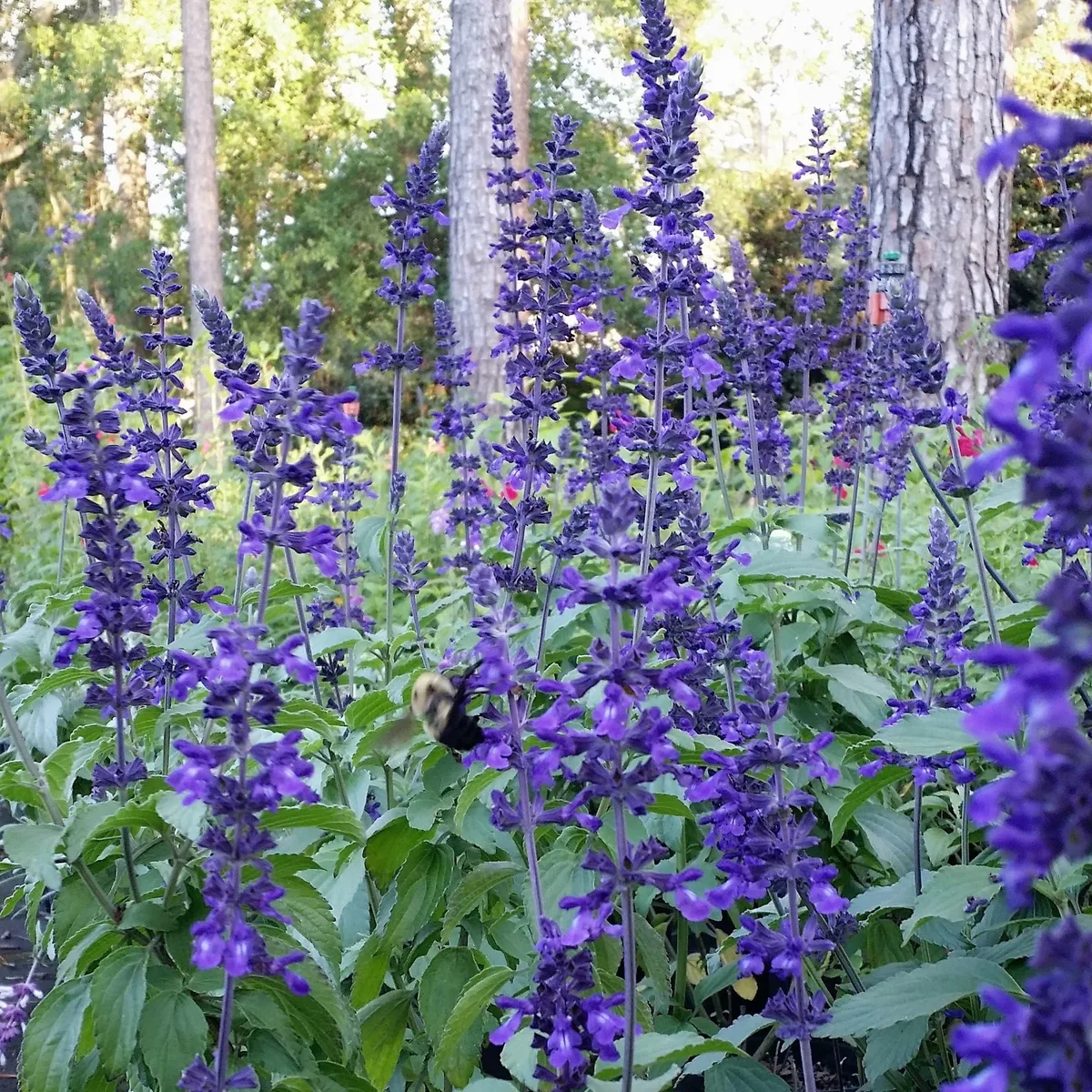
Indigo Spires' is a woody-based deciduous herbaceous perennial, up to 1.3m high, with aromatic, ovate green leaves and tall spikes of indigo-blue flowers from summer to autumn
Scientific classification
- Species
- sage 'Indigo Spires' (Salvia 'Indigo Spires')
- Genus
- Salvia
- Family
- Lamiaceae
- Order
- Lamiales
- Class
- Magnoliopsida
- Phylum
- Tracheophyta
- Information to be completed
- Toxicity
- Herbaceous Perennial
- Plant type
- 1-1.5 metres
- Height
- 0.5-1 metres
- Spread
- Deciduous
- Foliage
- Clump forming
- Habit
- Spring · Summer · Autumn
- Season of interest
- Full sun
- Sunlight
- Information to be completed
- Ideal temperature









sage 'Indigo Spires' pictures
sage 'Indigo Spires' care guide
- Even soft damp soil, water moderately often during hot sunny weather
- Watering
- Full sun
- Sunlight

Watering
Even soft damp soil, water moderately often during hot sunny weather
Fertilizing
 Fertilizing
Diluted balanced herb feed monthly spring until early autumn ends
Pruning
 Pruning
No pruning required
Propagation
 Propagation
Propagate by division in spring, by basal or softwood cuttings in spring or early summer, or by semi-ripe cuttings in late summer or autumn
Growing
 Growing
Grow in light, moderately fertile, humus-rich, moist but very well-drained soil in full sun with shelter from cold, drying winds; in frost-free areas in winter, protect from excessive wet, while in frost-prone areas protect plants with fleece, move plants under cover, or take cuttings to provide next year's plants - if kept in a heated greenhouse overwinter it will remain evergreen
Common pests and diseases
Diseases
May be susceptible to powdery mildews and Verticillium wilt; under glass, may be affected by foot and root rots
Pests
May be susceptible to capsid bug, leafhoppers, slugs and snails; under glass, may be affected by aphids, glasshouse red spider mite, and glasshouse whitefly
Explore the plant health library →




