
dwarf flowering almond 'Sinensis'
Also known as: Information to be completed
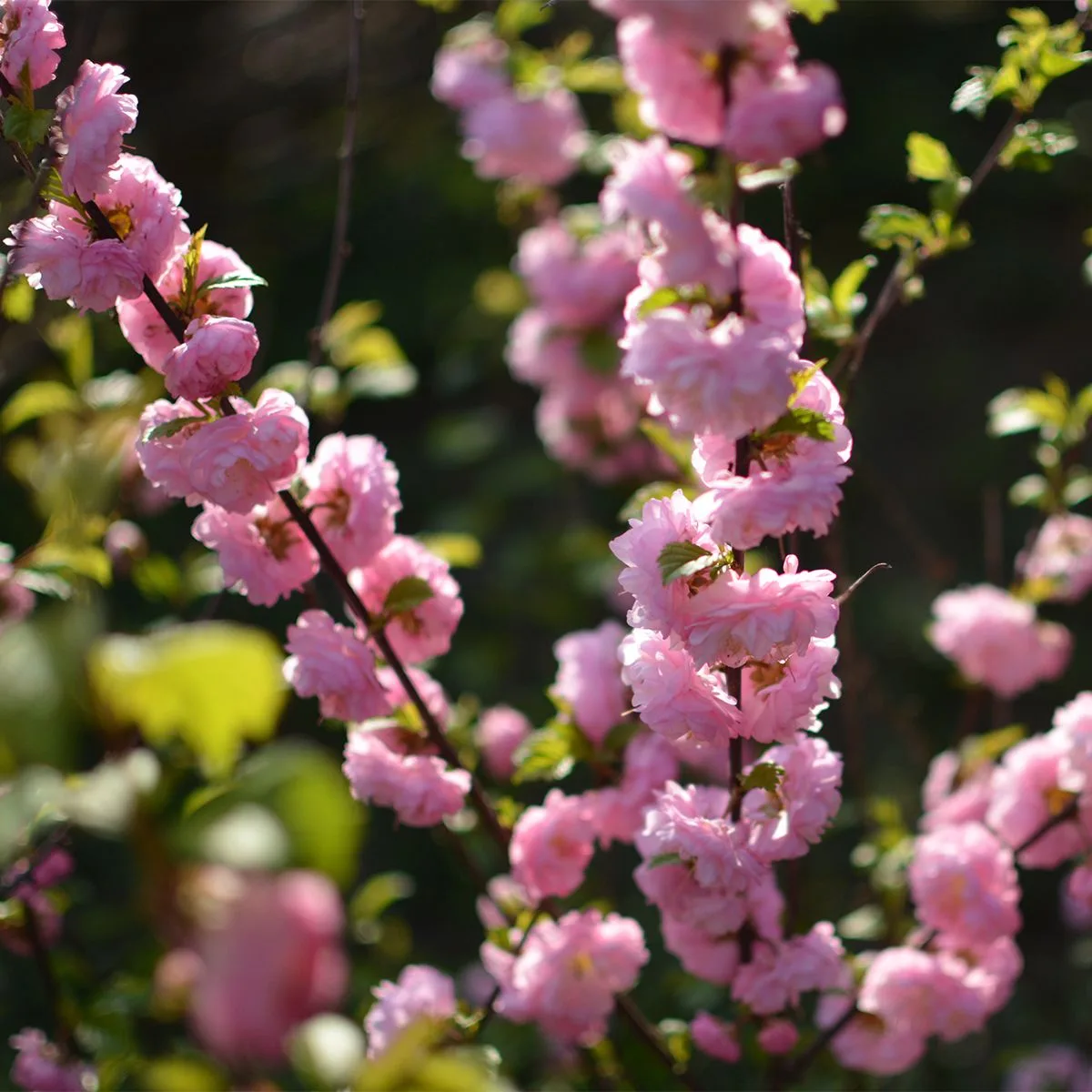
A rounded, multi-stemmed shrub to 1.5m tall, with finely toothed leaves. In spring, before the foliage unfurls, it produces double pink flowers which are clustered densely along the branches
Scientific classification
- Species
- dwarf flowering almond 'Sinensis' (Prunus glandulosa 'Sinensis')
- Genus
- Prunus
- Family
- Rosaceae
- Order
- Rosales
- Class
- Magnoliopsida
- Phylum
- Magnoliophyta
- Information to be completed
- Toxicity
- Shrubs
- Plant type
- 1-1.5 metres
- Height
- 1-1.5 metres
- Spread
- Deciduous
- Foliage
- Bushy
- Habit
- Spring · Summer · Autumn
- Season of interest
- Full sun
- Sunlight
- Information to be completed
- Ideal temperature









dwarf flowering almond 'Sinensis' pictures
dwarf flowering almond 'Sinensis' care guide
- Deep water during dry spells, especially when young
- Watering
- Full sun
- Sunlight

Watering
Deep water during dry spells, especially when young
Fertilizing
 Fertilizing
Balanced fruit or tree feed in early spring
Pruning
 Pruning
Little pruning is needed. Remove diseased, damaged, crowded or crossing shoots and unwanted growth. Timing depends on the plant: generally late winter or early spring; plants prone to bleeding and deciduous magnolias need different timing, and deciduous azaleas and lilacs are pruned after flowering.
Propagation
 Propagation
Propagate by budding or grafting
Growing
 Growing
Grow in any moist but well-drained, moderately fertile soil in full sun
Common pests and diseases
Diseases
May be susceptible to peach leaf curl, silver leaf, bacterial canker, blossom wilt and honey fungus
Pests
May be susceptible to aphids
Explore the plant health library →




