
Morus alba 'Laciniata'
Also known as: Information to be completed
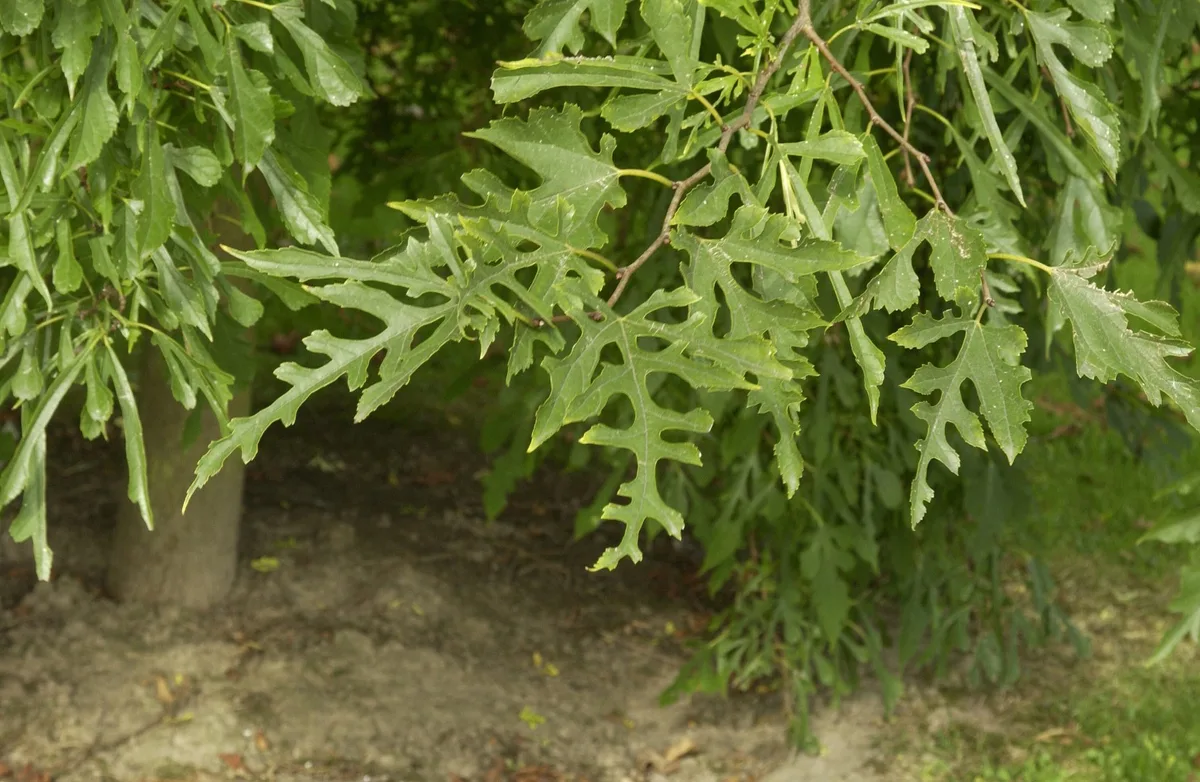
A large shrub to medium-sized deciduous tree, often multi-stemmed, with an open habit and tangled branches which form a zig-zag shape when young. Deeply lobed, dissected dark green leaves with a long, thin point, turn yellow in the autumn. Inconspicious pale green catkin-like flowers appear in the spring, followed by small, creamy-white to pale purple, edible fruits
Scientific classification
- Species
- Morus alba 'Laciniata' (Morus alba 'Laciniata')
- Genus
- Morus
- Family
- Moraceae
- Order
- Rosales
- Class
- Magnoliopsida
- Phylum
- Magnoliophyta
- Information to be completed
- Toxicity
- Fruit Edible · Shrubs · Trees
- Plant type
- 4-8 metres
- Height
- 2.5-4 metres
- Spread
- Deciduous
- Foliage
- Bushy
- Habit
- Autumn · Spring · Summer
- Season of interest
- Full sun
- Sunlight
- Information to be completed
- Ideal temperature









Morus alba 'Laciniata' pictures
Distribution of Morus alba 'Laciniata'
Distribution map
- Native
- Introduced
- Cultivated
Source:WCVP v16 · Royal Botanic Gardens, Kew · CC BY 3.0 · Boundaries:WGSRPD / TDWG
Morus alba 'Laciniata' care guide
- Water deeply during establishment, then only in prolonged dry periods
- Watering
- Full sun
- Sunlight

Watering
Water deeply during establishment, then only in prolonged dry periods
Fertilizing
 Fertilizing
Balanced tree or shrub feed once in spring
Pruning
 Pruning
Little pruning is needed. Remove diseased, damaged, crowded or crossing shoots and unwanted growth. Timing depends on the plant: generally late winter or early spring; plants prone to bleeding and deciduous magnolias need different timing, and deciduous azaleas and lilacs are pruned after flowering.
Propagation
 Propagation
Propagate by semi-hardwood cuttings in mid-summer
Growing
 Growing
Grow in moist, humus-rich, fertile soils with shelter from cold, dry winds. See mulberry cultivation
Common pests and diseases
Diseases
May be susceptible to mulberry leaf spot, mulberry canker, coral spot, powdery mildews and honey fungus (rarely)
Pests
Generally pest-free
Explore the plant health library →




