
penstemon 'Osprey'
Also known as: Information to be completed
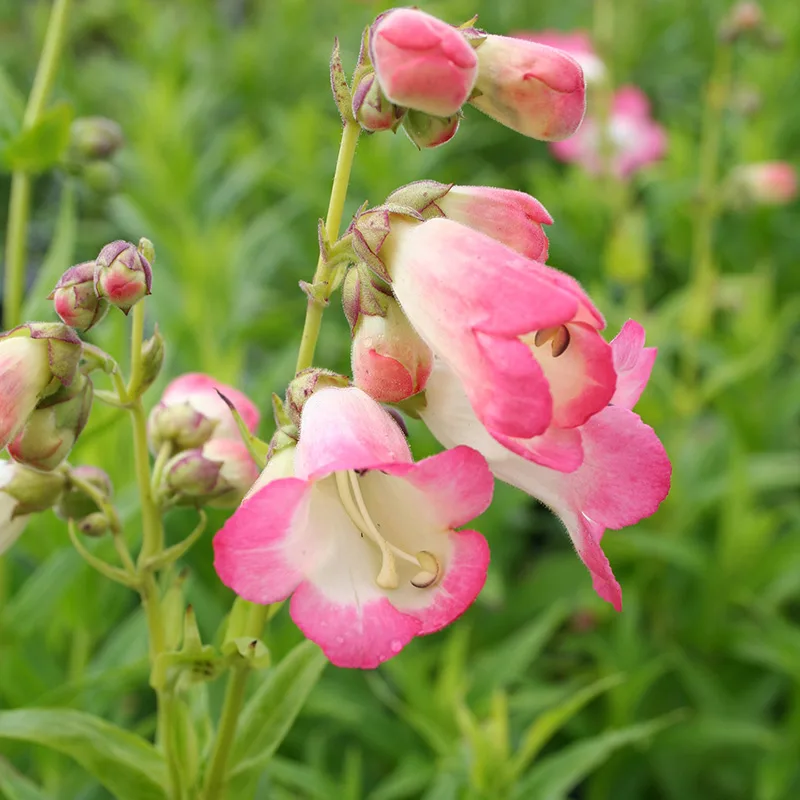
Osprey' is a perennial forming a loose clump to 1m in height, with ovate leaves and few-flowered racemes of fat, bright pink flowers 4.5cm across, with a creamy-white throat and mouth
Scientific classification
- Species
- penstemon 'Osprey' (Penstemon 'Osprey')
- Genus
- Penstemon
- Family
- Plantaginaceae
- Information to be completed
- Toxicity
- Herbaceous Perennial
- Plant type
- 0.5-1 metres
- Height
- 0.1-0.5 metres
- Spread
- Semi evergreen
- Foliage
- Clump forming
- Habit
- Spring · Summer · Autumn · Winter
- Season of interest
- Full sun · Partial shade
- Sunlight
- Information to be completed
- Ideal temperature









penstemon 'Osprey' pictures
Distribution of penstemon 'Osprey'
Distribution map
Information to be completed
Information to be completed
Culture
Information to be completed
Toxicity
Information to be completed
Quick identification of penstemon 'Osprey'
Information to be completed
penstemon 'Osprey' care guide
- Water thoroughly then wait top soil dries for next watering
- Watering
- Full sun · Partial shade
- Sunlight
- Information to be completed
- Ideal temperature

Watering
Water thoroughly then wait top soil dries for next watering
Fertilizing
 Fertilizing
Flowering perennial fertilizer biweekly spring to autumn period
Pruning
 Pruning
Deadhead after flowering to maintain vigour, then cut back to base in winter
Propagation
 Propagation
Propagate by softwood cuttings in early summer or semi-hardwood cuttings in midsummer. Propagate by division in spring
Growing
 Growing
Grow in fertile, well-drained soil in full sun or partial shade. In cold areas, protect plant overwinter with a dry winter mulch
People also ask
Information to be completed
Common pests and diseases
Diseases
May be subject to a downy mildew
Pests
May be attacked by slugs, snails and chrysanthemum eelworms
Explore the plant health library →




