
perennial phlox 'Blue Boy'
Also known as: Information to be completed
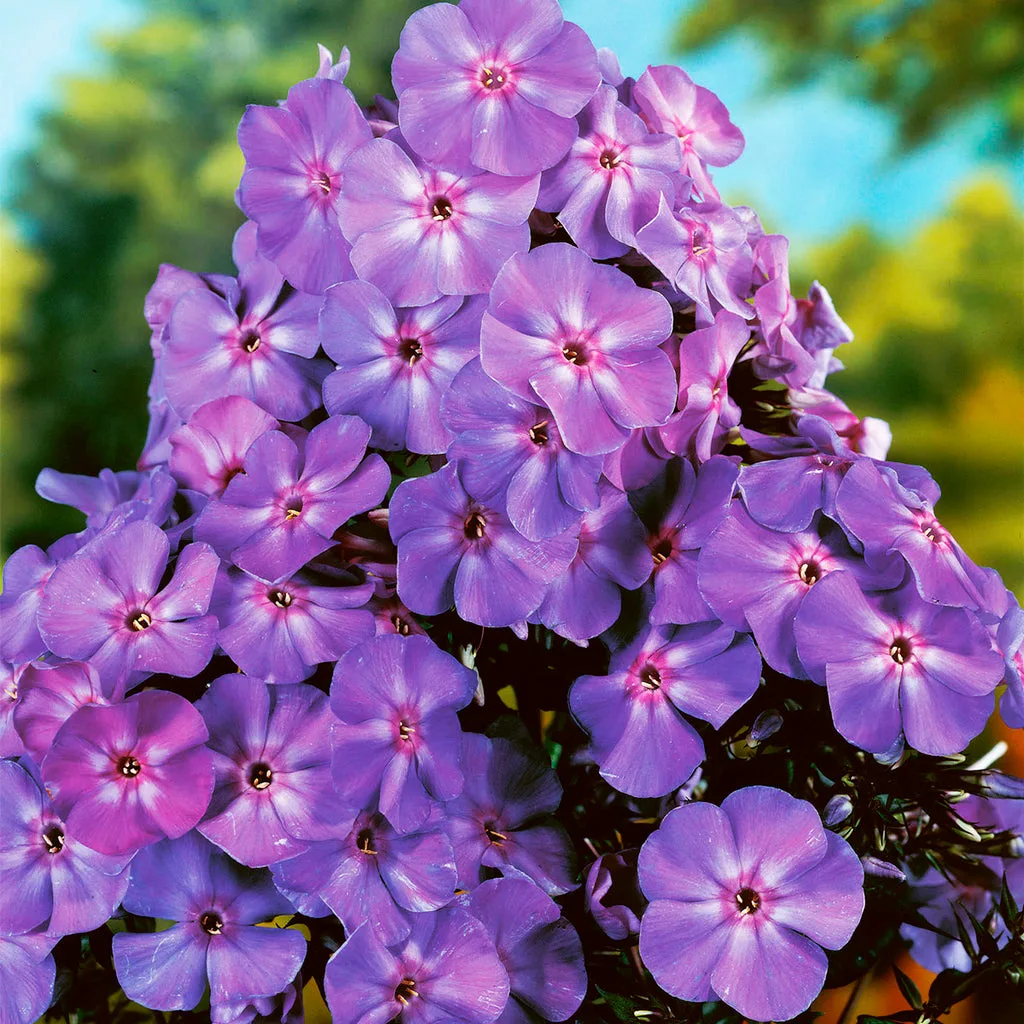
A strong-growing herbaceous perennial 90-120cm high with green lance-shaped leaves and large clusters of scented, mauve-blue flowers, with darker purple and white eyes, from summer to early autumn
Scientific classification
- Species
- perennial phlox 'Blue Boy' (Phlox paniculata 'Blue Boy')
- Genus
- Phlox
- Family
- Polemoniaceae
- Information to be completed
- Toxicity
- Herbaceous Perennial
- Plant type
- 0.5-1 metres
- Height
- 0.5-1 metres
- Spread
- Deciduous
- Foliage
- Clump forming
- Habit
- Spring · Summer · Autumn
- Season of interest
- Full sun
- Sunlight
- Information to be completed
- Ideal temperature









perennial phlox 'Blue Boy' pictures
Distribution of perennial phlox 'Blue Boy'
Distribution map
Information to be completed
Information to be completed
Culture
Information to be completed
Toxicity
Information to be completed
Quick identification of perennial phlox 'Blue Boy'
Information to be completed
perennial phlox 'Blue Boy' care guide
- Moderate regular watering, allowing brief slight drying between soakings
- Watering
- Full sun
- Sunlight
- Information to be completed
- Ideal temperature

Watering
Moderate regular watering, allowing brief slight drying between soakings
Fertilizing
 Fertilizing
Balanced perennial feed every four weeks from spring through summer
Pruning
 Pruning
Deadhead to prolong flowering; cut down to the base in late autumn and remove the cut stems, to reduce the risk of eelworm and mildew the following year
Propagation
 Propagation
Propagate by division in autumn or spring, by basal cuttings in spring or by root cuttings from early autumn to spring; root cuttings are the best method to ensure healthy plants
Growing
 Growing
Grow in fertile, humus-rich, moisture-retentive soil in full sun, and every autumn add a thick mulch of organic material to help preserve soil moisture
People also ask
Information to be completed
Common pests and diseases
Diseases
Generally disease-free but may be susceptible to crown gall, leafy gall, fungal leaf spot and Verticillium wilt; said to have good resistance to powdery mildews
Pests
Generally pest-free but may be susceptible to slugs, snails, aphids, and Phlox stem eelworm
Explore the plant health library →




