
Begonia annulata
Also known as: Information to be completed
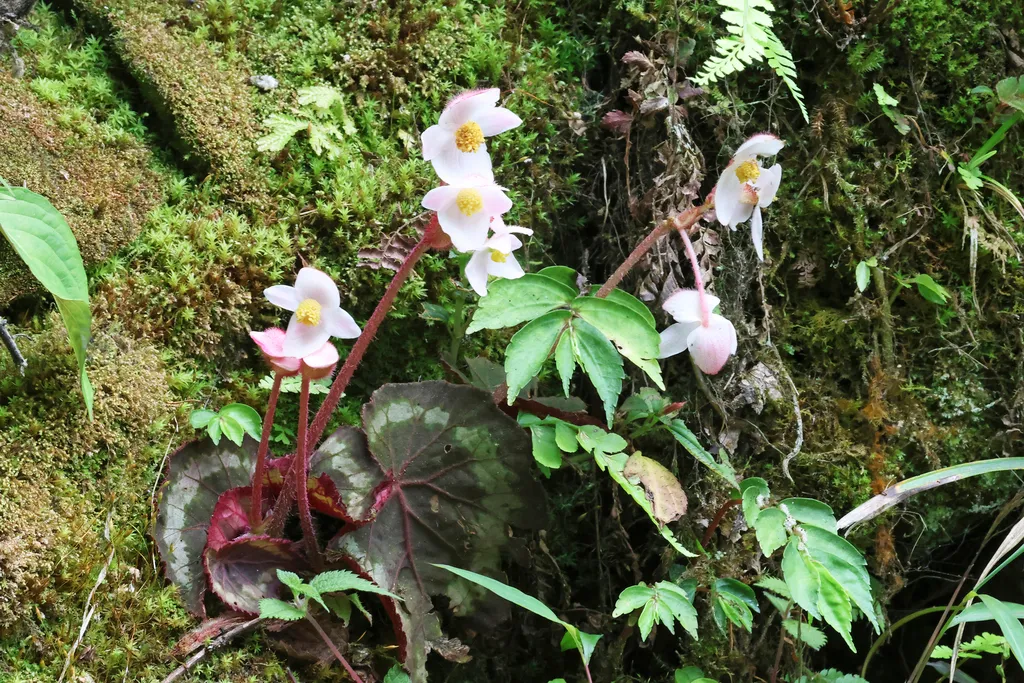
A rhizomatous perennial, to around 30cm high, with an upright habit and roughly hairy stems and leaves. Leaves are asymmetric, to 15cm long and dark green with a silver band, with wavy edges and reddish undersides. Flowers are white to pale pink, borne in small loose clusters from the leaf axils, and can be produced from late winter to early summer
Scientific classification
- Species
- Begonia annulata (Begonia annulata)
- Genus
- Begonia
- Family
- Begoniaceae
- Order
- Cucurbitales
- Class
- Magnoliopsida
- Phylum
- Magnoliophyta
- Ornamental bulbs - not to be eaten. Wear gloves and other protective equipment when handling
- Toxicity
- Herbaceous Perennial · Conservatory Greenhouse · Houseplants
- Plant type
- Information to be completed
- Height
- Information to be completed
- Spread
- Evergreen
- Foliage
- Bushy · Columnar upright
- Habit
- Spring · Summer · Autumn · Winter
- Season of interest
- Partial shade
- Sunlight
- Information to be completed
- Ideal temperature









Begonia annulata pictures
Distribution of Begonia annulata
Distribution map
- Native
- Introduced
- Cultivated
Source:WCVP v16 · Royal Botanic Gardens, Kew · CC BY 3.0 · Boundaries:WGSRPD / TDWG
Toxicity
Ornamental bulbs - not to be eaten. Wear gloves and other protective equipment when handling
Begonia annulata care guide
- Moderate regular watering, allowing brief slight drying between soakings
- Watering
- Partial shade
- Sunlight

Watering
Moderate regular watering, allowing brief slight drying between soakings
Fertilizing
 Fertilizing
Balanced perennial feed every four weeks from spring through summer
Pruning
 Pruning
No pruning required
Propagation
 Propagation
Propagate by basal softwood cuttings
Growing
 Growing
Grow in light, open, well-drained, neutral to slightly acidic potting compost, in bright indirect light, at an optimum temperature of 15-20ºC, and with moderate humidity. Water moderately when in growth, with balanced liquid fertilizer at alternate waterings, and sparingly in winter: immerse the container in water and allow the water to drain, to minimize the risk of rhizome rot. Pot on annually in spring. For more advice, see begonias: houseplants
Common pests and diseases
Diseases
May be susceptible to grey moulds (Botrytis), powdery mildews and stem and rhizome rot
Pests
May be susceptible to caterpillars, mealybugs, mites, thrips, vine weevil and aphids
Explore the plant health library →




