
Taxus baccata 'Prostrata'
Also known as: Information to be completed
A slow-growing evergreen shrub up to 4m and spreading to 2.5m, with dark green very narrow leaves. Good ground cover and backdrop for other colours. Tolerant of pollution
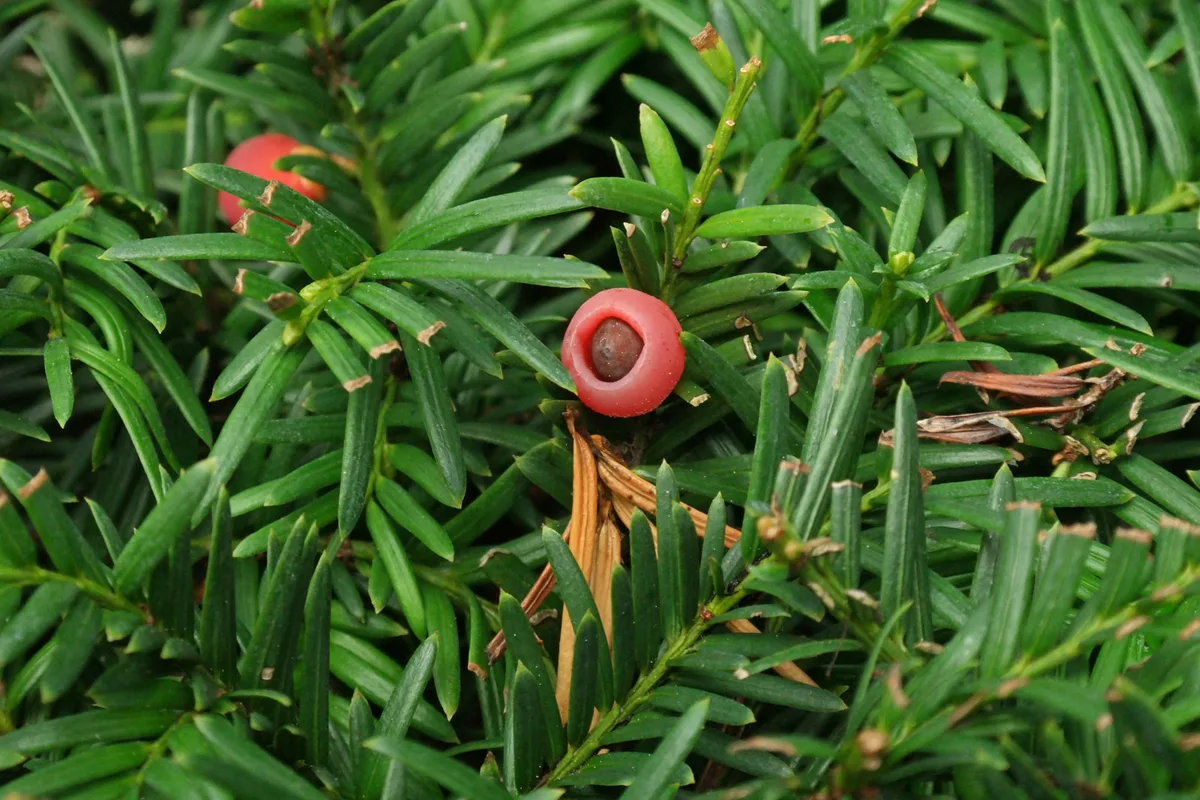
Scientific classification
- Species
- Taxus baccata 'Prostrata' (Taxus baccata 'Prostrata')
- Genus
- Taxus
- Family
- Taxaceae
- Order
- Taxales
- Class
- Pinopsida
- Phylum
- Pinophyta
- Toxic if eaten. Wear gloves and other protective equipment when handling
- Toxicity
- Shrubs
- Plant type
- 2.5-4 metres
- Height
- 1.5-2.5 metres
- Spread
- Evergreen
- Foliage
- Bushy
- Habit
- Spring · Summer · Autumn · Winter
- Season of interest
- Full sun · Partial shade
- Sunlight
- Information to be completed
- Ideal temperature









Taxus baccata 'Prostrata' pictures
Toxicity
Toxic if eaten. Wear gloves and other protective equipment when handling
Taxus baccata 'Prostrata' care guide
- Moderate regular watering, allowing brief slight drying between soakings
- Watering
- Full sun · Partial shade
- Sunlight

Watering
Moderate regular watering, allowing brief slight drying between soakings
Fertilizing
 Fertilizing
Balanced perennial feed every four weeks from spring through summer
Pruning
 Pruning
Little pruning is needed. Remove diseased, damaged, crowded or crossing shoots and unwanted growth. Timing depends on the plant: generally late winter or early spring; plants prone to bleeding and deciduous magnolias need different timing, and deciduous azaleas and lilacs are pruned after flowering.
Propagation
 Propagation
Propagate by semi-ripe cuttings
Growing
 Growing
Grow in any well drained soil. Both male and female plants available - females will have red berries, males masses of pale yellow flowers making clouds of pollen. Tolerant of pollution. For more information see tree cultivation.
Common pests and diseases
Diseases
May be susceptible to phytophthora root diseases
Pests
May be susceptible to tortrix moth, vine weevil, gall mites and scale insects
Explore the plant health library →




