
iris 'Broadleigh Rose'
Also known as: Information to be completed
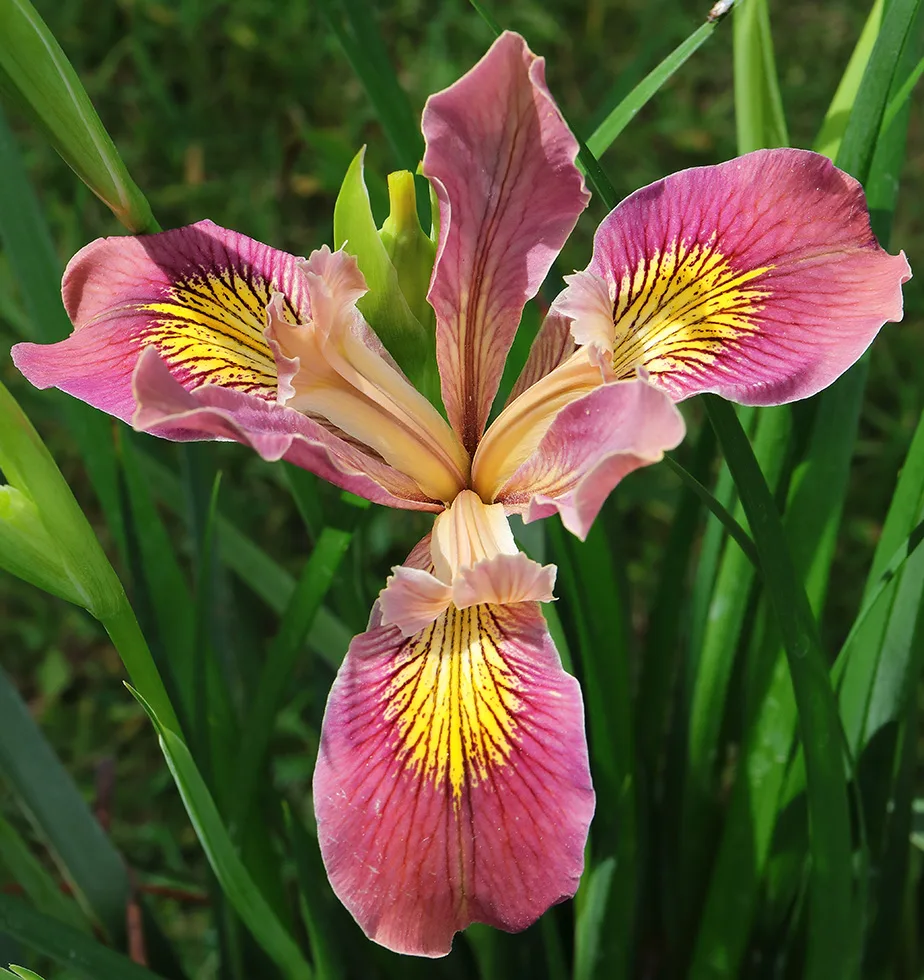
A Pacific Coast iris that bears pink-rose coloured flowers where the lower fall petals are flushed with yellow-gold and prominently veined with purple. Flowers in mid-and late spring to a height of 40cm (16in).
Scientific classification
- Species
- iris 'Broadleigh Rose' (Iris 'Broadleigh Rose')
- Genus
- Iris
- Family
- Iridaceae
- Harmful if eaten. Wear gloves and other protective equipment when handling
- Toxicity
- Herbaceous Perennial
- Plant type
- 0.1-0.5 metres
- Height
- 0.1-0.5 metres
- Spread
- Evergreen
- Foliage
- Clump forming
- Habit
- Spring · Summer · Autumn · Winter
- Season of interest
- Partial shade
- Sunlight
- Information to be completed
- Ideal temperature









iris 'Broadleigh Rose' pictures
Distribution of iris 'Broadleigh Rose'
Distribution map
Information to be completed
Information to be completed
Culture
Information to be completed
Toxicity
Harmful if eaten. Wear gloves and other protective equipment when handling
Quick identification of iris 'Broadleigh Rose'
Information to be completed
iris 'Broadleigh Rose' care guide
- Medium moisture growing period, drier soil once flowering cycle fully finishes
- Watering
- Partial shade
- Sunlight
- Information to be completed
- Ideal temperature

Watering
Medium moisture growing period, drier soil once flowering cycle fully finishes
Fertilizing
 Fertilizing
Diluted iris bulb feed every three to four weeks spring blooming season
Pruning
 Pruning
No pruning required. Cut back faded flower stems after flowering, and remove withered leaves in late winter or early spring.
Propagation
 Propagation
Propagate by division in October or March. Replant divisions straight away.
Growing
 Growing
Grow in moist but well-drained soil in partial shade. Prefers acidic to neutral soils rich in organic matter.
People also ask
Information to be completed
Common pests and diseases
Diseases
May be susceptible to virus diseases. See iris diseases
Pests
May be susceptible to slugs and snails
Explore the plant health library →




