
Salvia nemorosa 'Wesuwe'
Also known as: Information to be completed
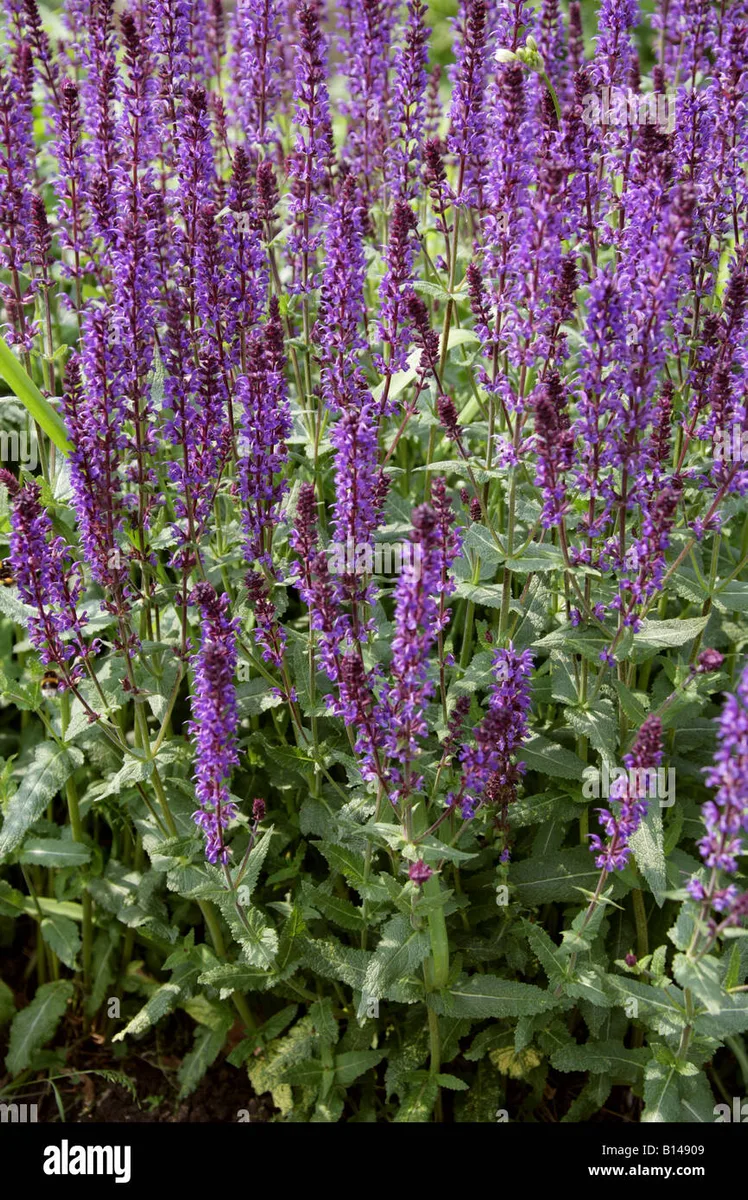
A compact, clump-forming perennial, to 60cm tall, with aromatic, grey-green leaves. Dense, erect spikes of intense purple-blue flowers with dark red bracts appear in July and August, then again in September if cut back halfway through the first flowering period
Scientific classification
- Species
- Salvia nemorosa 'Wesuwe' (Salvia nemorosa 'Wesuwe')
- Genus
- Salvia
- Family
- Lamiaceae
- Order
- Lamiales
- Class
- Magnoliopsida
- Phylum
- Tracheophyta
- Information to be completed
- Toxicity
- Herbaceous Perennial
- Plant type
- 0.5-1 metres
- Height
- 0.1-0.5 metres
- Spread
- Deciduous
- Foliage
- Clump forming
- Habit
- Spring · Summer · Autumn
- Season of interest
- Full sun · Partial shade
- Sunlight
- Information to be completed
- Ideal temperature









Salvia nemorosa 'Wesuwe' pictures
Distribution of Salvia nemorosa 'Wesuwe'
Distribution map
- Native
- Introduced
- Cultivated
Source:WCVP v16 · Royal Botanic Gardens, Kew · CC BY 3.0 · Boundaries:WGSRPD / TDWG
Salvia nemorosa 'Wesuwe' care guide
- Water moderately, let upper soil dry between waterings
- Watering
- Full sun · Partial shade
- Sunlight

Watering
Water moderately, let upper soil dry between waterings
Fertilizing
 Fertilizing
Light balanced feed in spring and during bloom flush
Pruning
 Pruning
Deadhead flower spikes as they fade to prolong flowering
Propagation
 Propagation
Propagate by division in spring and by semi-ripe cuttings in summer
Growing
 Growing
Grow in light, moderately fertile, humus-rich, moist but well-drained soil. Mulch in spring. Best in full sun but can tolerate light partial shade. Drought-tolerant once established
Common pests and diseases
Diseases
May be susceptible to honey fungus (rarely), powdery mildews, verticillium wilt and foot and root rots
Pests
May be susceptible to slugs, snails and leafhoppers
Explore the plant health library →




