
Chinese hibiscus
Also known as: blacking plant; China rose; Chinese rose mallow; garden hibiscus; Hawaian hibiscus; Malabar rose; rose of China; shoe flower; shoe-black; shoe-black plant
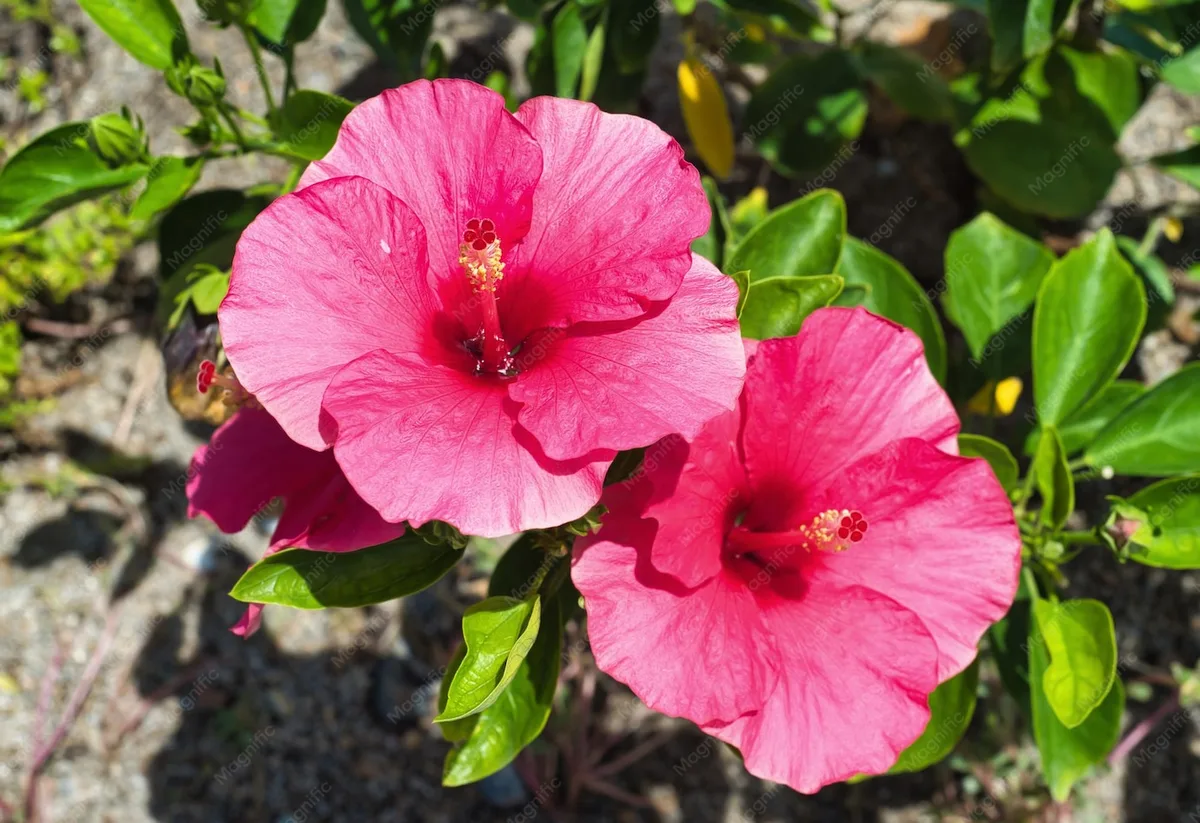
A compact evergreen shrub with ovate to broadly lance-shaped glossy dark green leaves. Single 5-petalled flowers 10cm across with yellow anthered red stamens are produced from the leaf axils from summer to autumn, though in cultivation semi-double and double forms are available. Flower colour is also very variable in cultivation ranging from crimson to orange, yellow or white
Scientific classification
- Species
- Chinese hibiscus (Hibiscus rosa-sinensis)
- Genus
- Hibiscus
- Family
- Malvaceae
- Information to be completed
- Toxicity
- Conservatory Greenhouse · Shrubs
- Plant type
- 1-1.5 metres
- Height
- 0.5-1 metres
- Spread
- Evergreen
- Foliage
- Bushy
- Habit
- Spring · Summer · Autumn · Winter
- Season of interest
- Full sun · Partial shade
- Sunlight
- 20 – 30 °C
- Ideal temperature









Chinese hibiscus pictures
Distribution of Chinese hibiscus
Distribution map
Vanuatu
Information to be completed
Culture
Information to be completed
Toxicity
Information to be completed
Quick identification of Chinese hibiscus
Information to be completed
Chinese hibiscus care guide
- Moderate regular watering, allowing brief slight drying between soakings
- Watering
- Full sun · Partial shade
- Sunlight
- 20 – 30 °C
- Ideal temperature

Watering
Moderate regular watering, allowing brief slight drying between soakings
Fertilizing
 Fertilizing
Balanced perennial feed every four weeks from spring through summer
Pruning
 Pruning
Prune lightly as needed to remove unwanted shoots and keep the shrub in shape. Prune in mid- to late spring.
Propagation
 Propagation
Propagate by seed at 13-18°C (55-64°F) in spring or propagate by semi-ripe cuttings in summer
Growing
 Growing
Under glass grow in a loam-based potting compost (JI No.2) in bright filtered light, providing moderate humidity and good ventilation. Water freely during the growing season and apply a balanced liquid fertiliser monthly. Water sparingly in winter
People also ask
Information to be completed
Common pests and diseases
Diseases
May be susceptible to honey fungus (rarely) and powdery mildews
Pests
May be susceptible to aphids, scale insects, mealybugs and glasshouse whitefly when grown under glass
Explore the plant health library →




