
ivy 'Dragon Claw'
Also known as: Information to be completed
Fast-growing, evergreen, self-clinging climber about 5-6m tall, with wiry leaf stalks bearing pale or dark green, deeply curled leaves, with red margins when young and in cold weather. Small flowers produced in greenish umbels during autumn are followed by black berries on mature foliage
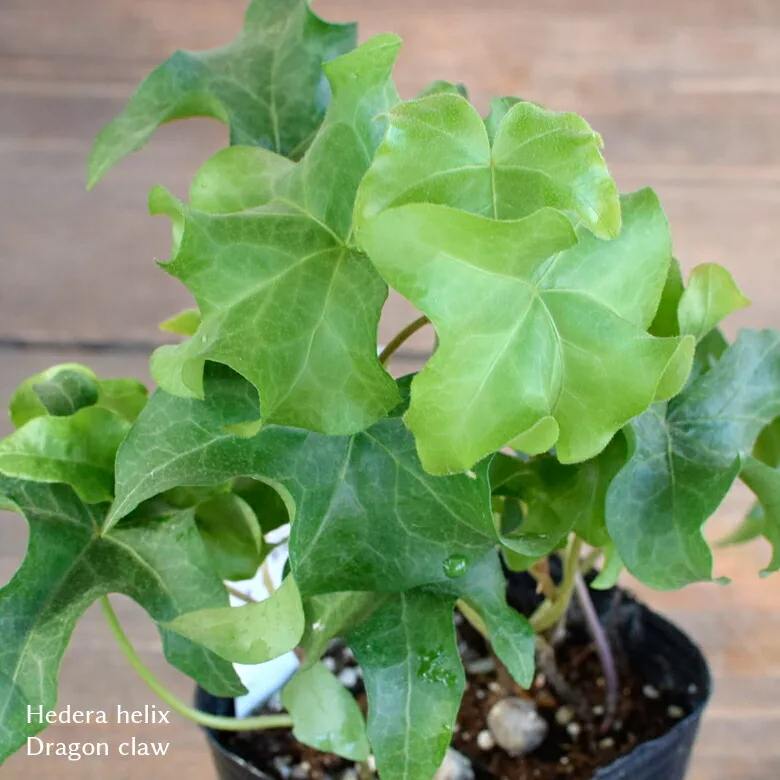
Scientific classification
- Species
- ivy 'Dragon Claw' (Hedera helix 'Dragon Claw')
- Genus
- Hedera
- Family
- Araliaceae
- Order
- Apiales
- Class
- Magnoliopsida
- Phylum
- Magnoliophyta
- Harmful if eaten, skin irritant. Wear gloves and other protective equipment when handling]
- Toxicity
- Climber Wall Shrub
- Plant type
- 4-8 metres
- Height
- 2.5-4 metres
- Spread
- Evergreen
- Foliage
- Climbing
- Habit
- Spring · Winter · Summer · Autumn
- Season of interest
- Full sun · Partial shade
- Sunlight
- Information to be completed
- Ideal temperature









ivy 'Dragon Claw' pictures
Toxicity
Harmful if eaten, skin irritant. Wear gloves and other protective equipment when handling]
ivy 'Dragon Claw' care guide
- Moderate regular watering, allowing brief slight drying between soakings
- Watering
- Full sun · Partial shade
- Sunlight

Watering
Moderate regular watering, allowing brief slight drying between soakings
Fertilizing
 Fertilizing
Balanced perennial feed every four weeks from spring through summer
Pruning
 Pruning
Routine pruning is unnecessary; shorten overlong shoots to fit the available space. Trim as needed at any time.
Propagation
 Propagation
Propagate by softwood cuttings at any time, semi-ripe or hardwood cuttings from late summer to late winter, layering or grafting at any time
Growing
 Growing
Tolerant of a range of soils and conditions but grows best in ferile, humus-rich well-drained alkaline soil in a sheltered spot. See Hedera (ivy) cultivation
Common pests and diseases
Diseases
May be susceptible to honey fungus (rarely) and a leaf spot
Pests
May be susceptible to glasshouse red spider mite, scale insects, vine weevil and aphids
Explore the plant health library →




