
gold-edged box
Also known as: Information to be completed
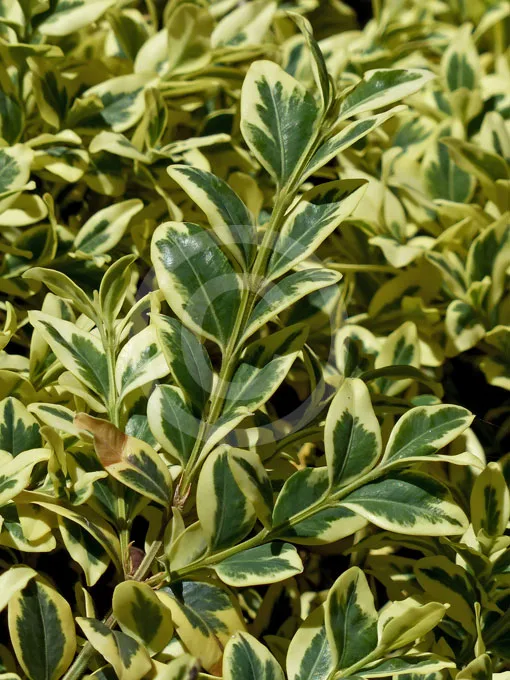
Large evergreen shrub about 3m high, with a dense, bushy habit, grey-brown bark and small green leaves streaked and splashed with creamy yellow. Tiny yellow-green flowers are produced in the leaf axils in spring
Scientific classification
- Species
- gold-edged box (Buxus sempervirens 'Aureovariegata')
- Genus
- Buxus
- Family
- Buxaceae
- Order
- Buxales
- Class
- Magnoliopsida
- Phylum
- Magnoliophyta
- Information to be completed
- Toxicity
- Shrubs
- Plant type
- 2.5-4 metres
- Height
- 2.5-4 metres
- Spread
- Evergreen
- Foliage
- Bushy
- Habit
- Spring · Summer · Autumn · Winter
- Season of interest
- Full shade · Partial shade
- Sunlight
- Information to be completed
- Ideal temperature









gold-edged box pictures
Distribution of gold-edged box
Distribution map
- Native
- Introduced
- Cultivated
Source:WCVP v16 · Royal Botanic Gardens, Kew · CC BY 3.0 · Boundaries:WGSRPD / TDWG
gold-edged box care guide
- Water moderately, allowing the soil to dry slightly between waterings.
- Watering
- Full shade · Partial shade
- Sunlight

Watering
Water moderately, allowing the soil to dry slightly between waterings.
Fertilizing
 Fertilizing
Apply a balanced slow-release fertilizer in spring.
Pruning
 Pruning
Usually little pruning is needed. Lightly shape if necessary, removing dead, damaged or diseased shoots. Prune after flowering. Trim hedges during summer.
Propagation
 Propagation
Propagate by semi-hardwood cuttings in summer
Growing
 Growing
Grow in any fertile, well-drained soil. Prefers light shade, full sun may result in dull or scorched foliage in dry soils. Water regularly while establishing. See box cultivation for more detailed advice
Common pests and diseases
Diseases
May be susceptible to a leaf spot, box blight and, rarely, honey fungus
Pests
May be susceptible to box tree caterpillar, box sucker, mussel scale and red spider mite
Explore the plant health library →




