
seven-lobed Japanese maple
Also known as: Information to be completed
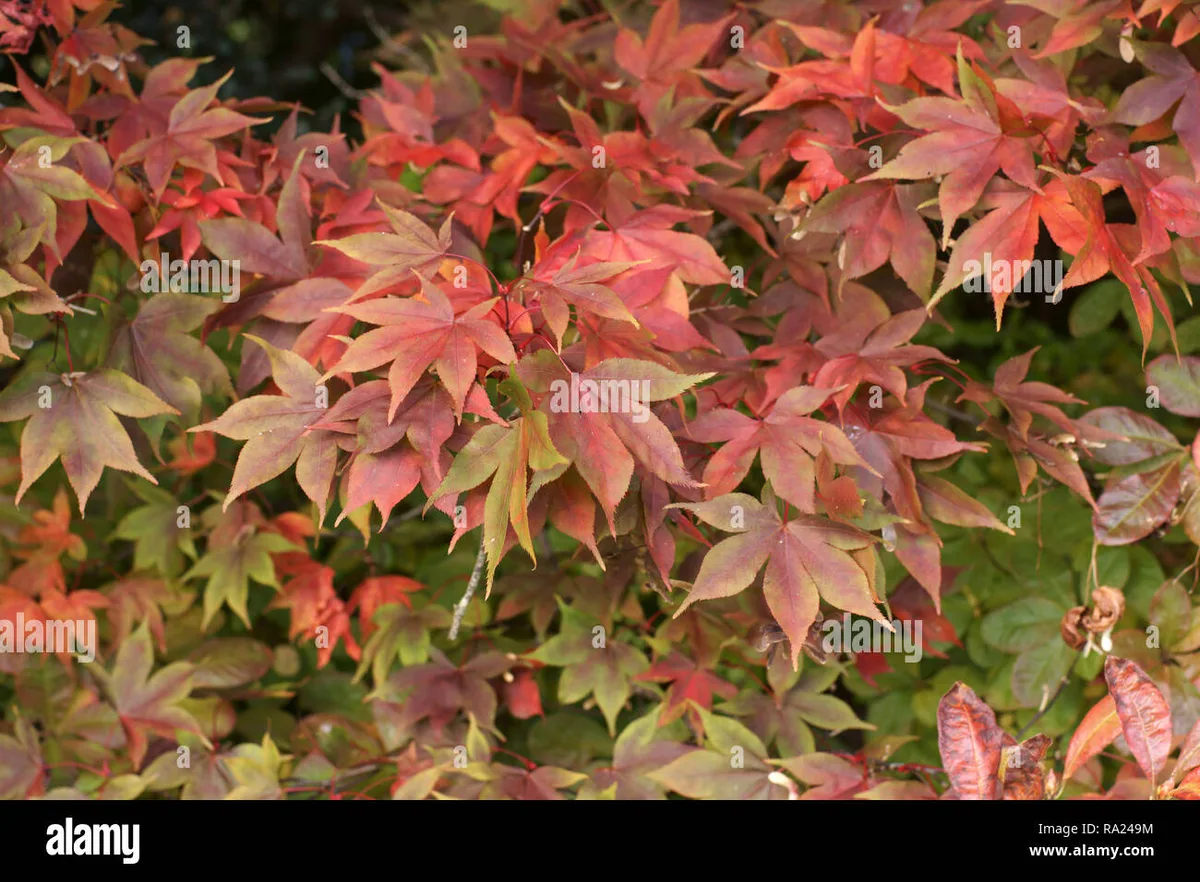
A small, finely-branched, deciduous tree. The palmate foliage has seven to nine leaflets and turns red and orange in autumn. Clusters of tiny, hanging, red flowers are followed by small, red-green, sycamore-like seeds
Scientific classification
- Species
- seven-lobed Japanese maple (Acer palmatum var. heptalobum)
- Genus
- Acer
- Family
- Sapindaceae
- Order
- Sapindales
- Class
- Magnoliopsida
- Phylum
- Magnoliophyta
- Information to be completed
- Toxicity
- Trees
- Plant type
- 4-8 metres
- Height
- 4-8 metres
- Spread
- Deciduous
- Foliage
- Bushy
- Habit
- Autumn · Spring · Summer
- Season of interest
- Full sun · Partial shade
- Sunlight
- Information to be completed
- Ideal temperature









seven-lobed Japanese maple pictures
Distribution of seven-lobed Japanese maple
Distribution map
- Native
- Introduced
- Cultivated
Source:WCVP v16 · Royal Botanic Gardens, Kew · CC BY 3.0 · Boundaries:WGSRPD / TDWG
seven-lobed Japanese maple care guide
- Moderate regular watering, allowing brief slight drying between soakings
- Watering
- Full sun · Partial shade
- Sunlight

Watering
Moderate regular watering, allowing brief slight drying between soakings
Fertilizing
 Fertilizing
Balanced perennial feed every four weeks from spring through summer
Pruning
 Pruning
Little pruning is needed. Remove diseased, damaged, crowded or crossing shoots and unwanted growth. Timing depends on the plant: generally late winter or early spring; plants prone to bleeding and deciduous magnolias need different timing, and deciduous azaleas and lilacs are pruned after flowering.
Propagation
 Propagation
Propagate by seed, grafting or softwood cuttings
Growing
 Growing
Grow in fertile, moist, humus-rich soil in sun or partial shade. Hot, dry air, cold winds or late frost may cause leaf scorching. Mulch in autumn to protect the fine, surface roots from cold and drying out
Common pests and diseases
Diseases
May be susceptible to Verticillium wilt, Acer leaf scorch and honey fungus
Pests
May be susceptible to Acer gall mite, aphids, caterpillars and horse chestnut scale
Explore the plant health library →




