
Burmese spruce
Also known as: Farrer spruce
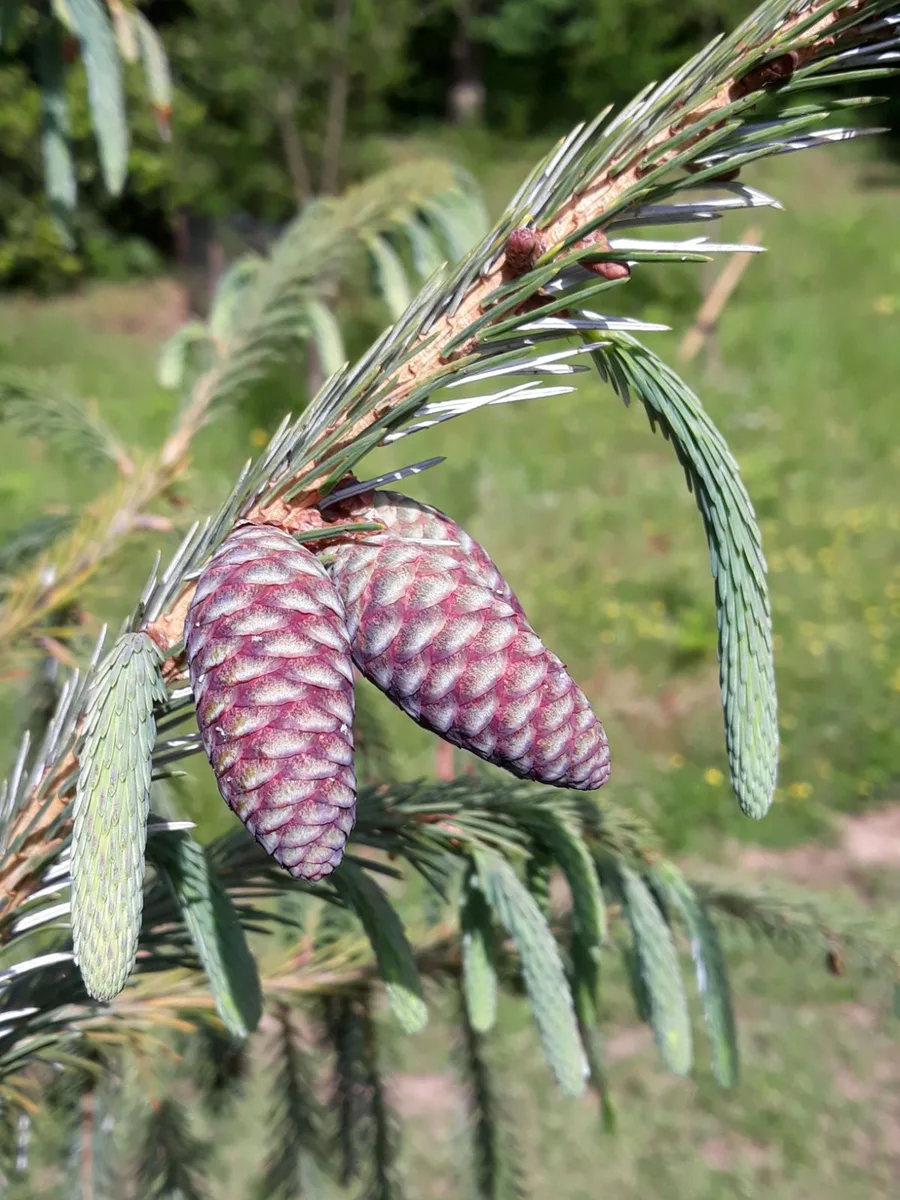
A very large coniferous tree with open, horizontal branches and slender, weeping branchlets. In spring, erect reddish-purple seed cones and pendent brown pollen cones are produced; the seed cones become woody and hang down as they mature, the pollen cones die back
Scientific classification
- Species
- Burmese spruce (Picea farreri)
- Genus
- Picea
- Family
- Pinaceae
- Order
- Pinales
- Class
- Pinopsida
- Phylum
- Pinophyta
- Information to be completed
- Toxicity
- Conifers · Trees
- Plant type
- Higher than 12 metres
- Height
- wider than 8 metres
- Spread
- Evergreen
- Foliage
- Columnar upright
- Habit
- Spring · Summer · Autumn · Winter
- Season of interest
- Full sun
- Sunlight
- Information to be completed
- Ideal temperature









Burmese spruce pictures
Distribution of Burmese spruce
Distribution map
- Native
- Introduced
- Cultivated
Source:WCVP v16 · Royal Botanic Gardens, Kew · CC BY 3.0 · Boundaries:WGSRPD / TDWG
Burmese spruce care guide
- Deep occasional watering, let soil drain freely
- Watering
- Full sun
- Sunlight

Watering
Deep occasional watering, let soil drain freely
Fertilizing
 Fertilizing
Light slow release conifer feed in spring
Pruning
 Pruning
No pruning required
Propagation
 Propagation
Propagate by seed or grafting
Growing
 Growing
Grow in any deep, moist but well-drained soil in full sun
Common pests and diseases
Diseases
May be susceptible to honey fungus
Pests
May be susceptible to adelgids, red spider mite and conifer aphid
Explore the plant health library →




