
Populus × canadensis 'Gelrica'
Also known as: Information to be completed
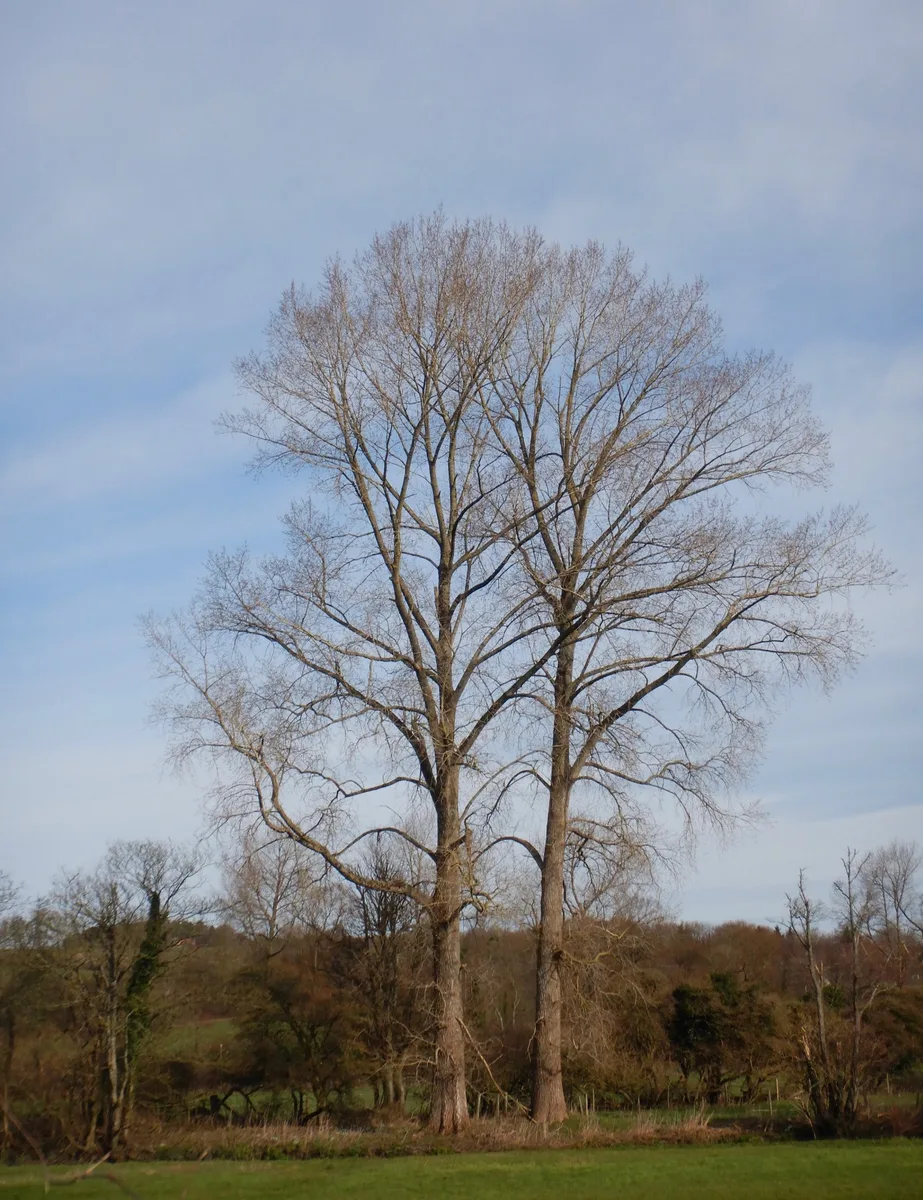
A fast growing deciduous tree, to around 25m high in 20 years and up to 40m high at maturity, with pale bark, sometimes slightly twisting branches, and triangular, glossy green leaves with bluntly toothed edges. Leaves are flushed copper when opening, and slender male catkins are produced in spring
Scientific classification
- Species
- Populus × canadensis 'Gelrica' (Populus × canadensis 'Gelrica')
- Genus
- Populus
- Family
- Salicaceae
- Order
- Malpighiales
- Class
- Magnoliopsida
- Phylum
- Magnoliophyta
- Information to be completed
- Toxicity
- Trees
- Plant type
- Higher than 12 metres
- Height
- wider than 8 metres
- Spread
- Deciduous
- Foliage
- Columnar upright
- Habit
- Autumn · Spring · Summer
- Season of interest
- Full sun
- Sunlight
- Information to be completed
- Ideal temperature









Populus × canadensis 'Gelrica' pictures
Populus × canadensis 'Gelrica' care guide
- Moderate regular watering, allowing brief slight drying between soakings
- Watering
- Full sun
- Sunlight

Watering
Moderate regular watering, allowing brief slight drying between soakings
Fertilizing
 Fertilizing
Balanced perennial feed every four weeks from spring through summer
Pruning
 Pruning
Little pruning is needed. Remove diseased, damaged, crowded or crossing shoots and unwanted growth. Timing depends on the plant: generally late winter or early spring; plants prone to bleeding and deciduous magnolias need different timing, and deciduous azaleas and lilacs are pruned after flowering.
Propagation
 Propagation
Propagate by hardwood cuttings in winter and suckers in autumn or late winter
Growing
 Growing
Cultivated for their very rapid growth as specimen trees. Useful as windbreaks. Tolerant of any soil other than constantly waterlogged soils. Avoid growing within 40m of buildings as the vigorous root systems may damage drains and foundations, particularly on clay soils; has the potential to become a nuisance
Common pests and diseases
Diseases
May be susceptible to silver leaf, bacterial canker, tree rusts and honey fungus
Pests
May be susceptible to leaf beetles, sawflies and caterpillars
Explore the plant health library →




