
rhubarb 'Giant Grooveless Crimson'
Also known as: Information to be completed
An herbaceous perennial with uniformly tall leaves from ground-level. The green leaves are supported by red stems which are reported to be less acidic than some varieties
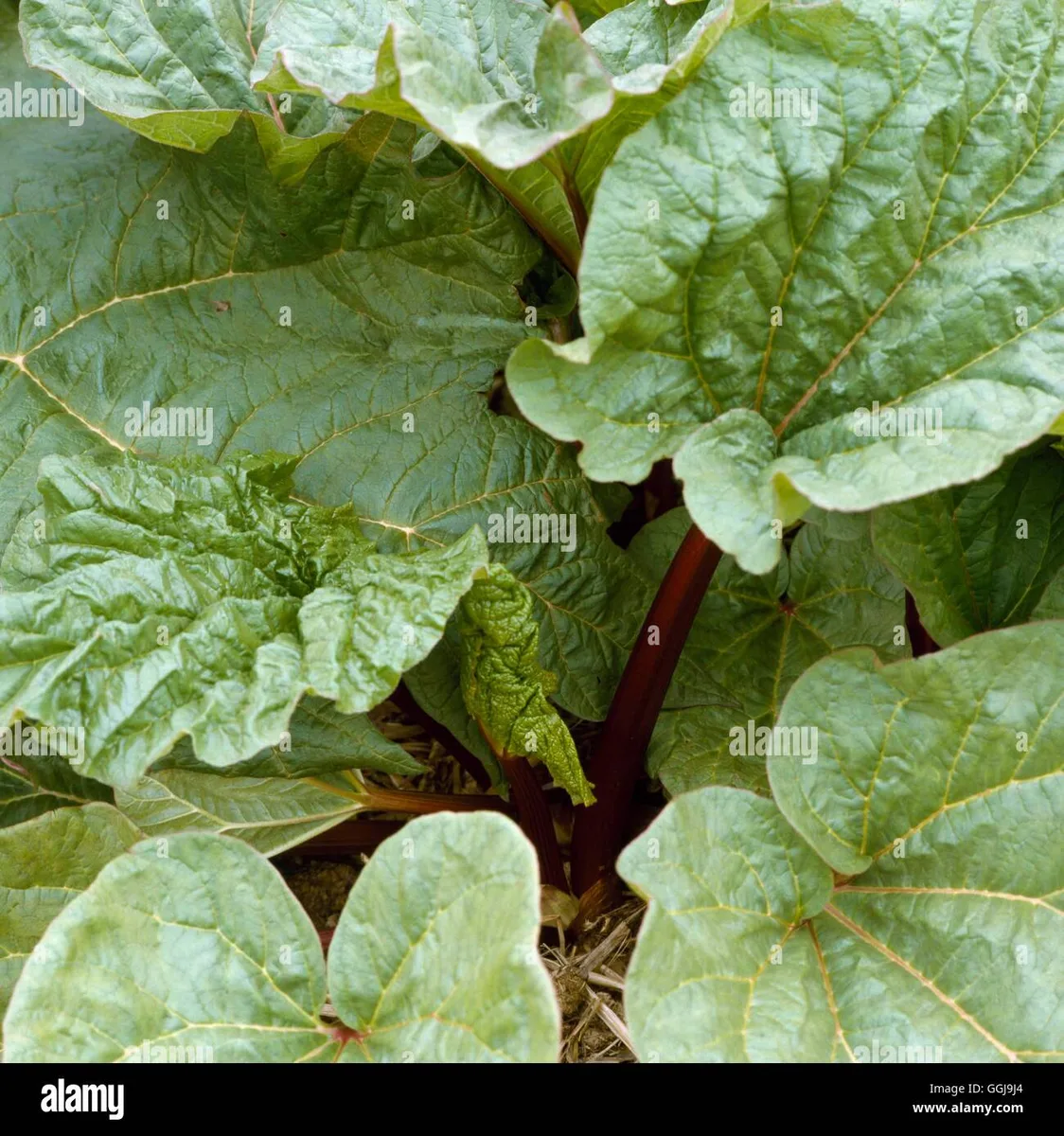
Scientific classification
- Species
- rhubarb 'Giant Grooveless Crimson' (Rheum × hybridum 'Giant Grooveless Crimson')
- Genus
- Rheum
- Family
- Polygonaceae
- Order
- Caryophyllales
- Class
- Magnoliopsida
- Phylum
- Magnoliophyta
- Harmful if eaten, except cooked leaf stalks
- Toxicity
- Herbaceous Perennial
- Plant type
- 0.5-1 metres
- Height
- 0.5-1 metres
- Spread
- Deciduous
- Foliage
- Clump forming
- Habit
- Spring · Summer · Autumn
- Season of interest
- Full sun · Partial shade
- Sunlight
- Information to be completed
- Ideal temperature









rhubarb 'Giant Grooveless Crimson' pictures
Toxicity
Harmful if eaten, except cooked leaf stalks
rhubarb 'Giant Grooveless Crimson' care guide
- Abundant regular watering, soil must stay constantly moist all season
- Watering
- Full sun · Partial shade
- Sunlight

Watering
Abundant regular watering, soil must stay constantly moist all season
Fertilizing
 Fertilizing
High nitrogen vegetable feed applied every two weeks in growing months
Pruning
 Pruning
Little pruning is needed. Remove diseased, damaged, crowded or crossing shoots and unwanted growth. Timing depends on the plant: generally late winter or early spring; plants prone to bleeding and deciduous magnolias need different timing, and deciduous azaleas and lilacs are pruned after flowering.
Propagation
 Propagation
Propagate by division in late winter
Growing
 Growing
Grow in moisture-retentive but well-drained, deep fertile soil in good light. See rhubarb cultivation for further advice
Common pests and diseases
Diseases
May be susceptible to honey fungus, downy mildews, grey moulds, crown rot and virus diseases
Pests
May be susceptible to stem and bulb eelworm, swift moth caterpillar, and to slugs and snails on young growth
Explore the plant health library →




