
rhubarb 'Glaskin's Perpetual'
Also known as: Information to be completed
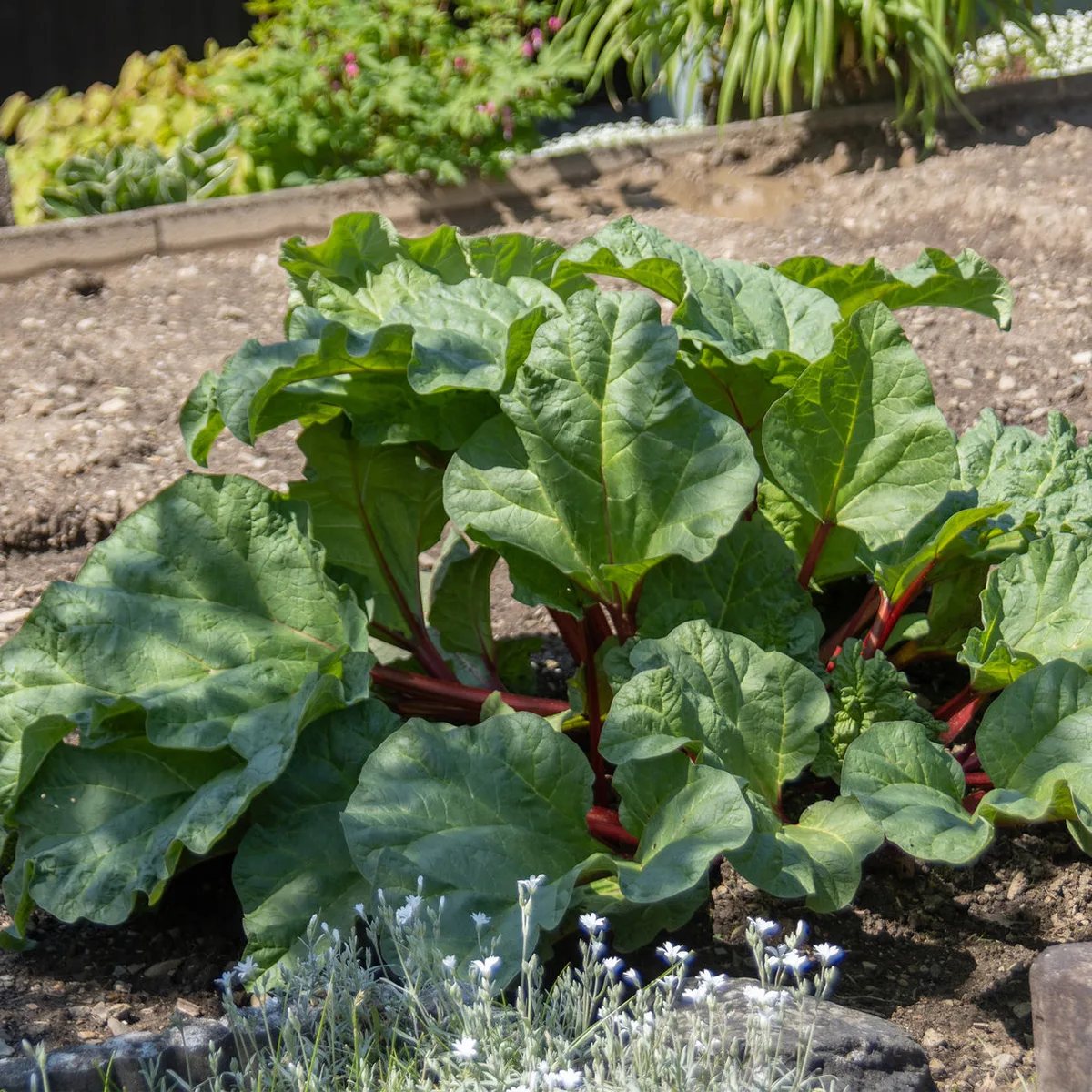
A vigorous variety with green stems flushed red at the base. Ready for harvest from late spring, but as this cultivar does not increase in acidity it can be harvested into late summer and sometimes early autumn
Scientific classification
- Species
- rhubarb 'Glaskin's Perpetual' (Rheum × hybridum 'Glaskin's Perpetual')
- Genus
- Rheum
- Family
- Polygonaceae
- Order
- Caryophyllales
- Class
- Magnoliopsida
- Phylum
- Magnoliophyta
- Harmful if eaten, except cooked leaf stalks. Wear gloves and other protective equipment when handling]
- Toxicity
- Herbaceous Perennial
- Plant type
- 0.5-1 metres
- Height
- 0.5-1 metres
- Spread
- Deciduous
- Foliage
- Bushy
- Habit
- Spring · Summer · Autumn
- Season of interest
- Full sun · Partial shade
- Sunlight
- Information to be completed
- Ideal temperature









rhubarb 'Glaskin's Perpetual' pictures
Toxicity
Harmful if eaten, except cooked leaf stalks. Wear gloves and other protective equipment when handling]
rhubarb 'Glaskin's Perpetual' care guide
- Moderate regular watering, allowing slight drying between waterings
- Watering
- Full sun · Partial shade
- Sunlight

Watering
Moderate regular watering, allowing slight drying between waterings
Fertilizing
 Fertilizing
Balanced feed monthly during active growth season
Pruning
 Pruning
Harvest sparingly in the first year. Remove any flowerheads that may develop. Allow the foliage to die back naturally in autumn then cut away the old leaves to expose the growing points to winter cold
Propagation
 Propagation
Propagate by division of established crowns in late autumn or early spring
Growing
 Growing
Grow in deep, moist, humus-rich soil. Mulch with manure in spring; avoid covering the crown. Keep watered in dry summers and divide every five years to maintain vigour. See rhubarb cultivation for more detailed advice
Common pests and diseases
Diseases
May be susceptible to honey fungus, downy mildews, grey mould, crown rot and virus diseases
Pests
May be susceptible to stem and bulb eelworm, swift moth caterpillar, and to slugs and snails on young growth
Explore the plant health library →




