
common rhubarb
Also known as: pie plant
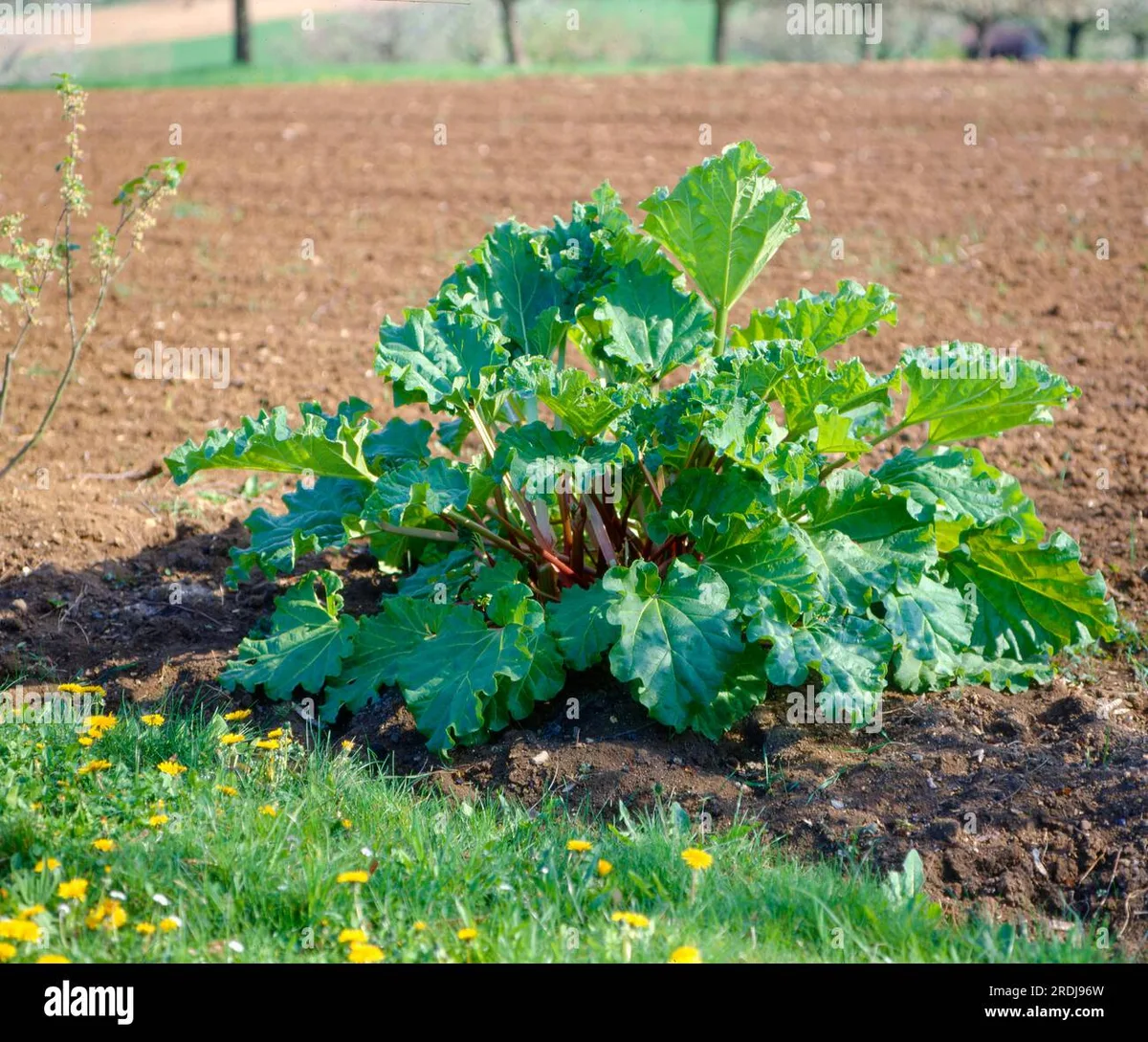
A large herbaceous perennial which overwinters as a short crown, and in spring produces triangular to heart-shaped dark green leaves up to 50cm long, held on thick, slightly ridged, reddish-green stems. In mid summer, dense panicles of small greenish-yellow flowers are held on upright stems above the foliage, followed by reddish-green seeds. This species may have been involved in the parentage of the hybrids now used as culinary rhubarb
Scientific classification
- Species
- common rhubarb (Rheum rhaponticum)
- Genus
- Rheum
- Family
- Polygonaceae
- Order
- Caryophyllales
- Class
- Magnoliopsida
- Phylum
- Magnoliophyta
- Harmful if eaten. Wear gloves and other protective equipment when handling LJD
- Toxicity
- Herbaceous Perennial
- Plant type
- 1-1.5 metres
- Height
- 1-1.5 metres
- Spread
- Deciduous
- Foliage
- Bushy
- Habit
- Spring · Summer · Autumn
- Season of interest
- Full sun · Partial shade
- Sunlight
- Information to be completed
- Ideal temperature









common rhubarb pictures
Distribution of common rhubarb
Distribution map
- Native
- Introduced
- Cultivated
Source:WCVP v16 · Royal Botanic Gardens, Kew · CC BY 3.0 · Boundaries:WGSRPD / TDWG
Toxicity
Harmful if eaten. Wear gloves and other protective equipment when handling LJD
common rhubarb care guide
- Moderate regular watering, allowing brief slight drying between soakings
- Watering
- Full sun · Partial shade
- Sunlight

Watering
Moderate regular watering, allowing brief slight drying between soakings
Fertilizing
 Fertilizing
Balanced perennial feed every four weeks from spring through summer
Pruning
 Pruning
Deadhead spent flower spikes unless seed is required, cut back faded leaves at the end of the season
Propagation
 Propagation
Propagate by seed or by division
Growing
 Growing
Grow in moist but well drained soil. Mulch with manure in spring; avoid covering the crown. Keep watered in dry summers. See rhubarb cultivation for more detailed advice
Common pests and diseases
Diseases
May be susceptible to crown rot, honey fungus and virus diseases
Pests
May be susceptible to slugs and aphids
Explore the plant health library →




