
dancing lady orchid Sharry Baby gx
Also known as: Information to be completed
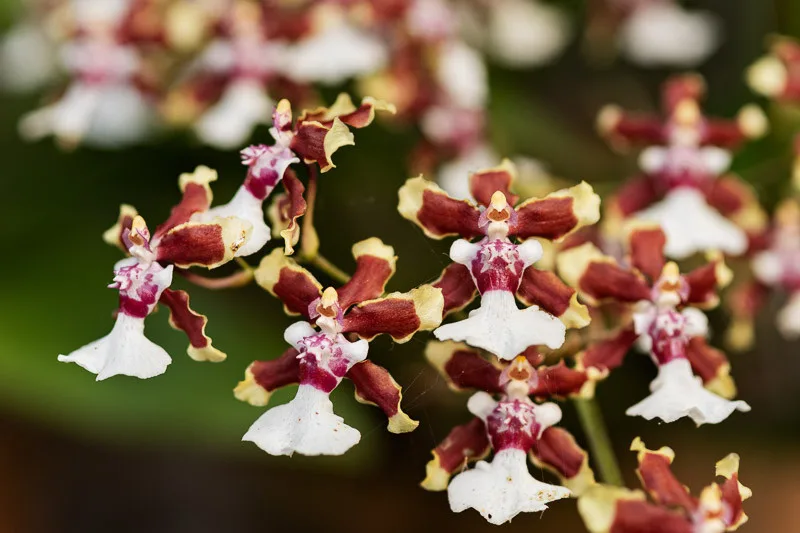
Sharry Baby gx AGM is a spectacular plant when in flower. It is not unusual for the branching spikes to carry well in excess of 100 fragrant deep-red flowers with white tips which have a pleasing aroma of chocolate
Scientific classification
- Species
- dancing lady orchid Sharry Baby gx (Oncidium Sharry Baby gx)
- Genus
- Oncidium
- Family
- Orchidaceae
- Order
- Asparagales
- Class
- Liliopsida
- Phylum
- Magnoliophyta
- Skin allergen. Wear gloves and other protective equipment when handling
- Toxicity
- Conservatory Greenhouse · Houseplants
- Plant type
- 0.1-0.5 metres
- Height
- 0.1-0.5 metres
- Spread
- Evergreen
- Foliage
- Information to be completed
- Habit
- Spring · Summer · Autumn · Winter
- Season of interest
- Partial shade
- Sunlight
- Information to be completed
- Ideal temperature









dancing lady orchid Sharry Baby gx pictures
Toxicity
Skin allergen. Wear gloves and other protective equipment when handling
dancing lady orchid Sharry Baby gx care guide
- Moderate regular watering, allowing brief slight drying between soakings
- Watering
- Partial shade
- Sunlight

Watering
Moderate regular watering, allowing brief slight drying between soakings
Fertilizing
 Fertilizing
Balanced perennial feed every four weeks from spring through summer
Pruning
 Pruning
No pruning required, remove spent flower spikes
Propagation
 Propagation
Propagate by division when plants are large enough to be divided into clumps of 2 - 3 pseudobulbs and overflowing the pot
Growing
 Growing
Grow in a fine-grade, bark-based epiphytic orchid compost. Provide bright filtered light, good ventilation and in spring and summer water freely as compost dries out, use orchid fertiliser at every third watering and mist regularly for high humidity. Reduce watering in winter and allow a 4 week period of day time temperature around 10°C to encourage flowering. See Oncidium (warm) cultivation
Common pests and diseases
Diseases
Generally disease free
Pests
May be susceptible to mealybugs, aphids and scale insects.
Explore the plant health library →




