
striped bloody cranesbill
Also known as: Information to be completed
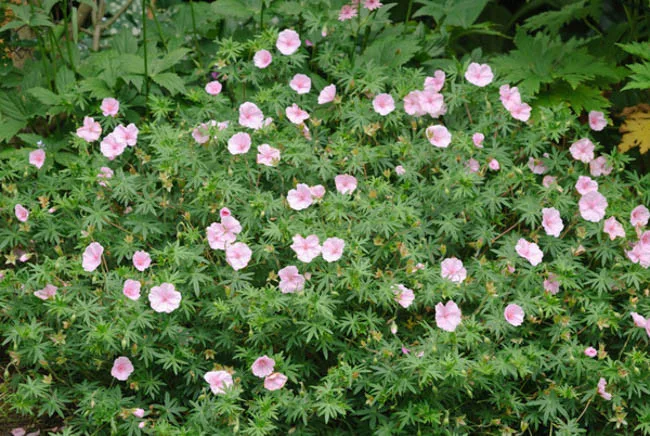
A prostrate herbaceous perennial to 15cm in height, making a compact mat of narrow-lobed dark green leaves. Pale lilac-pink flowers are 4cm in width, with deeper pink veining
Scientific classification
- Species
- striped bloody cranesbill (Geranium sanguineum var. striatum)
- Genus
- Geranium
- Family
- Geraniaceae
- Order
- Geraniales
- Class
- Magnoliopsida
- Phylum
- Tracheophyta
- Information to be completed
- Toxicity
- Alpine Rockery · Herbaceous Perennial
- Plant type
- 0.1-0.5 metres
- Height
- 0.1-0.5 metres
- Spread
- Deciduous
- Foliage
- Matforming
- Habit
- Spring · Summer · Autumn
- Season of interest
- Full shade · Full sun · Partial shade
- Sunlight
- Information to be completed
- Ideal temperature









striped bloody cranesbill pictures
Distribution of striped bloody cranesbill
Distribution map
- Native
- Introduced
- Cultivated
Source:WCVP v16 · Royal Botanic Gardens, Kew · CC BY 3.0 · Boundaries:WGSRPD / TDWG
striped bloody cranesbill care guide
- Moderate watering, allow slight drying between soakings
- Watering
- Full shade · Full sun · Partial shade
- Sunlight

Watering
Moderate watering, allow slight drying between soakings
Fertilizing
 Fertilizing
Light balanced feed in spring and midsummer
Pruning
 Pruning
Remove flowered stems and old leaves to encourage the production of new flowers and leaves
Propagation
 Propagation
Propagate by seed or basal cuttings
Growing
 Growing
Effective ground cover plant, good in wildlife garden. Can be invasive
Common pests and diseases
Diseases
May be affected by a downy mildew and powdery mildews
Pests
May get vine weevil, capsid bug and sawflies
Explore the plant health library →




