
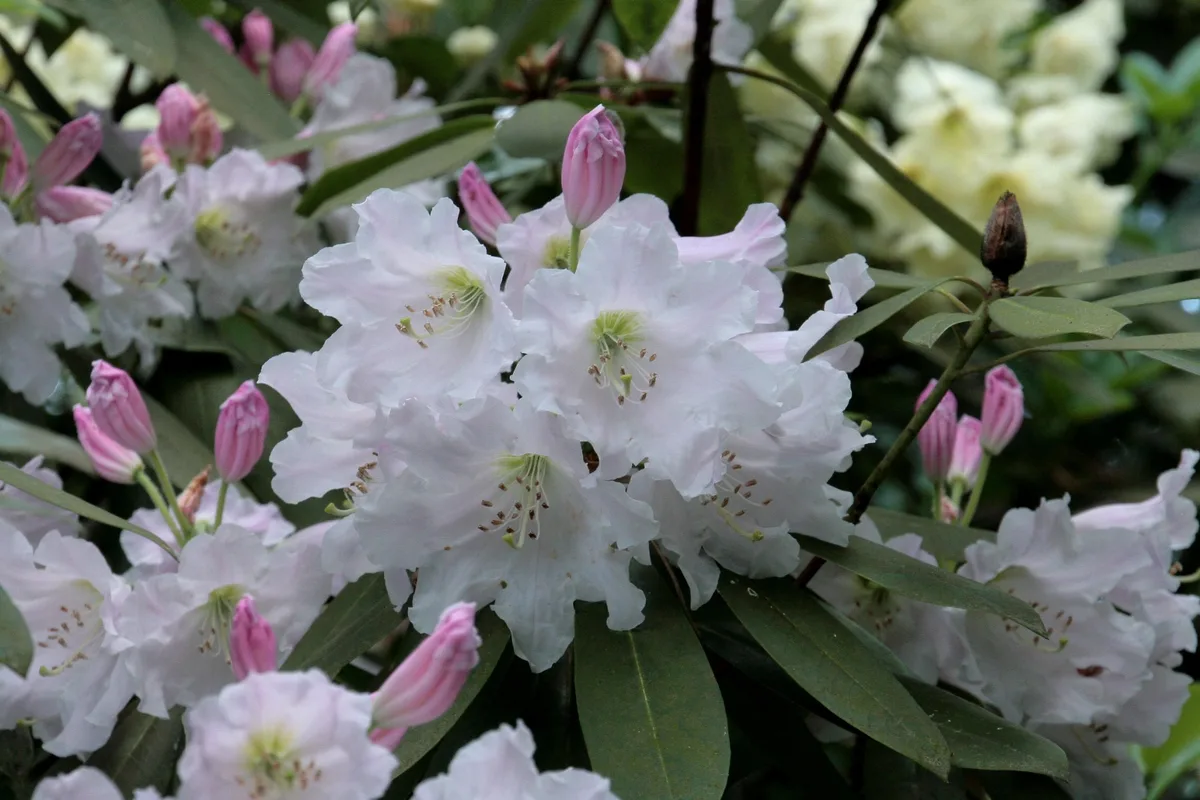
twice-coloured cloud-brocade rhodendron
Also known as: twice-coloured Fortune's rhododendron
A large evergreen shrub with an open habit and long, narrowly ovate, matt dark green leaves. Approximately 2m high in 10 years, but may reach up to 6m. Produces clusters of 8-10 fragrant, bell-shaped flowers, white flushed with pale pink, in late spring and early summer
Scientific classification
- Species
- twice-coloured cloud-brocade rhodendron (Rhododendron fortunei subsp. discolor)
- Genus
- Rhododendron
- Family
- Ericaceae
- Harmful if eaten. Wear gloves and other protective equipment when handling
- Toxicity
- Shrubs
- Plant type
- 4-8 metres
- Height
- 2.5-4 metres
- Spread
- Evergreen
- Foliage
- Information to be completed
- Habit
- Spring · Summer · Autumn · Winter
- Season of interest
- Partial shade
- Sunlight
- Information to be completed
- Ideal temperature









twice-coloured cloud-brocade rhodendron pictures
Distribution of twice-coloured cloud-brocade rhodendron
Distribution map
C and Western China
Information to be completed
Culture
Information to be completed
Toxicity
Harmful if eaten. Wear gloves and other protective equipment when handling
Quick identification of twice-coloured cloud-brocade rhodendron
Information to be completed
twice-coloured cloud-brocade rhodendron care guide
- Soft acidic water for irrigation, soil lightly damp with zero standing excess water
- Watering
- Partial shade
- Sunlight
- Information to be completed
- Ideal temperature

Watering
Soft acidic water for irrigation, soil lightly damp with zero standing excess water
Fertilizing
 Fertilizing
Specialized rhododendron acid feed monthly spring extending to late summer months
Pruning
 Pruning
Usually little pruning is needed. Lightly shape if necessary, removing dead, damaged or diseased shoots. Prune after flowering.
Propagation
 Propagation
Propagate by semi-hardwood cuttings in late summer, by layering in autumn, or by grafting in winter
Growing
 Growing
Grow in moist but well-drained, humus rich, acidic soil, in partial or dappled shade. Choose a site away from frost pockets and sheltered from strong winds. Mulch annually, ideally with leaf mould. See rhododendron cultivation for more detailed advice
People also ask
Information to be completed
Common pests and diseases
Diseases
May be susceptible to rhododendron diseases including rhododendron bud blast and rhododendron petal blight, as well as powdery mildews, honey fungus, rust, leafy gall, silver leaf and Phytophthora root and shoot rots
Pests
May be susceptible to vine weevil, whitefly, rhododendron leafhopper, lacebugs, scale insects, caterpillars and aphids
Explore the plant health library →




