
abutilon 'Patrick Synge'
Also known as: Information to be completed
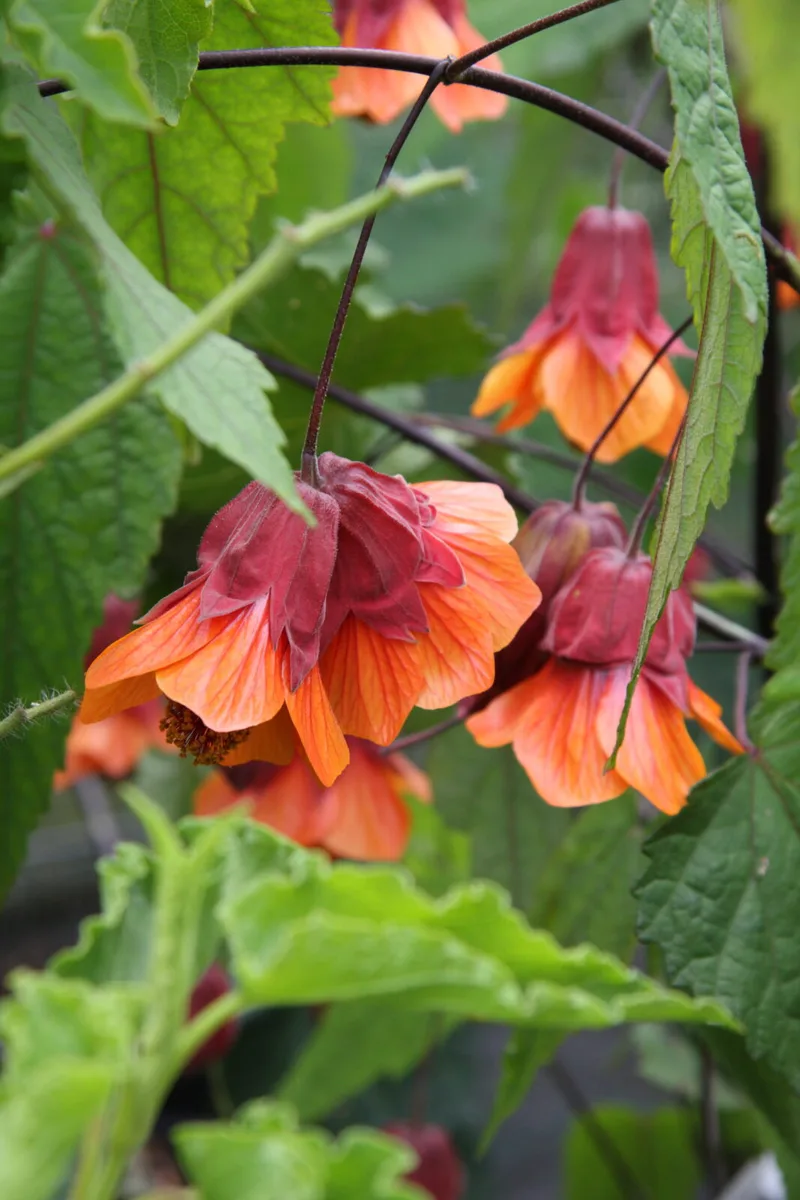
A vigorous evergreen shrub to 2.5m, with an erect to spreading habit and 3-lobed, mid-green leaves to 20cm long. From spring to autumn it bears 7cm long, pendent, bell-shaped flowers; the petals are orange and emerge from dark red calyces
Scientific classification
- Species
- abutilon 'Patrick Synge' (Abutilon 'Patrick Synge')
- Genus
- Abutilon
- Family
- Malvaceae
- Information to be completed
- Toxicity
- Shrubs
- Plant type
- 1.5-2.5 metres
- Height
- 1-1.5 metres
- Spread
- Evergreen
- Foliage
- Bushy
- Habit
- Spring · Summer · Autumn · Winter
- Season of interest
- Full sun
- Sunlight
- Information to be completed
- Ideal temperature









abutilon 'Patrick Synge' pictures
Distribution of abutilon 'Patrick Synge'
Distribution map
Information to be completed
Information to be completed
Culture
Information to be completed
Toxicity
Information to be completed
Quick identification of abutilon 'Patrick Synge'
Information to be completed
abutilon 'Patrick Synge' care guide
- Keep soil evenly moist with warmth and humidity
- Watering
- Full sun
- Sunlight
- Information to be completed
- Ideal temperature

Watering
Keep soil evenly moist with warmth and humidity
Fertilizing
 Fertilizing
Balanced feed every few weeks in active growth
Pruning
 Pruning
Little pruning is needed. Remove diseased, damaged, crowded or crossing shoots and unwanted growth. Timing depends on the plant: generally late winter or early spring; plants prone to bleeding and deciduous magnolias need different timing, and deciduous azaleas and lilacs are pruned after flowering.
Propagation
 Propagation
Propagate by softwood cuttings in spring, or greenwood cuttings in summer
Growing
 Growing
Under glass, grow in loam-based compost in full light. In the growing season, water freely and apply a balanced liquid fertiliser monthly; water sparingly in winter
People also ask
Information to be completed
Common pests and diseases
Diseases
May be susceptible to honey fungus (rarely) or a virus
Pests
May be susceptible to glasshouse red spider mite, glasshouse whitefly, mealybugs and scale insects
Explore the plant health library →




