
yellow-berried yew
Also known as: Information to be completed
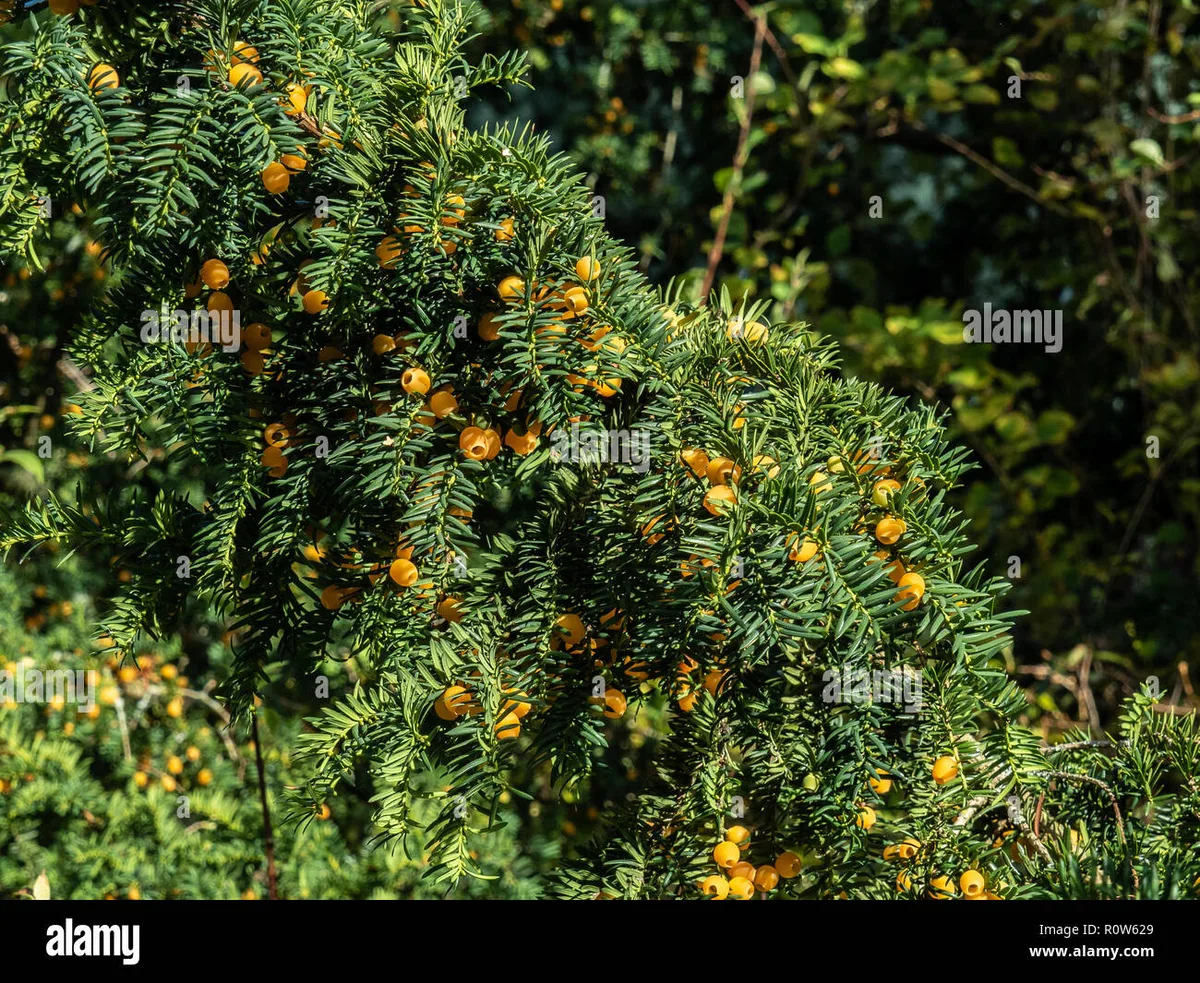
Lutea' is a slow-growing, evergreen tree or shrub with needle-like, flattened, dark green leaves. Insignificant flowers are followed by cup-shaped, fleshy yellow fruits/arils
Scientific classification
- Species
- yellow-berried yew (Taxus baccata 'Lutea')
- Genus
- Taxus
- Family
- Taxaceae
- Order
- Taxales
- Class
- Pinopsida
- Phylum
- Pinophyta
- Toxic if eaten. Wear gloves and other protective equipment when handling
- Toxicity
- Conifers · Trees
- Plant type
- 8-12 metres
- Height
- 4-8 metres
- Spread
- Evergreen
- Foliage
- Bushy
- Habit
- Spring · Summer · Autumn · Winter
- Season of interest
- Full shade · Full sun · Partial shade
- Sunlight
- Information to be completed
- Ideal temperature









yellow-berried yew pictures
Toxicity
Toxic if eaten. Wear gloves and other protective equipment when handling
yellow-berried yew care guide
- Water deeply during dry periods; established plants are moderately drought-tolerant.
- Watering
- Full shade · Full sun · Partial shade
- Sunlight

Watering
Water deeply during dry periods; established plants are moderately drought-tolerant.
Fertilizing
 Fertilizing
Apply a balanced slow-release fertilizer in spring.
Pruning
 Pruning
No regular pruning necessary, but can be trimmed and shaped when required
Propagation
 Propagation
Propagate by seed or semi-hardwood cuttings
Growing
 Growing
Grow in any well-drained soil. Will tolerate exposure, dry soils and urban pollution. Good specimen plant for topiary and hedging
Common pests and diseases
Diseases
May be susceptible to phytophthora root diseases and honey fungus (rarely)
Pests
May be susceptible to tortrix moth, vine weevil, gall mites and scale insects
Explore the plant health library →




