
Stern's hybrid hellebore
Also known as: Information to be completed
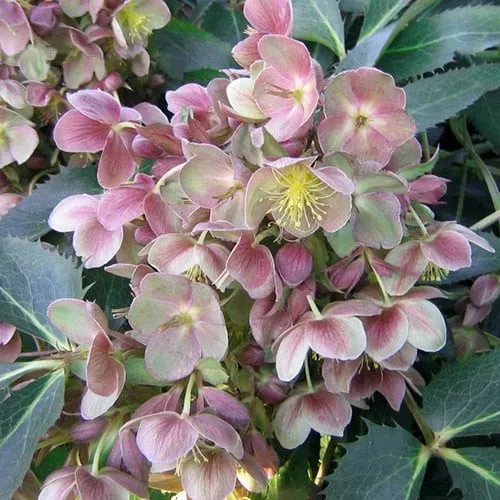
H. x sternii is an evergreen perennial, to 35cm, with purple, biennial stems bearing leaves with three green, pale-veined leaflets. Nodding, creamy-green flowers, suffused with pinkish-purple and 3-5cm in width, are borne in open clusters from late winter to mid-spring
Scientific classification
- Species
- Stern's hybrid hellebore (Helleborus × sternii)
- Genus
- Helleborus
- Family
- Ranunculaceae
- Order
- Ranunculales
- Class
- Magnoliopsida
- Phylum
- Magnoliophyta
- Harmful if eaten, skin irritant. Wear gloves and other protective equipment when handling]
- Toxicity
- Herbaceous Perennial
- Plant type
- 0.1-0.5 metres
- Height
- 0.1-0.5 metres
- Spread
- Evergreen
- Foliage
- Clump forming
- Habit
- Spring · Summer · Autumn · Winter
- Season of interest
- Full sun · Partial shade
- Sunlight
- Information to be completed
- Ideal temperature









Stern's hybrid hellebore pictures
Toxicity
Harmful if eaten, skin irritant. Wear gloves and other protective equipment when handling]
Stern's hybrid hellebore care guide
- Keep soil evenly moist, richer moisture in spring
- Watering
- Full sun · Partial shade
- Sunlight

Watering
Keep soil evenly moist, richer moisture in spring
Fertilizing
 Fertilizing
Mulch or balanced feed in late winter to spring
Pruning
 Pruning
Remove faded or damaged foliage as the flowers appear
Propagation
 Propagation
Propagate by seed sown in pots in a cold frame as soon as seed is ripe, or by division in late spring after flowering
Growing
 Growing
Thrives in neutral to alkaline soils that are moist, fertile and humus-rich. Partial shade is ideal but can tolerate full sun. Provide shelter from strong, cold winds. Mulch annually in autumn. See hellebore cultivation
Common pests and diseases
Diseases
May be susceptible to hellebore black death, hellebore leaf spot and a virus
Pests
May be susceptible to hellebore aphid and snails
Explore the plant health library →




